


Technology Guide · Equipment Overview
Complete Beverage Filling Equipment Guide — Types, Capacities and How to Choose
Filling principles, container types, line configurations and the arithmetic behind choosing capacity.
2,000–48,000
BPH range built
444+
Lines delivered
71+
Countries exported
20,000 m²
Manufacturing facility
ISO/CE
Certified · SGS audited
Short answer: Beverage filling equipment is classified three ways: by filling principle (gravity, mechanical, volumetric, load cell, isobaric), by container (PET, glass, can) and by configuration (standalone filler, rinser-filler-capper monoblock, or blow-fill-cap combiblock). Product decides the principle — carbonated means isobaric, weight-declared means load cell — while output, bottle size and operating hours decide the size of the machine.
🎯 Key takeaways
- Five filling principles: gravity, mechanical, volumetric, load cell, isobaric — the product decides, not the budget
- Carbonated product requires isobaric filling; weight-declared product requires load cell dosing
- Three configurations: standalone filler, rinser-filler-capper monoblock, blow-fill-cap combiblock
- A BPH figure is meaningless without the bottle size and product attached
- Size capacity from annual volume → operating hours → realistic efficiency → peak month, not from nameplate
- Utilities are the most under-budgeted item — air compressor, dryer and water treatment are often outside the quotation
On this page
1. The equipment map — what a filling line is made of
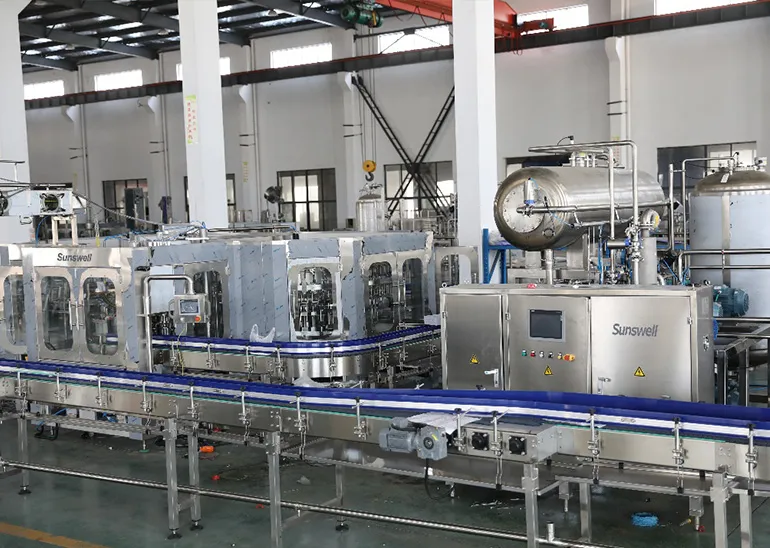
A beverage line is a sequence of machines, and buyers get into trouble when they price the filler and forget the rest. Reading left to right, a complete PET line contains:
| Stage | Machine | Function | Commonly forgotten? |
|---|---|---|---|
| Bottle supply | Blow moulder or bottle depalletiser | Produces or unpacks empty bottles | No |
| Bottle handling | Air conveyor or neck-handling transfer | Moves empties to the filler | Air compressor for it, yes |
| Filling | Rinser-filler-capper monoblock | Rinses, fills, seals | No |
| Cap supply | Cap hopper, elevator, sorter | Feeds and orients closures | Sometimes |
| Labelling | OPP, sleeve or self-adhesive labeller | Applies labels | Sleeve steam tunnel, often |
| Coding | Date and batch coder | Prints production data | Frequently |
| Packing | Shrink wrapper, carton packer | Groups bottles into packs | No |
| Palletising | Robot or layer palletiser | Builds pallets | Often deferred to phase two |
| Utilities | Air compressor, dryer, water treatment, CIP | Supplies the line | Yes — the biggest omission |
Utilities are the most under-budgeted part of a first line. Compressed air generation and drying, and water treatment, are frequently quoted separately or not at all. Ask explicitly whether they are inside or outside the scope of every quotation you compare.
2. Filling principles — the choice that defines the machine
How liquid gets into the bottle determines accuracy, speed, price and which products the line can ever run. Five principles cover essentially all beverage applications.
| Principle | How it doses | Best for | Trade-off |
|---|---|---|---|
| Gravity | Liquid falls to a set level under its own weight | Plain still water, low-cost lines | Level accuracy varies with bottle volume tolerance |
| Mechanical | Mechanical valve opens to a set fill level | Still water at lowest capex | Least precise; simplest to maintain |
| Volumetric | Flow meter doses a measured volume | Water, juice, tea where declared volume must be exact | Higher cost; needs clean product path |
| Load cell (weight) | Each station weighs the bottle as it fills | Edible oil, high-value products, weight-declared goods | Highest cost per valve; most accurate |
| Isobaric counter-pressure | CO₂ pre-pressurises the bottle, then liquid enters | Carbonated soft drinks, sparkling water, beer | Pressurised carousel, more complex; mandatory for carbonation |
Two rules cut through most of the confusion. First, carbonated product means isobaric filling — there is no cheaper path that works. Second, if the product is sold and declared by weight rather than volume, load cell filling is the honest answer, because dosing volume and declaring weight introduces an error you pay for on every bottle. The valve-by-valve comparison is in filling valve types compared.
3. Container types and what changes with each
3.1 PET bottles
The dominant format for water, carbonated drinks and juice. Bottles are blown from preforms, either on a separate blow moulder or inside a combiblock. PET gives low package weight, low freight cost and design freedom, and the main running cost is resin plus the compressed air used to blow it.
3.2 Glass bottles
Used for premium juice, tea, wine, spirits and returnable carbonated drinks. Glass lines need bottle washing rather than rinsing when containers are returnable, gentler handling, and crown or ROPP capping instead of plastic closures. Output per hour is typically lower than an equivalent PET line and the package cost is much higher, which is why glass is a positioning decision as much as a technical one.
3.3 Aluminium cans
Strong for carbonated drinks, beer and increasingly for juice and tea. Cans arrive as empty bodies, are rinsed, filled and seamed — there is no capping and no blow moulding. Output is measured in CPH, cans per hour. Seaming quality is the critical control point, and it is monitored with regular seam teardown checks rather than by watching the machine.
4. Line configurations
The same filling principle can be delivered in three configurations, and the choice affects floor space, manpower and bottle cost more than most buyers expect.
4.1 Standalone filler
A filler alone, fed by an external bottle supply. Suitable where bottles are bought in, or where an existing line is being upgraded one machine at a time.
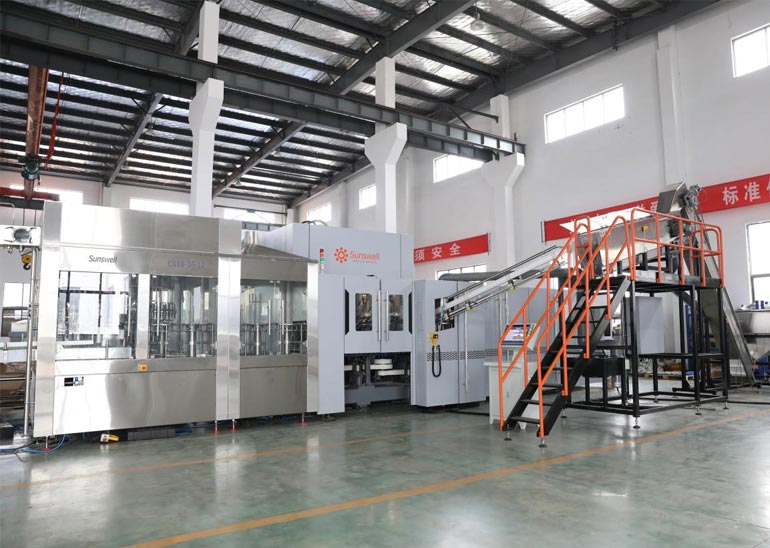
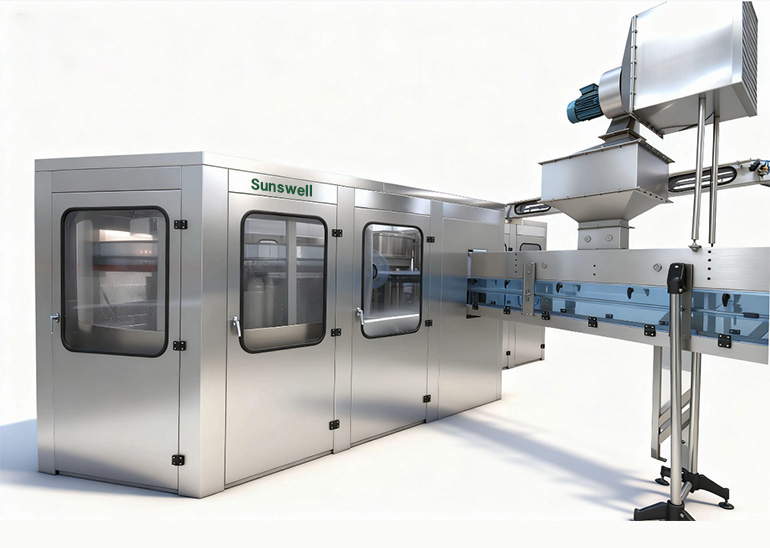
4.2 Rinser-filler-capper monoblock
Three functions on one frame, receiving ready-made bottles. The standard configuration for glass lines, for plants that buy bottles, and for can lines in their equivalent form.
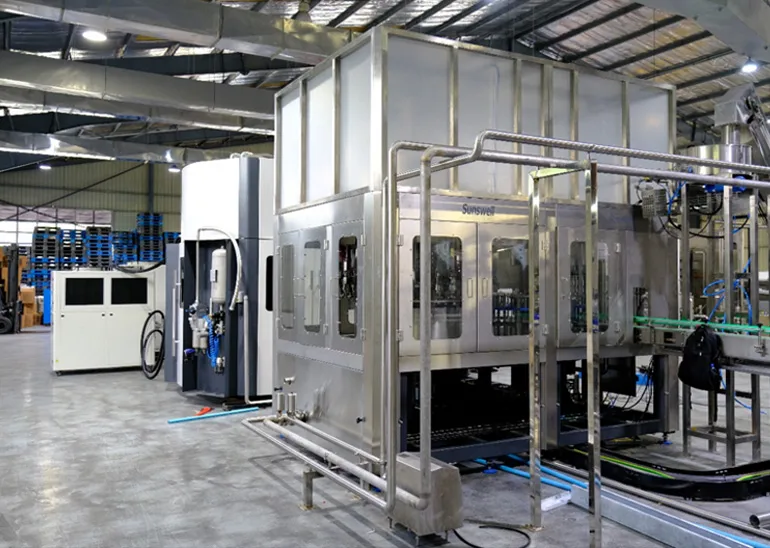
4.3 Blow-fill-cap combiblock
Blow moulding, filling and capping in one machine. The bottle never enters an air conveyor, which removes a machine, its compressed air demand, its floor area and the bottle weight safety margin that conveyor handling requires. Sunswell builds combiblocks from 2,000 to 48,000 BPH.
| Separate blower + filler | Combiblock | |
|---|---|---|
| Machines to buy | Blow moulder, air conveyor, filler | One block |
| Floor area | Larger — conveyor run between machines | Smaller |
| Operators | More, machines are separately tended | Fewer — one block, one operator |
| Bottle weight | Carries a safety margin for conveyor handling | Lighter, neck-handled throughout |
| Sell empty bottles? | Yes — bottles exist as an intermediate product | No — bottles are filled immediately |
| Best below ~8,000 BPH? | Often yes | Usually not |
The trade-off analysis with figures is in combiblock vs separate blowing and filling line. The short version: if you also sell empty bottles, or run at low output, separate machines remain the sensible choice.
5. Choosing capacity without over- or under-buying
Capacity is where money is most often wasted in both directions. Over-buying ties up capital in a machine that runs at part load; under-buying forces a second line years earlier than planned. Work through it arithmetically.
- Start from annual volume, not from a BPH figure. How many bottles do you need to sell next year, and in your peak month?
- Convert to bottles per operating hour. Divide by realistic operating days, shifts and hours — not by theoretical maximum uptime.
- Apply an efficiency factor. Real lines do not run at nameplate speed continuously. Changeovers, CIP, breaks and minor stops all consume time.
- Size on the peak month. Beverage demand is seasonal in most markets. A line sized on annual average will fail you in summer.
- Check the largest bottle. Output falls as bottle volume rises. A line rated at a small format will not hold that rate on a large one.
- Leave headroom, but not too much. Buying the next size up is cheap at order stage and expensive to run at 40% load.
Worked example of the trap. A line rated 12,000 BPH running two shifts at 85% efficiency does not produce 192,000 bottles a day — it produces closer to 163,000. Plan on the second number. Buyers who plan on the first discover the shortfall during their first peak season, which is the worst possible moment.
Combiblock capacity bands by product and bottle size are set out in combiblock capacity selection.
6. Matching equipment to product
| Product | Filling principle | Special requirements |
|---|---|---|
| Still and mineral water | Gravity, mechanical or volumetric | Water treatment; rinsing; simplest configuration |
| Carbonated soft drinks, sparkling water | Isobaric counter-pressure | CO₂ handling, chilled product, pressure-rated carousel |
| Juice and tea, no pulp | Hot-fill volumetric | Product heating, heat-resistant bottle geometry, CIP |
| Juice with pulp | Hot-fill piston or volumetric with large valve path | Particle handling without shear or blockage |
| Edible oil | Load cell weight dosing | Weight declaration, drip control, viscous product handling |
| Beer and carbonated in cans | Isobaric can filler and seamer | Seam integrity control, oxygen pickup management |
| Home-care liquids | Volumetric or piston depending on viscosity | Foaming control, material compatibility |
Each product family has its own configuration page: still water, CSD and sparkling water, and the juice, glass and can lines linked from the resources index.
7. Automation, controls and what to ask about them
Two lines with identical mechanical specifications can behave very differently because of what sits in the control cabinet. This is the part of the quotation buyers read least carefully and live with longest.
7.1 The component brand schedule
PLC, HMI, servo drives, VFDs and sensors should be named by brand and model in the technical annex before the contract is signed. Two consequences follow directly. A mainstream brand can be bought from a distributor in your own city when a unit fails at midnight; an unmarked component has to be air-freighted from China. And a documented brand list makes the quotation comparable — without it, a price difference between two suppliers may be nothing more than a difference in component grade.
7.2 Who owns the programme
Ask who wrote the PLC programme and who supports it. If the answer is a subcontractor, ask what happens when a fault appears on your night shift. Ask also for the programme backup to be handed over at commissioning — it is standard practice and it protects you if the relationship with the supplier ever ends.
7.3 Remote access
A VPN-capable router in the control cabinet, connected to a stable internet drop, lets engineers read the PLC live from anywhere. Most electrical faults, sensor failures and recipe problems are resolved this way in under an hour instead of waiting for a visa. It is the cheapest infrastructure in the entire project and the one most often left out.
7.4 Data you will want later
Output counters, downtime logging with fault codes, and reject counts by cause. These are not luxuries. Six months into operation they are how you find out whether your losses come from the capper, the labeller or the compressed air supply. Ask whether the HMI records them and whether the data can be exported.
The question that reveals most. Ask a supplier what the three most common fault codes are on this machine type and what causes each. A builder who commissions their own equipment answers immediately and specifically. It is a harder question to fake than any certificate.
8. Selection mistakes that repeat across projects
- Pricing the filler and forgetting the line. Labelling, coding, packing and utilities frequently exceed the cost of the filler itself.
- Quoting output without bottle size and product. It makes every quotation incomparable and guarantees a disappointing result.
- Choosing a filling principle on price. Carbonated product on a non-isobaric filler does not work at any price. Weight-declared product on a volumetric valve loses money on every bottle.
- Specifying one bottle size, then running four. Format parts are priced per size and take weeks to make. Declare the full range at quotation stage.
- Under-sizing compressed air. The single most common cause of a line that never reaches rated output at site.
- Deferring the labeller. Bottles you cannot label are inventory, not product. If the budget is tight, reduce output before removing a stage.
9. A specification checklist you can send to suppliers
Write these down before contacting anyone. Suppliers cannot quote comparably without them, and buyers who skip this step receive quotations that cannot be compared at all.
| Item | Why it changes the quotation |
|---|---|
| Product and its properties | Density, viscosity, temperature, pulp, CO₂ volumes decide the valve |
| Every bottle size you will run | Format parts and moulds are priced per size |
| Target output with bottle size named | Decides valve count and blow cavity count |
| Operating hours and shift pattern | Decides whether nominal output meets your annual volume |
| Packaging format | Shrink, carton, tray and pallet pattern drive end-of-line cost |
| Site utilities available | Voltage, phase, air capacity, water quality and temperature |
| Destination market | CE, EAC/EAEU, SASO or local electrical standards |
| Future expansion plans | Whether to leave conveyor and layout space now |
With that specification in hand, the procurement sequence — shortlist, RFQ, normalising quotations, contract terms, factory testing — is set out step by step in how to buy a beverage filling line from China.
Frequently asked questions
What are the main types of beverage filling machines?
By filling principle: gravity, volumetric, weight (load cell), mechanical and isobaric counter-pressure. By container: PET bottle, glass bottle and aluminium can. By configuration: standalone filler, rinser-filler-capper monoblock, or blow-fill-cap combiblock that also makes the bottle.
Which filling machine do I need for my product?
Still water uses gravity, mechanical or volumetric valves. Carbonated drinks require isobaric counter-pressure filling. Juice and tea use hot-fill, with piston valves where pulp is present. Edible oil uses load cell weight dosing because it is sold by weight and is high-value per litre.
What does BPH mean?
Bottles per hour, the standard output unit. A BPH figure is only meaningful with the bottle size and product attached — 12,000 BPH of 0.5 L water and 12,000 BPH of 1.5 L carbonated drink describe different machines at different prices.
What is a combiblock?
A single machine combining PET blow moulding, filling and capping on one frame with one drive and one control system. Bottles transfer by neck-handling starwheels instead of an air conveyor. Sunswell builds combiblocks from 2,000 to 48,000 BPH.
What is the difference between a monoblock and a combiblock?
A monoblock combines rinsing, filling and capping and receives ready-made bottles. A combiblock additionally blows the bottle from a preform, so it needs no bottle supply and no air conveyor.
How much floor space does a filling line need?
It depends on scope and output, but the layout drawing issued at quotation stage gives exact dimensions. A combiblock line saves noticeable floor area against a separate blower plus filler because the air conveyor between them disappears.
Can one line handle several bottle sizes?
Yes, with format parts for each size. Specify every size you intend to run at quotation stage — format parts are priced per size, and a line quoted for one size is not a line for four.
What utilities does a filling line need?
Electrical power at correct voltage and phase, compressed air at low and high pressure with drying and filtration, treated water for rinsing and product, drains, and often steam or hot water for hot-fill and CIP. Utility figures should be in the quotation.
About the author
Written by the Sunswell engineering team — led by Howie SUN, Founder & CEO, with 14 years in filling and blow-moulding equipment R&D and turnkey project delivery across 71+ countries.
Last reviewed: 2026-08-06 · Reviewed by Sunswell engineering team
Ask our engineering team →Recommend Products
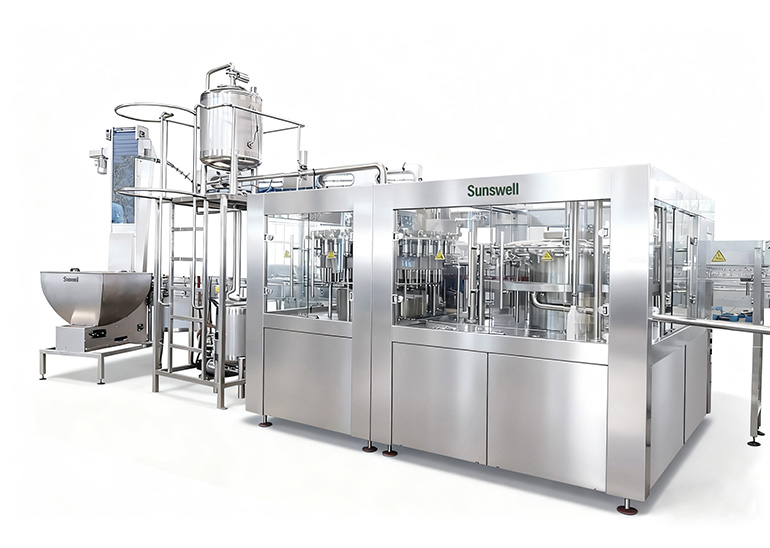
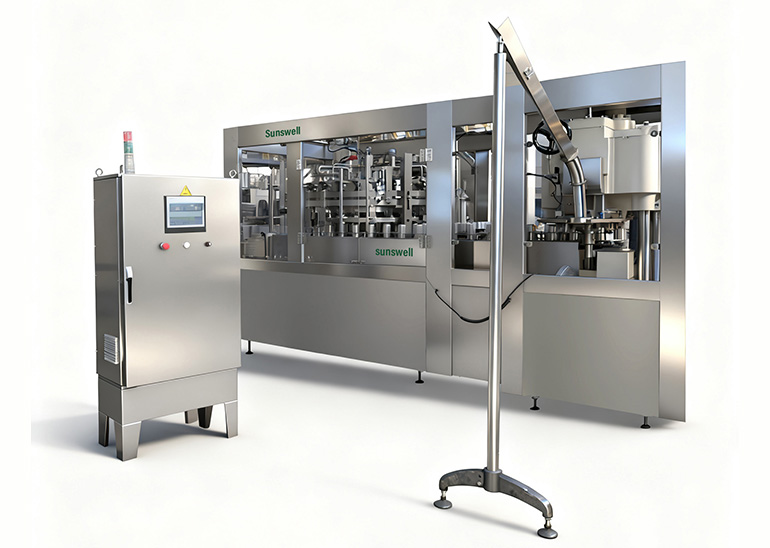
Project references
-
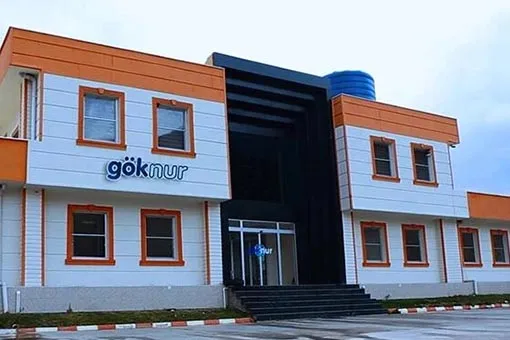
Goknur, 2 Sets of 18,000BPH Bottling Lines for Juice, Turkey
Country: Turkey
Product: Glass and PET Bottled Juice
Capacity: 20000BPH(330ml) Glass Bottle; 4000BPH(3L) PET Bottle
Solution:Juice Production Line
Read More + -

Vizit, 12,000BPH 1L Bottling Line with Combiblock for CSD, Kazakhstan
Country: Kazakhstan
Product: PET Bottled Carbonated Soft Drinks
Capacity: 12000BPH (1L)
Solution:Carbonated Drinks Production Line
Read More + -
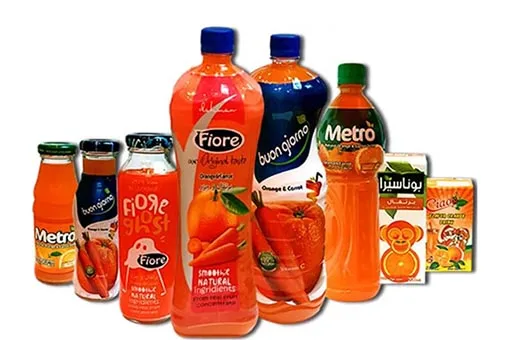
Dahman, 24,000CPH Canning Line for CSD, Syria
Country: Syria
Product: Aluminum Canned Carbonated Soft Drinks
Capacity: 24000CPH (250ml)
Solution:Carbonated Drinks Production Line
Read More + -
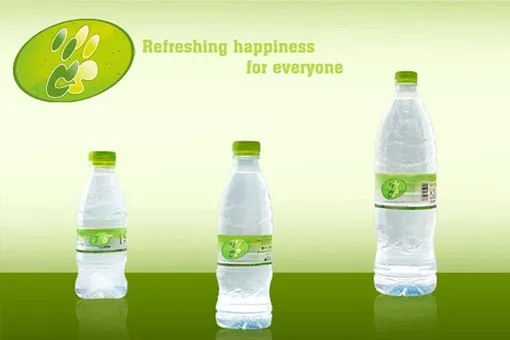
Taza, 4 Sets of 12,000BPH 1.5L Bottling Lines with Combiblock for Water, Maldives
Country: Maldives
Product: PET Bottled Mineralized Water
Capacity: 24,000BPH (500ml); 2 Lines
Solution:Water Production Line
Read More +
Have a specific project in mind?
Tell us product, target BPH, bottle sizes and market. We reply with a draft layout, equipment list and lead time estimate.
Fill the inquiry form ↑