


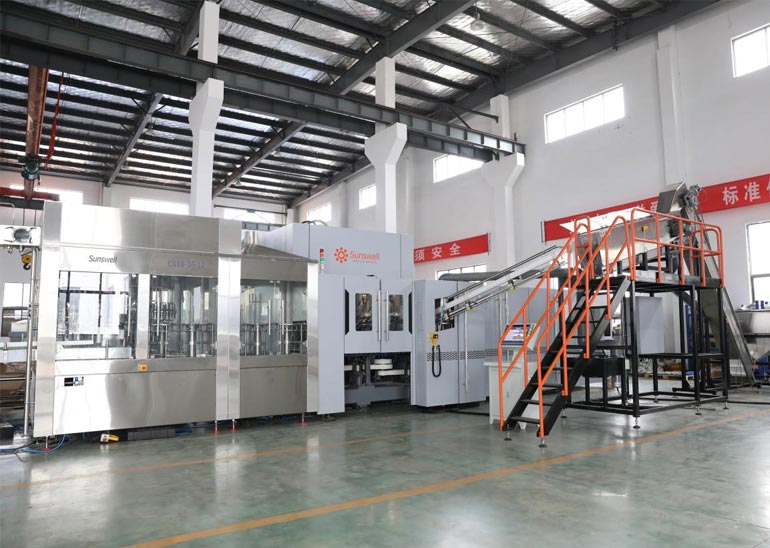
Application Guide · Combiblock Series
Combiblock for Still Water and Mineral Water (0.2–2 L)
Where the blow-fill-cap block makes its clearest case — and the arithmetic to check before buying one.
12,000–48,000
BPH, 0.2–2 L
1
Operator at the block
444+
Lines delivered
71+
Countries exported
ISO/CE
Certified · SGS audited
Short answer: A blow-fill-cap combiblock for still water blows the PET bottle, fills it and caps it on one frame, with neck-handling transfer and no air conveyor. Sunswell builds still water blocks at 12,000–48,000 BPH for 0.2–2 L, 3,000–12,000 BPH for 3–7 L and 2,000–6,000 BPH for 7–16 L. Mechanical, semi-electric and volumetric valves all suit water; load cell filling is rarely justified below 5 L.
🎯 Key takeaways
- 12,000–48,000 BPH for 0.2–2 L; larger formats run slower and are quoted separately
- Bottle weight is the main saving — neck-handled bottles skip the stiffness margin an air conveyor demands
- Mechanical or semi-electric valves are usually right for commodity water; load cell is hard to justify below 5 L
- One operator at the block, with downstream labelling and packing staffed separately
- Compressed air quality decides bottle quality — dry, oil-free air at the machine tie-in, not just at the compressor
- Not the right answer if you sell empty bottles, run below ~8,000 BPH, or already own a serviceable blow moulder
On this page
1. Why still water is the natural fit for a combiblock
Of all beverage products, small-format still water is where a blow-fill-cap block makes the clearest case. The reasoning is not about the machine being advanced; it is about what water production is economically sensitive to.
- Resin is the dominant cost. Water sells on thin margins and the bottle is a large share of the cost of goods. Anything that reduces grams per bottle goes straight to the bottom line.
- Volumes are high and formats are stable. A water plant typically runs a small number of sizes continuously, which suits a block optimised around a few moulds.
- The product is simple. No carbonation, no pulp, no heat. The filling task itself is undemanding, so the value is in bottle production and handling.
- Labour per bottle matters. At high output, operator count per shift is a visible line in the cost model.
Those four conditions align exactly with what a combiblock changes: lighter bottles, fewer machines, fewer operators, less floor area.
2. Bottle weight — where the real saving sits
On a conventional line an empty bottle is blown, then floated across the plant on an air conveyor. To survive that journey without deforming, the bottle needs a degree of stiffness it does not otherwise require. That stiffness is paid for in grams of PET on every bottle.
Inside a combiblock the bottle is gripped by the neck ring from the moment it leaves the mould until it is capped. It never rides on its base and never rubs a rail, so the structural allowance for conveyor handling can be reduced.
Do the arithmetic on your own volume. Take your current bottle weight, your annual bottle count and your resin price. A reduction of even a fraction of a gram per bottle becomes tonnes of resin per year at high volume. This is the calculation that usually decides whether a block is worth its price, and it is specific to your bottle design and your production plan — not a general claim.
The achievable weight is set together with the preform supplier and the mould designer. Bottle height, neck finish, top load requirement and your distribution conditions all constrain it. Any supplier who quotes a bottle weight before seeing your bottle drawing is guessing.
3. Capacity bands for still water
| Bottle size | Capacity range | Typical application |
|---|---|---|
| 0.2 – 2 L | 12,000 – 48,000 BPH | Retail single-serve and family packs |
| 3 – 7 L | 3,000 – 12,000 BPH | Home and office multi-serve |
| 7 – 16 L | 2,000 – 6,000 BPH | Bulk and water-cooler formats |
Output falls as bottle volume rises for two reasons: the mould cavity needs longer to cool a larger bottle, and each bottle takes longer to fill. A line rated at a small format will not hold that rate on a large one, so state the size mix you actually intend to run. Capacity is confirmed after preform and bottle drawings are reviewed. Selection method across the full range is in combiblock capacity selection.
4. Valve choice for water
Water is the one product family where the cheapest valve is frequently the right answer.
| Valve | Fit for still water | When to choose it |
|---|---|---|
| Mechanical | Good | Commodity water, lowest capex, limited local maintenance depth |
| Semi-electric | Good | Better repeatability than mechanical without full electronic dosing |
| Volumetric | Good | Where declared volume must be exact, or where several sizes run on recipe changes |
| Load cell | Rarely justified | Large 5–15 L containers where absolute quantity error becomes significant |
The decision framework, including how to calculate whether accuracy pays for itself, is in load cell vs volumetric vs mechanical filling valve.
5. What surrounds the block
A block is not a line. For a water plant the complete scope normally includes:
- Water treatment — specified from an analysis of your source water; a separate scope in nearly every contract
- Preform and cap handling — unscrambler, hopper, elevator and chute
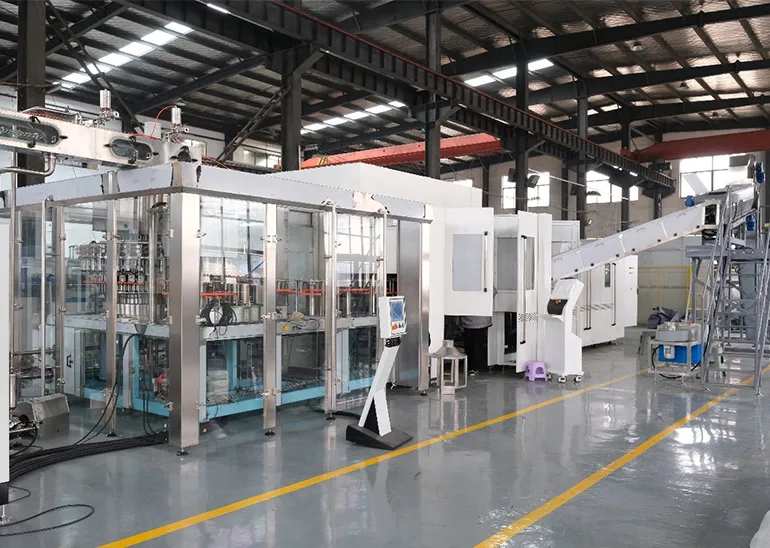
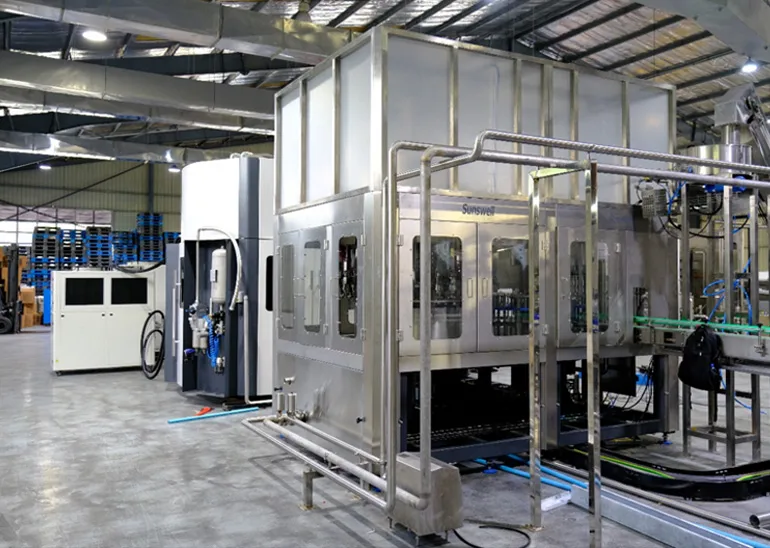
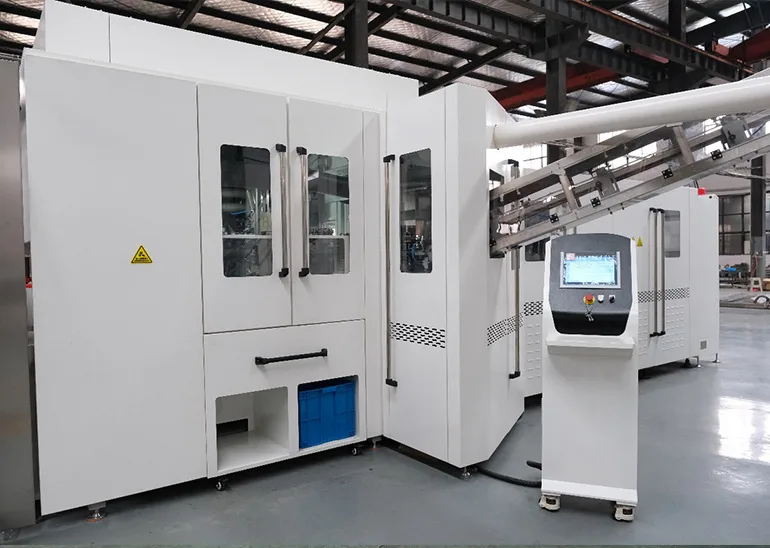
- The combiblock — blow, fill, cap
- Labelling — OPP hot-melt, sleeve or self-adhesive depending on your pack design
- Coding — date and batch printing
- Shrink packing — film wrapping into retail packs
- Palletising — manual, semi-automatic or robotic
- Utilities — compressed air generation with drying and filtration, plus power distribution
Compressed air quality is the single most common cause of disappointing bottle quality. Blowing air must be dry and oil-free at the machine tie-in point, not merely at the compressor. Buyers who invest in the block and economise on air treatment get bottle wall defects they then blame on the machine.
6. Floor space and manpower
Two practical effects follow from deleting the air conveyor, and both show up in the plant layout rather than in the machine specification.
6.1 Floor area
A separate blower and filler need the two machines plus the conveyor run between them, and that run is not short — air conveyors need length to buffer and to route around obstacles. A block occupies one footprint. For plants in leased industrial space, or retrofitting into an existing building, this is often the deciding factor rather than a secondary benefit.
6.2 Operators
Separate machines are separately tended. One block with one control system needs one operator. Over three shifts and a full year that difference is a real payroll line, and it grows in markets where wages are rising. The comparison with figures is in combiblock vs separate blowing and filling line.
7. Preforms and caps decide more than the machine does
Two plants with identical blocks can run at noticeably different efficiencies, and the difference is usually not the machine. It is the consistency of what feeds it.
7.1 Preforms
Preform weight consistency, neck finish quality and material clarity all affect the blowing process. Variation between batches shows up as wall thickness scatter and, at the extreme, as blow-outs. A plant that buys preforms on price alone and changes supplier frequently will spend its life re-tuning the heating profile. Qualify two suppliers, keep both, and test a new batch before committing a production run to it.
7.2 Caps
Closures are the most common source of post-commissioning trouble on water lines. Liner material, thread tolerance and tamper band consistency all influence capping torque and seal integrity. If you change cap supplier after commissioning, expect to re-tune the capping heads — and plan the change during a maintenance window rather than mid-season.
7.3 Bring both to the factory test
Send your real preforms and real caps in production quantity for the Factory Acceptance Test. Testing on generic materials and then discovering your own behave differently defeats the purpose of testing at all. The protocol and what to send is set out in quality control and the FAT process.
This is why site output sometimes lags the factory figure. A machine that passed a witnessed test weeks earlier has not deteriorated in a container. Check compressed air dryness, voltage stability, the preform batch and the cap supplier before concluding anything about the block.
8. When a combiblock is the wrong answer
Three situations where separate machines remain the better purchase, stated plainly because buying the wrong configuration is expensive in both directions:
- You also sell empty bottles. A block fills what it blows. If bottles are a product line in their own right, you need a blow moulder that can deliver them.
- Very low output. Below roughly 8,000 BPH the economics thin out. The saved operators and floor area are smaller in absolute terms, while the block still carries its integrated cost.
- You already own a serviceable blow moulder. Replacing working equipment to gain integration benefits rarely returns the capital.
There is also a resilience argument worth acknowledging: integrated machines fail as a unit. With separate machines a filler fault leaves the blower producing bottles into a buffer. With a block, a stop is a stop. Plants that run continuously should weigh that against the operating savings rather than treating integration as free.
Frequently asked questions
What capacity range is available for still water combiblocks?
12,000–48,000 BPH for 0.2–2 L bottles. Larger formats run slower: 3–7 L at 3,000–12,000 BPH and 7–16 L at 2,000–6,000 BPH. Final capacity is confirmed once preform and bottle drawings are reviewed.
Which filling valve is best for still water?
Mechanical for lowest capital cost, semi-electric as a middle option, volumetric where declared volume must be exact. Load cell filling is generally unnecessary for small-format water and hard to justify on commodity margins.
Do I still need an air conveyor?
No. The bottle goes from mould to filling valve inside the block on neck-handling starwheels. Removing the air conveyor removes a machine, its compressed air demand, its floor area and its maintenance.
How light can the bottle be?
Lighter than on a line with an air conveyor, because the bottle no longer has to be stiff enough to be blown along a rail. The achievable weight depends on bottle design, height and the top load your packaging and distribution require — it is decided with the preform and mould design, not chosen from a table.
Can the same block run several bottle sizes?
Yes, with a mould change and format parts for each size. Declare every size at quotation stage, because format parts and moulds are priced and manufactured per size.
What water treatment do I need upstream?
Treatment is a separate scope and depends entirely on your source water. Filtration, softening, reverse osmosis and disinfection are specified from a water analysis. Treated water quality directly affects rinser nozzles, valve seats and product taste.
How many operators does the block need?
One for the block itself. Additional people are needed downstream for labelling, packing, palletising and material handling — the saving is at the block, not across the whole plant.
About the author
Written by the Sunswell engineering team — led by Howie SUN, Founder & CEO, with 14 years in filling and blow-moulding equipment R&D and turnkey project delivery across 71+ countries.
Last reviewed: 2026-08-06 · Reviewed by Sunswell engineering team
Ask our engineering team →Recommend Products
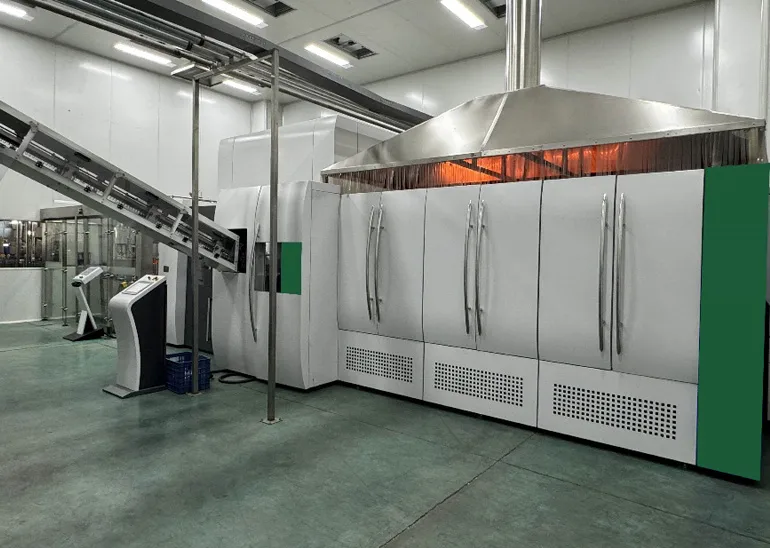
Project references
-
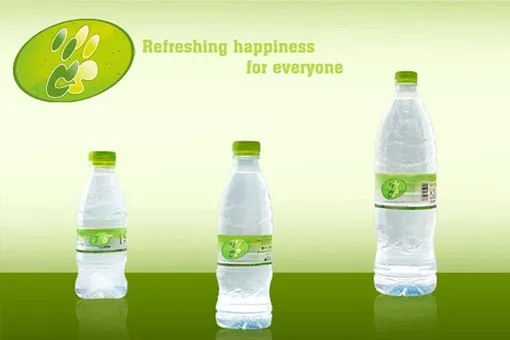
Taza, 4 Sets of 12,000BPH 1.5L Bottling Lines with Combiblock for Water, Maldives
Country: Maldives
Product: PET Bottled Mineralized Water
Capacity: 24,000BPH (500ml); 2 Lines
Solution:Water Production Line
Read More + -
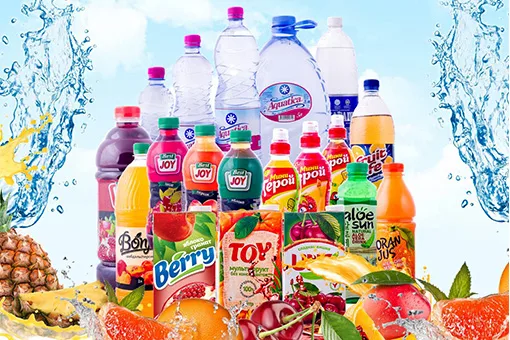
Rauan, 8 Sets of Bottlingand Canning Lines from 12,000-24,000BPH for Water, CSD and Juice, Kazakhstan
Country:Kazakhstan
Product: PET Bottled Sparkling Water, Canned Soft Drink, Canned Tea
Capacity: 25000CPH (250ml)
Solution:Three Lines,7000BPH(1.5L), 15000CPH(330ml),15000CPH(450ml)
Read More +
Have a specific project in mind?
Tell us product, target BPH, bottle sizes and market. We reply with a draft layout, equipment list and lead time estimate.
Fill the inquiry form ↑