


Comparison · Combiblock Series
Load Cell vs Volumetric vs Mechanical Filling Valve — Which Combiblock Filler Fits Your Product
The specification decision with the longest shadow — and why the right answer is often the cheaper valve.
4
Valve principles offered
2,000–48,000
BPH range
444+
Lines delivered
71+
Countries exported
ISO/CE
Certified · SGS audited
Short answer: Mechanical valves fill to a level set by valve geometry — cheapest, best for plain water. Volumetric valves dose a measured volume through a flow meter — right for water, juice and tea declared by volume. Load cell valves weigh each bottle as it fills — the only principle immune to bottle and density variation, and the correct choice for edible oil and large containers. Carbonated products require isobaric filling regardless of the accuracy principle chosen.
🎯 Key takeaways
- The valve outlives every other choice — converting a carousel to another principle is close to buying a new filler
- Mechanical: lowest cost, level-based, right for plain still water and limited maintenance skills
- Volumetric: flow-meter dosing, unaffected by bottle variation, fastest size changeover via recipe
- Load cell: weighs each bottle, immune to bottle and density variation, correct for edible oil and 5–15 L containers
- Carbonated means isobaric — available in mechanical and semi-electric forms
- Calculate giveaway before buying accuracy: overfill % × annual volume × product value decides whether the premium pays
On this page
1. Why the valve decision outlives every other choice
Output can be increased later by adding shifts. Labelling can be upgraded. The filling valve is different: it defines what the machine is able to fill accurately, and converting a carousel from one principle to another is close to buying a new filler. This is the specification decision with the longest shadow.
The choice is usually presented as a price ladder — mechanical cheapest, load cell most expensive. That framing is misleading. Each principle is the correct answer for a specific combination of product, declaration method and market, and buying up the ladder beyond what your product needs is as wasteful as buying below it.
2. Mechanical valve
The mechanical valve fills to a level determined by the valve's physical geometry. A vent tube sets the fill height; when liquid reaches it, flow stops. There is no flow meter, no load cell and very little electronics in the filling path.
2.1 Where it works
- Plain still water and mineral water
- Price-sensitive projects where capex dominates the decision
- Plants with limited local maintenance expertise — fewer components to diagnose
- Returnable or variable-quality bottles where level appearance matters more than exact volume
2.2 What you give up
Fill accuracy is tied to bottle geometry. If the bottles themselves vary in internal volume — and PET bottles from different preform batches do — a level-based fill delivers varying actual volume. For water sold by nominal volume with a generous tolerance this is acceptable. For a product where the declared quantity is legally tight, it is not.
Mechanical is not a lesser machine. It is a machine matched to a product with loose accuracy requirements. A water plant in a competitive commodity market that buys load cell filling has spent money it will never recover in product value. Match the valve to the product, not to a notion of quality.
3. Volumetric valve
A flow meter measures liquid passing into each bottle and closes the valve at the target volume. Accuracy is independent of bottle geometry, because the machine counts what flows rather than watching where the level sits.
3.1 Where it works
- Water, juice and tea sold by declared volume
- Products where bottle-to-bottle volume variation is unacceptable
- Mixed-size lines — recipe change rather than mechanical adjustment between sizes
- Hot-fill applications, where thermal expansion makes level-based filling unreliable
3.2 What to watch
Flow meters need a clean product path and periodic calibration. Pulp and particles are a problem unless the valve and meter are specified for them. And because the meter measures volume, a product whose density shifts with temperature will vary in delivered weight even while volume stays constant — which matters if you declare weight.
Volumetric filling also makes size changeovers faster. Changing target volume is a recipe entry rather than a mechanical adjustment on every valve, and on a 40-valve carousel that difference is measured in hours per changeover.
4. Load cell (weight) valve
Each filling station sits on a load cell. The bottle is weighed empty, weighed continuously as it fills, and the valve closes at target net weight. This is the only principle that measures the actual delivered quantity rather than inferring it.
4.1 Where it works
- Edible oil and other products sold and declared by weight
- High-value products where overfill giveaway is a material cost
- Products with density variation between batches or with temperature
- Large containers — 5 L, 10 L, 15 L — where a small percentage error is a large absolute quantity
4.2 What it costs
Load cells and their electronics make this the most expensive valve per station, and the carousel needs mechanical isolation from vibration to weigh reliably at speed. Against that, it is the only principle that automatically compensates for empty-bottle weight variation, which on a 15 L container is not a rounding error.
5. Semi-electric and isobaric variants
Two further options sit alongside the main three.
5.1 Semi-electric
A middle position: electronic control of valve opening and closing with simpler measurement than a full volumetric or weight system. It offers better repeatability than a purely mechanical valve at a lower cost than full electronic dosing, and it is a common choice for water and carbonated lines where the accuracy requirement is moderate.
5.2 Isobaric counter-pressure
Mandatory for carbonated products, and orthogonal to the accuracy question — isobaric filling is available in mechanical and semi-electric forms. CO₂ pre-pressurises the bottle to tank pressure so the liquid enters without pressure drop, preventing foaming and CO₂ loss; displaced gas returns to the tank rather than venting. Details in combiblock for CSD and sparkling water.
6. Direct comparison
| Mechanical | Semi-electric | Volumetric | Load cell | |
|---|---|---|---|---|
| Measures | Fill level by geometry | Controlled level | Volume by flow meter | Net weight by scale |
| Relative accuracy | Lowest | Moderate | High | Highest |
| Relative capex | Lowest | Low–moderate | Moderate–high | Highest |
| Affected by bottle variation | Yes | Yes | No | No |
| Affected by density change | Yes | Yes | Yes | No |
| Handles pulp | Limited | Limited | With large flow path | Yes |
| Size changeover | Mechanical adjustment | Mechanical + recipe | Recipe | Recipe |
| Maintenance skill needed | Lowest | Low | Moderate | Highest |
| Typical products | Plain water | Water, CSD | Water, juice, tea | Edible oil, large containers, high-value liquids |
7. Maintenance, calibration and local skills
A valve principle that your maintenance team cannot support is the wrong choice regardless of its accuracy. This consideration rarely appears in quotations and frequently decides how a line performs in year three.
| Mechanical | Volumetric | Load cell | |
|---|---|---|---|
| Routine service | Seal and gasket replacement | Seals plus meter cleaning | Seals plus cell inspection |
| Calibration needed | Mechanical setting only | Periodic meter calibration | Periodic scale calibration with test weights |
| Diagnostic skill | Mechanical fitter | Fitter plus basic instrumentation | Fitter plus instrumentation and electronics |
| Spare parts held | Gasket and seal kits | Kits plus a spare meter | Kits plus a spare load cell and amplifier |
| Typical failure mode | Worn seat, drifting level | Meter fouling or drift | Cell damage from shock or overload |
7.1 Calibration discipline
Volumetric and load cell systems both drift. Neither drifts dramatically, which is the problem — a slow shift in delivered quantity is invisible until someone checks. Set a calibration interval at commissioning, record every check, and treat the log as production data rather than paperwork. A plant that calibrates monthly and records it can prove its declared quantity; a plant that does not is guessing about its own giveaway.
7.2 Protecting load cells
Load cells are precision devices in an industrial environment. The common damage causes are shock loading during cleaning, overload from a jammed bottle, and water ingress at the cable gland. All three are avoidable with training, which is why load cell lines need a slightly deeper training programme than mechanical ones — and why that training should be part of commissioning rather than an afterthought.
Match the valve to the team as well as the product. A plant with a strong instrumentation technician can run volumetric or load cell filling well. A plant whose maintenance depth is one mechanical fitter will keep a mechanical line running and will struggle to keep a load cell line accurate. Be honest about this at specification stage, and if the accuracy is genuinely required, budget for the skills alongside the machine.
8. Choosing without over-buying
Four questions settle it in nearly every project:
- Is the product carbonated? If yes, the filler is isobaric. Accuracy principle is then chosen within that family.
- Is the product declared by weight or by volume? Weight declaration points to load cell. Volume declaration points to volumetric.
- Does density vary? Temperature-sensitive or batch-variable density favours weight dosing, because volume dosing will deliver inconsistent weight.
- What is the cost of giveaway? Multiply your realistic overfill percentage by annual volume and product value. If that number is large, accuracy pays for itself; if it is small, it does not.
The honest recommendation is often the cheaper valve. A commodity water plant does not need load cell filling, and a supplier who insists otherwise is selling margin rather than solving a problem. Equally, an edible oil plant that buys volumetric to save capex will pay for that decision on every bottle for a decade. The valve should follow the product.
Valve options by product family and capacity band are summarised in combiblock capacity selection, and the block-level trade-off against separate machines is in combiblock vs separate line.
Frequently asked questions
Which filling valve is the most accurate?
Load cell. Each filling station weighs the bottle continuously and closes the valve when target weight is reached, so it compensates for bottle weight variation, foaming and density changes in a way no volume-based method can.
What is the cheapest filling valve?
Mechanical. It fills to a level set by the valve geometry, has no flow meter, no load cell and minimal electronics. For plain still water in a price-sensitive market it remains a rational choice, and it is the easiest valve to maintain with local skills.
What is the difference between volumetric and load cell filling?
Volumetric doses a measured volume through a flow meter. Load cell doses a measured weight on a scale. If your product is sold by weight, or its density varies with temperature or batch, weight dosing removes an error that volume dosing cannot.
Which valve does carbonated drink need?
An isobaric counter-pressure valve. CO₂ pre-pressurises the bottle to tank pressure, the liquid valve opens, and displaced CO₂ returns to the tank. Isobaric filling is available in mechanical and semi-electric versions at different price and control levels.
Can I change valve type later?
Converting an installed carousel to a different filling principle is a major rebuild and is rarely economic. Choose the principle for the products you intend to run over the machine's life, including the ones you plan to add in year three.
Which valve handles juice with pulp?
A piston valve or a volumetric valve with a large clear flow path. Narrow valve passages shear or block on particles. State your maximum particle size at quotation stage — it changes the valve selection outright.
Do more accurate valves pay for themselves?
It depends on product value and giveaway. Overfilling by a small percentage on a high-value product across millions of bottles a year is a real cost; on cheap water it may not justify the valve premium. Calculate it with your own volume and product cost.
About the author
Written by the Sunswell engineering team — led by Howie SUN, Founder & CEO, with 14 years in filling and blow-moulding equipment R&D and turnkey project delivery across 71+ countries.
Last reviewed: 2026-08-06 · Reviewed by Sunswell engineering team
Ask our engineering team →Recommend Products
Project references
-
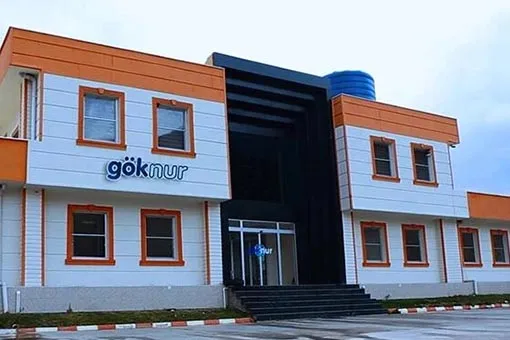
Goknur, 2 Sets of 18,000BPH Bottling Lines for Juice, Turkey
Country: Turkey
Product: Glass and PET Bottled Juice
Capacity: 20000BPH(330ml) Glass Bottle; 4000BPH(3L) PET Bottle
Solution:Juice Production Line
Read More + -

Vizit, 12,000BPH 1L Bottling Line with Combiblock for CSD, Kazakhstan
Country: Kazakhstan
Product: PET Bottled Carbonated Soft Drinks
Capacity: 12000BPH (1L)
Solution:Carbonated Drinks Production Line
Read More + -
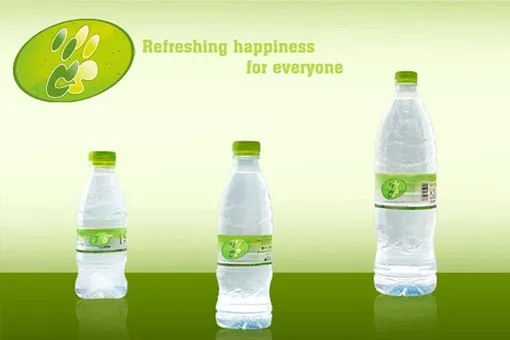
Taza, 4 Sets of 12,000BPH 1.5L Bottling Lines with Combiblock for Water, Maldives
Country: Maldives
Product: PET Bottled Mineralized Water
Capacity: 24,000BPH (500ml); 2 Lines
Solution:Water Production Line
Read More +
Have a specific project in mind?
Tell us product, target BPH, bottle sizes and market. We reply with a draft layout, equipment list and lead time estimate.
Fill the inquiry form ↑