


Buyer's Guide · Procurement
How to Buy a Beverage Filling Line from China — A Step-by-Step Buyer's Guide
Specification, shortlist, quotation, contract, test, ship, commission — and the seven mistakes that cost the most.
6–8 mo
Signature to production
90–120 d
Typical manufacturing
71+
Countries exported
444+
Lines delivered
ISO/CE
Certified · SGS audited
Short answer: Buying a filling line from China works in seven steps: write a specification (product, bottle sizes, output, hours, packaging, market), shortlist 3–5 builders rather than traders, send one identical RFQ, normalise the quotations onto the same scope, contract with staged payments and numeric acceptance criteria, attend or commission a FAT before shipment, then commission on site. Budget 6–8 months from signature to steady production.
🎯 Key takeaways
- Write the specification before contacting suppliers — product, bottle sizes, output at a named size, hours, packaging, destination market
- Shortlist 3–5 builders, not traders: ask what is machined in house, for the component brand list, and for contactable references in your region
- One identical RFQ to everyone, then normalise quotes onto the same scope — the cheapest before normalising rarely stays cheapest
- Staged payments 30 / 30–40 / 20–30 with retention; never pay 100% before shipment
- Acceptance criteria in numbers, with bottle size, product and test duration attached
- Budget 6–8 months and run civil works in parallel with manufacturing, not after it
On this page
1. Define the line before you contact anyone
Most bad equipment purchases are decided before the first supplier is contacted. A buyer who asks for "a 12,000 BPH water line" will receive five quotes describing five different machines, and comparing them will be impossible. Write the specification first.
Six inputs define a filling line. Everything else is commentary:
| Input | What to state | Why it changes the machine |
|---|---|---|
| Product | Still water, CSD, juice with or without pulp, tea, edible oil | Decides filling principle: gravity, isobaric, hot-fill, weight-dosed |
| Bottle sizes | Every size you will run, with drawings if available | Decides format parts, star wheels, mould count and change-over time |
| Output | BPH at a named bottle size and product | Decides valve count, blower cavities and conveyor speeds |
| Operating hours | Shifts per day, days per week, seasonal peaks | Decides whether nominal output is enough for your annual volume |
| Packaging format | Shrink film, carton, tray, pallet pattern | Decides end-of-line equipment, often a third of line cost |
| Destination market | Country and applicable standards | Decides CE / EAC / SASO certification and electrical build |
Do the annual volume arithmetic before choosing output. A line rated 12,000 BPH running 16 hours a day at 85% efficiency produces roughly 163,000 bottles per day, not 192,000. Size the machine on realistic efficiency and on your peak month, not on the nameplate figure and your average month.
2. Building a shortlist that is worth comparing
China has hundreds of companies selling filling equipment and far fewer building it. The distinction matters when a star wheel wears out in year four and you need a part made from the original drawing. Three checks separate builders from traders:
- Ask what is machined in house. A builder answers with specifics — frames, carousels, valves, format parts — and can show the machining shop. A trader answers in generalities.
- Ask for the component brand list. A builder names the PLC, servo, pneumatics and bearing brands and puts them in the technical annex. Vague answers here become surprises at delivery.
- Ask for reference plants in your region. Not a logo wall — contactable customers running comparable products. Then telephone two of them and ask what went wrong and how it was handled.
Three to five suppliers is the right shortlist size. Below three you have no price reference; above five you will not do the diligence properly on any of them.
3. Sending one specification to everyone
Send an identical written specification to every shortlisted supplier and require quotations in the same structure. This is the single highest-return hour in the whole project.
3.1 What the RFQ must contain
- Product, bottle sizes with drawings, target output at a named size, operating hours
- Scope boundaries: where the line starts (preform tipping? bottle infeed?) and where it ends (palletiser? carton sealer?)
- Utilities available at site: voltage, frequency, phases, compressed air capacity, water quality and temperature
- Required certification and documentation language
- Required delivery date and the acceptance criteria you will use
3.2 What the quotation must contain
- Machine-by-machine equipment list with model, brand and quantity
- Component brand schedule for PLC, HMI, servo, pneumatics and bearings
- Output guarantee stated with bottle size and product
- Utility consumption figures: kW, m³/h compressed air, water
- Layout drawing with overall dimensions and required floor area
- Lead time, payment terms, warranty terms, scope of commissioning
- Recommended two-year spare parts list with prices
Compare utility consumption, not just price. Compressed air is the largest running cost in PET bottle production. A line that consumes noticeably more air per bottle will erase a purchase-price saving within the first years of operation. Ask for the figure in writing and convert it into your local electricity tariff.
4. Reading the quotations
Quotations rarely differ because one machine is better. They differ because the scopes are not the same. Normalise before comparing:
| Frequently omitted item | Typical impact |
|---|---|
| Conveyors between machines | Quoted as an option by some suppliers, included by others |
| Air compressor and dryer | Often excluded — and often the largest single omission |
| Water treatment | Almost always separate; specify it or you will run product through untreated water |
| CIP system | Included for juice and tea lines, excluded for plain water |
| Format parts for additional bottle sizes | Priced per size; a line quoted for one size is not a line for four |
| Blow moulds | Priced per cavity set, per bottle design |
| Electrical cable from your panel to the line | Buyer scope in nearly all contracts |
| Installation supervision days | Number of engineers and days varies widely between quotes |
| Spare parts package | A two-year package is a real cost; leaving it out flatters a quotation |
Rebuild every quotation onto the same scope, then compare. The cheapest quotation before normalising is very often not the cheapest after.
5. The contract clauses that actually protect you
A machinery contract is enforced mostly by its payment schedule and its acceptance criteria. Both should be numeric.
5.1 Payment structure
| Milestone | Typical share | What it buys you |
|---|---|---|
| On order | 30% | Design work and long-lead procurement start |
| Before shipment / against FAT | 30–40% | Leverage to require a passed FAT |
| After commissioning / SAT | 20–30% | Leverage to require a working line |
| Retention | 5–10% | Held to the end of warranty or against a bank guarantee |
5.2 Acceptance criteria in numbers
Write output, fill accuracy and reject rate as figures with the bottle size, product and test duration attached. "Machine shall perform satisfactorily" is unenforceable. "20,000 BPH on 0.5 L still water, measured over a continuous 4-hour run, with fill deviation within the stated tolerance and reject rate below the agreed threshold" is enforceable.
5.3 The annexes that matter
- Technical specification with component brand schedule
- Layout drawing signed by both parties
- Buyer readiness checklist — makes plant preparation contractual
- FAT protocol with pass criteria
- Spare parts price list valid for 24 months
- Documentation and training scope, with language specified
6. Shipping, customs and the arrival gap
A turnkey line typically fills several 40-foot containers. The mechanics are routine; the risks are administrative.
- Incoterms. FOB, CIF and DAP shift very different amounts of work onto you. If you have no freight forwarder relationship, CIF or DAP is worth the premium on a first order.
- Documents. Commercial invoice, packing list, bill of lading, certificate of origin, and the conformity certificates your customs authority requires. One missing certificate can hold a container for weeks.
- HS codes. Agree the classification with your customs broker before shipment. Filling machinery, blow moulding machinery and conveyors can attract different duty rates.
- Unloading. Confirm crane or forklift capacity against the heaviest crate. Discovering the filler weighs more than your forklift can lift is a bad day.
- Storage. If the building will not be ready when the container lands, arrange dry indoor storage. Electrical cabinets should not sit in a yard.
7. The cost that continues after the invoice
Purchase price is a single payment. Running cost repeats every shift for a decade, and on a PET line it usually overtakes the price difference between two competing quotations within the first few years. Four items dominate:
7.1 Compressed air
Blowing air is normally the largest utility cost in PET bottle production. Two variables control it: whether the machine has an air-recovery circuit that reclaims part of the high-pressure blowing air, and how heavy the bottle is. Ask each supplier for m³/h at rated output and convert it into your own electricity tariff before comparing purchase prices.
7.2 PET resin
Resin is the largest consumable cost by a wide margin. Bottle weight is set by the bottle design and by how the bottle is handled between blowing and filling — a bottle that must survive an air conveyor carries a weight safety margin that a neck-handled bottle does not. Over an annual production run, a fraction of a gram per bottle becomes tonnes of resin.
7.3 Labour
Count operators per shift, not headcount on paper. A line that needs one operator instead of three saves two salaries per shift, multiplied by the number of shifts, every year the line runs. In markets with rising wages this figure grows over the machine's life.
7.4 Downtime and spares
Unplanned stops cost production, not just repairs. The controllable part is spare parts availability: a stocked wear-part kit turns a three-week stoppage into a two-hour one. This is why the spare parts list belongs in the original order, priced and agreed, rather than negotiated during a breakdown.
| Cost item | When it lands | What controls it |
|---|---|---|
| Machine purchase | Once, at order | Scope, output, valve type, automation level |
| Installation & commissioning | Once, at start-up | Site readiness and engineer-days |
| Compressed air | Every shift | Air recovery, bottle weight, leak management |
| PET resin | Every bottle | Bottle design, wall thickness, handling method |
| Labour | Every shift | Operators required per shift |
| Maintenance & spares | Ongoing | Wear part stock, service interval discipline |
| Downtime | Unpredictable | Utility stability, material consistency, parts on shelf |
Ask for the running-cost figures in writing at quotation stage. Air consumption in m³/h, installed power in kW, operators per shift. Suppliers who have measured these numbers will give them; suppliers who have not will change the subject. That response is itself useful information.
8. Seven mistakes that cost real money
- Quoting output without bottle size and product. The single most common error, and it makes every quotation incomparable.
- Buying nameplate capacity for average demand. Size for the peak month at realistic efficiency, or you will be buying a second line early.
- Ignoring utilities. Wet compressed air and unstable voltage will hold a perfectly good line below rated output indefinitely.
- Skipping the FAT. Saves a week, risks months.
- Paying too much too early. Once the balance is paid, urgency transfers to you.
- Leaving out spare parts. A 200 USD sensor with a six-week lead time stops a line just as effectively as a broken filler.
- Starting the building work after the machine ships. Civil work runs in parallel with manufacturing, not after it.
The pattern behind all seven. They are all failures to write something down in numbers at a point when writing it down was free. Specification, acceptance criteria, utility figures, readiness checklist — the paperwork is not bureaucracy, it is the mechanism that makes a supplier's promises testable.
Frequently asked questions
How much does a beverage filling line from China cost?
Price is driven by output, product and scope, not by a catalogue. A small water line at 4,000–6,000 BPH with basic labelling sits far below a 24,000 BPH CSD line with blowing, isobaric filling, sleeve labelling and end-of-line packing. Get three quotes against one written specification — comparing quotes written to different scopes tells you nothing.
What are the standard payment terms?
The common structure is 30% deposit on order, 30–40% before shipment or against FAT sign-off, and the balance after commissioning or against a bank guarantee. Letters of credit are normal for larger projects. Paying 100% before shipment removes your only leverage and should be refused.
How long from order to production?
Manufacturing 90–120 days for a turnkey line, sea freight 20–45 days depending on destination, customs 5–20 days, installation and commissioning 15–30 days. Budget 6–8 months from signature to steady production, and start the building work in parallel rather than after.
Do I need to visit China before ordering?
Not strictly, but visiting the shortlisted factories before signing changes what you learn. A two-hour walk through an assembly floor tells you whether machines are built there or traded. If you cannot travel, commission a third-party factory audit — it costs a fraction of a wrong order.
What certification do I need for my market?
It depends on destination: CE for the EU and many markets that follow it, EAC/EAEU for Russia, Kazakhstan and the Customs Union, SASO for Saudi Arabia, and local electrical standards elsewhere. Fix this in the contract before manufacturing starts, because retrofitting a compliance requirement to a finished machine is expensive.
Should I buy a turnkey line or machine by machine?
Turnkey from one supplier gives you one contract, one commissioning team and one party responsible when the line does not run. Buying machine by machine can be cheaper on paper and frequently costs more in integration, because interface problems belong to nobody.
What is the single most common buyer mistake?
Specifying output without specifying bottle size, product and operating hours. "12,000 BPH" is meaningless alone — 12,000 BPH of 0.5 L still water and 12,000 BPH of 1.5 L carbonated drink are different machines at different prices.
How do I protect myself against a bad supplier?
Written specification annexed to the contract, staged payments tied to milestones, FAT before shipment with your own or third-party attendance, retention against commissioning, and reference customers in your region that you actually telephone.
About the author
Written by the Sunswell engineering team — led by Howie SUN, Founder & CEO, with 14 years in filling and blow-moulding equipment R&D and turnkey project delivery across 71+ countries.
Last reviewed: 2026-08-26 · Reviewed by Sunswell engineering team
Ask our engineering team →Recommend Products
Project references
-
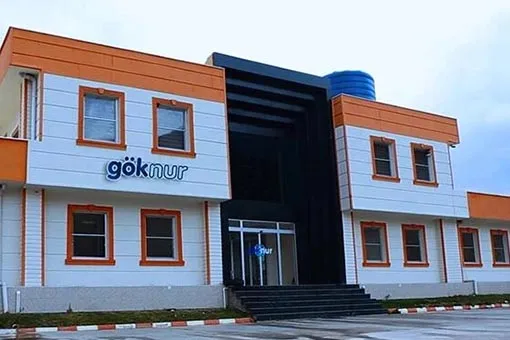
Goknur, 2 Sets of 18,000BPH Bottling Lines for Juice, Turkey
Country: Turkey
Product: Glass and PET Bottled Juice
Capacity: 20000BPH(330ml) Glass Bottle; 4000BPH(3L) PET Bottle
Solution:Juice Production Line
Read More + -

Vizit, 12,000BPH 1L Bottling Line with Combiblock for CSD, Kazakhstan
Country: Kazakhstan
Product: PET Bottled Carbonated Soft Drinks
Capacity: 12000BPH (1L)
Solution:Carbonated Drinks Production Line
Read More + -
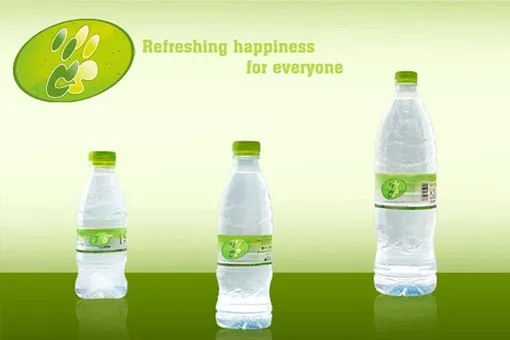
Taza, 4 Sets of 12,000BPH 1.5L Bottling Lines with Combiblock for Water, Maldives
Country: Maldives
Product: PET Bottled Mineralized Water
Capacity: 24,000BPH (500ml); 2 Lines
Solution:Water Production Line
Read More +
Have a specific project in mind?
Tell us product, target BPH, bottle sizes and market. We reply with a draft layout, equipment list and lead time estimate.
Fill the inquiry form ↑