| Trade bloc | Argentina: MERCOSUR State Party · Chile: Associate State |
| Food authority | Argentina: ANMAT via COMEX INAL · Chile: sanitary authorisation first |
| Label review | Spanish wording plus the beverage’s legal category in both |
| Import scope | Machinery, ingredients and finished food are three separate procedures |
| Site driver | Verified demand, packaging supply and delivered cost — not bloc membership |
| Sizing basis | Monthly bottles ÷ production days ÷ hours ÷ production factor |
The official MERCOSUR country list distinguishes Argentina’s membership from Chile’s associate status. That distinction is a starting question, not a conclusion. A business plan that treats “Argentina and Chile” as one customs location will mis-state the tariff position of every export flow it models.
Check the applicable agreement, the product classification, the origin rules and the destination requirement separately for each flow you intend to run. Manufacturing locally and importing finished beverages are also different projects: the importer of a packaged drink needs a compliant product and an import route, while the operator importing machinery needs a correctly classified shipment, an installation plan and a locally approved food-manufacturing operation. One set of documents does not satisfy the other.
The opportunity that matters is a serviceable segment: an underserved delivery route, a confirmed private-label contract, a regional retail listing, or a product with repeat demand. Record the competing pack size, price per litre, promotion pattern and payment terms. Keep retailer sell-through separate from the opening shipment a distributor asks for — they are not the same number.
Test local-currency sales against the currencies that govern packaging, ingredients, equipment financing and replacement parts. Use quoted purchasing terms and a dated exchange-rate assumption. Model inventory and receivables as cash requirements, because an accounting margin does not guarantee enough cash to replenish imported components.
Industry-wide growth claims need a defined category and a date. For this guide no consistent country-pair dataset was verified that separates the still-water and CSD segments a new entrant would actually serve, so build the case from documented channel volumes and treat broader forecasts as context. A beer-market forecast should not be applied to a bottled-water line.
Argentina. Identify the establishment and product registration route with the competent authority, then obtain the current labelling requirements for the actual beverage. The ANMAT COMEX INAL portal is the starting point for food import and export procedures. Imported-food rules have changed, so an older supplier presentation is not a project checklist.
Chile. Establish the sanitary authorisation route before committing to a building layout. ChileAtiende’s food-facility guidance covers premises that produce, process, pack, store or distribute food, and requires the premises to be equipped and compliant at the time of application. Frame the local discussion on that basis, then confirm the current submission requirements.
| Decision | Argentina project | Chile project |
|---|---|---|
| Market access | MERCOSUR membership relevant, transaction-specific checks still required | Associate status requires separate agreement and origin analysis |
| Food approval | Confirm establishment and product authorities | Confirm sanitary authorisation and product rules |
| Label review | Spanish wording plus legal category | Spanish wording plus category nutrition or warning rules |
| Import planning | Separate machinery, ingredient and finished-food procedures | Separate machinery, ingredient and finished-food procedures |
The practical output is a document matrix: each approval with an owner, required evidence and dependency. Do not insert a universal registration lead time into the construction schedule — site condition, formulation, laboratory evidence and the application itself all move the critical path.
Still water usually presents a shorter product-process chain than CSD, but a smaller equipment scope does not prove a better commercial return. Water economics depend on source quality, packaging cost and distribution efficiency. CSD adds formulation, carbonation, temperature control and pressure-related packaging requirements. Compare contribution margins with those extra operations included.
For water, define the product category and treatment objective before selecting a complete water bottling line. For CSD, fix the formulation, carbonation target, fill temperature and package behaviour before reviewing a carbonated drinks production line. A still-water filler does not become an isobaric system through routine format adjustment.
A plant that intends to run both needs a written changeover concept: which product-contact circuits are shared, how cleaning is verified, whether aroma carryover is acceptable, and how closures will be handled. Allocate the lost production time in the sales model. Flexibility only has value when the actual changeover is operationally manageable.
Single-serve PET, family PET, cans and glass are distinct distribution and production choices. They differ in transport weight, handling, breakage exposure, filling compatibility and end-of-line equipment. Do not label one format “preferred in Chile” or “standard in Argentina” without evidence for the relevant category and channel.
Buy samples from target outlets and request drawings from prospective packaging suppliers. Define bottle volume, neck finish, dimensions, cap geometry, label area and bundle configuration. For carbonated drinks, qualify the container and closure at the intended carbonation level, storage condition and transport exposure — a bottle that survives a short factory trial can still fail in sustained distribution.
Include preform, closure, label and film availability in the country comparison. Two local sources for a critical item reduce launch risk, but switching between them needs equivalent specifications and trials. Record approved revisions and prohibit unreviewed substitution: a slight closure change can alter feeding, application torque and leak performance.
Capacity. Calculate it per commercial format. An illustrative order book of 480,000 bottles per month, 20 production days, eight scheduled hours per day and an assumed 65% combined production factor needs roughly 4,615 nominal BPH — 480,000 ÷ 20 ÷ 8 ÷ 0.65. That is a sizing example, not a forecast for either country.
| Planning condition | Consequence for selection |
|---|---|
| Stable demand in one main format | Compare sustained output and maintenance needs on that format |
| Many short runs | Weight cleaning and format-change duration higher |
| Large seasonal orders | Compare overtime, inventory and an extra shift before raising speed |
| Expansion tied to unsigned contracts | Show expansion as a separate investment stage |
A 500 ml rating cannot be carried unchanged to a large bottle. Ask for a format-by-format rate table with the corresponding limits of blowing, filling, labelling and packing, and specify a sustained test with representative product and packaging. Measure accepted finished packs, not bottles counted at the filler outlet.
Use the same project scope in both country models: land or rent, building works, source access, treatment, machinery, utilities, freight, local handling, installation and working capital. For CSD, add the CO₂ supply arrangement, chilling duty and gas storage. Validate each line with a local quotation or a documented assumption.
Compare operating cost per saleable litre and per saleable pack. The first compares product volume; the second captures format and handling differences, because a small bottle carries more packaging and distribution activity per litre than a family pack. Report both when evaluating a mixed-format plant.
Run downside cases one driver at a time: lower sell-through, higher preform cost, longer customer payment terms, additional freight. State the date, currency and tax basis of every financial input. No general equipment-price band replaces a quotation based on agreed bottles, products and contractual boundaries.
Before shortlisting suppliers, issue one requirements sheet: installation country, target outlets, product recipes or categories, bottle and closure drawings, format-specific annual volumes, production calendar, utility conditions, building dimensions, inspection access and the language needed for operator materials. Ask every bidder for the same acceptance evidence — output by format, filling consistency, closure integrity, reject handling, cleaning procedure and a complete pack trial. For the carbonated option, discuss CSD filling equipment against the agreed product and package conditions rather than comparing valve counts.
No. The official list identifies Chile as an Associate State. Verify the agreement and origin treatment for the specific transaction before making an export assumption.
Only after packaging qualification for both duties. Carbonation changes pressure and closure requirements, so a similar appearance does not establish suitability.
Labour is one input. Compare total delivered cost, serviceable sales, packaging supply, utilities and financing needs before choosing the site.
Yes, if the commercial and technical basis stays consistent and local differences are listed explicitly. Installation conditions and country-specific documentation still need separate confirmation.
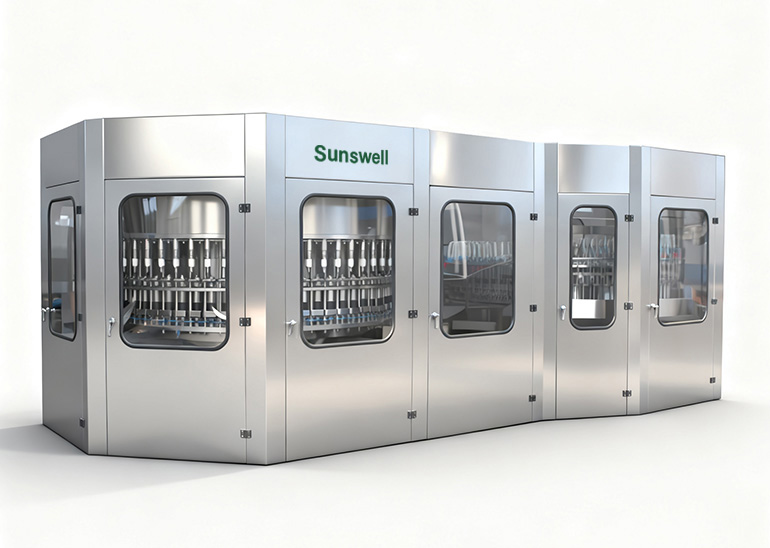
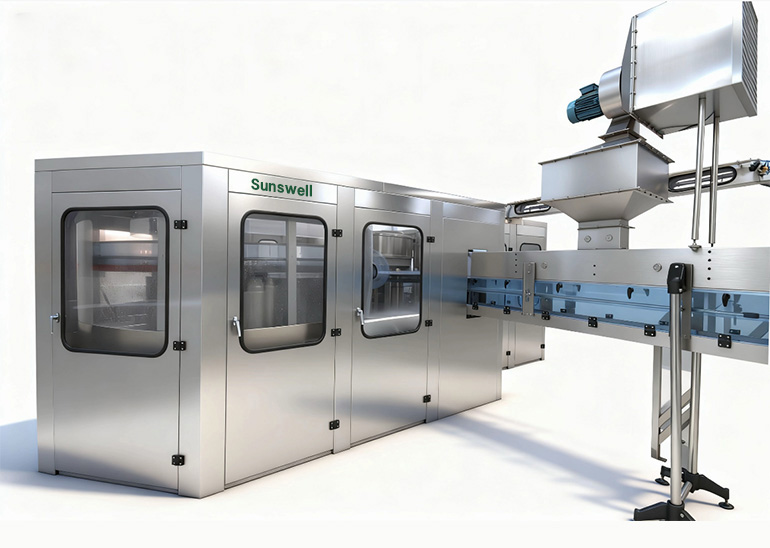
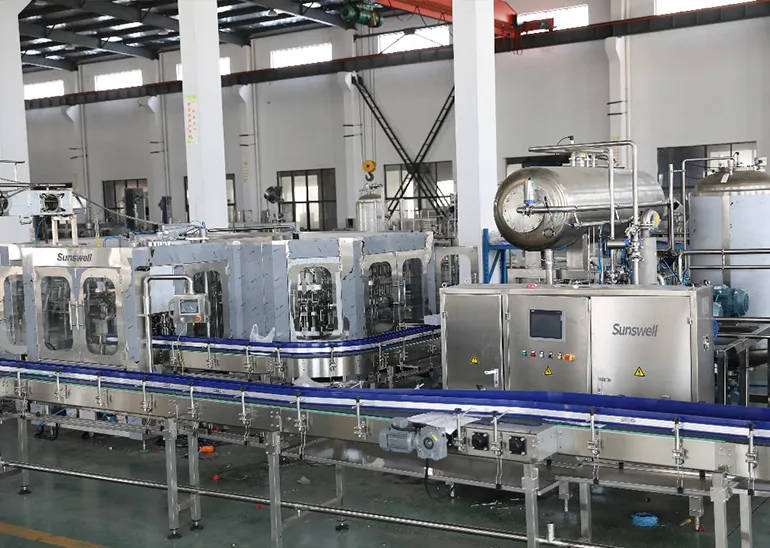
Country:Kazakhstan
Product: PET Bottled Sparkling Water, Canned Soft Drink, Canned Tea
Capacity: 25000CPH (250ml)
Solution:Three Lines,7000BPH(1.5L), 15000CPH(330ml),15000CPH(450ml)



 +86 13921964455
 [email protected]

A2 Dongjiu Industrial Park, 30 East Jintang Road, Tangshi, Zhangjiagang, Jiangsu 215600, China