


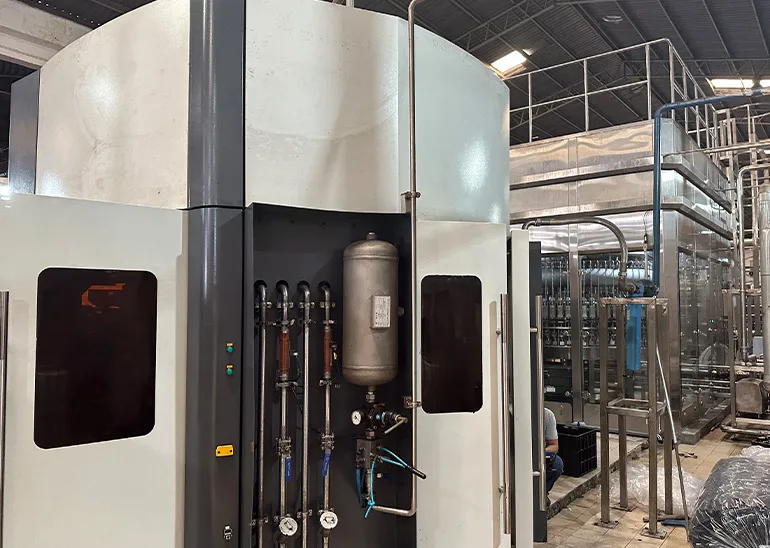
Project reference · South America
South America Project References — How to Verify a Supplier
A South American buyer verifies a supplier the same way any buyer does — on delivered projects, contactable owners and export records — with the region's specifics (national conformity, site voltage, service reach) added to the checklist. This page sets out the reference method and Sunswell's verifiable delivery record.
71+
Countries exported
444+
Lines delivered
20,000
m² workshop
80+
Staff
2011
Sunswell founded
Short answer: Supplier verification for South America runs on the same evidence as anywhere: delivered projects with contactable owners, an export record that covers the region's import realities, and a factory you can visit or video-audit. Sunswell's verifiable record includes 444+ delivered lines across 71+ countries — and the South American specifics (national conformity, site voltage, port delivery, service terms) are confirmed per project, not assumed.
🎯 Key takeaways
- Verification is delivered projects plus contactable owners — not brochures.
- The export record (71+ countries) shows the import realities are practised.
- South American specifics — conformity, voltage, port, service — are confirmed per project.
- A factory visit or video audit is part of every qualification.
- Regional project references are maintained as lines are delivered.
On this page
1. The verification method
Verification is three evidence types: delivered projects with contactable owners (call one), an export record that covers the region's import realities, and a factory you can visit or video-audit with a checklist. The method is the same for a South American plant as for any plant — the region's specifics are added to the checklist, not substituted for it.
Ask the supplier for two delivered projects and call both owners. One honest conversation tells you more than a folder of brochures.
Evidence is documents and calls, not promises — the supplier who passes the method is the supplier worth ordering from.
2. The verifiable record
Sunswell's verifiable record is 444+ delivered lines across 71+ countries, from a 20,000 m² workshop with 80+ staff. The record covers the line families a beverage plant needs — combiblocks, water and CSD fillers, juice hot-fill, canning — and the export base shows the delivery, documentation and service patterns are practised across markets, including the constraints that matter in South America: sea delivery, national conformity and site voltage.
The record is current and grows with every delivery; the buyer matches it to their line type and market.
3. The regional checklist
Add four South American questions to the qualification: (1) national conformity and registration for the destination — show the process and the local coordination; (2) sea delivery to the destination port — show the route and the terms; (3) site voltage and frequency handling — the machine is specified for the site; (4) service reach — spares response and technician access. The answers are contract items, not intentions.
Suppliers who answer all four in writing are qualified; suppliers who talk around any one are not.
4. Voltage and site realities
Site voltage is the South American spec most often assumed: the region runs mixed supplies, and the machine must be specified for the actual site, confirmed with the utility. The evidence is the technical proposal — the voltage and frequency handling, the protection devices and the conditioning included. A supplier who asks for the site voltage before quoting is a supplier who has done the region.
Confirm the site's supply with the utility before the enquiry — the design follows the reality, not the assumption.
5. Reference projects to examine
Examine reference projects that share your constraints: sea delivery and hot-climate operation (the Maldives water lines), multi-line turnkey scope (the Kazakhstan plant), and canning (the canning line). Match the constraint, not just the product — the closest constraint is the reference worth a call. Regional South American references are maintained as lines are delivered into the continent.
Ask for the current reference list and verify with the owners — the evidence is the call, not the list.
6. The factory audit
A factory visit or video audit with a checklist covers: the workshop size and organisation, the machines under build, the test facilities (FAT rig), the engineering team and the spare-parts operation. The audit answers 'who actually builds my line' — the difference between a manufacturer and a trader is visible on the shop floor, not in the brochure.
Sunswell's 20,000 m² workshop is open to buyers, and FAT is a standard stage — the audit is expected, not a favour.
7. From verification to order
With the verification done, the order follows a standard path: specification on your bottle and output, payment stages tied to FAT and shipment, a contract naming delivery terms and penalty, and installation and after-sales terms in writing. The verification is the reason the order is confident — and the contract is the reason it is safe.
The filling machine and combiblock ranges are the starting point; the references are the evidence.
Frequently asked questions
How do I verify a supplier for South America?
On delivered projects with contactable owners, an export record covering the region's realities, and a factory visit or video audit — plus the regional checklist (conformity, port, voltage, service).
What is Sunswell's verifiable record?
444+ delivered lines across 71+ countries, from a 20,000 m² workshop.
What is the regional checklist?
National conformity for the destination, sea delivery to your port, site voltage and frequency handling, and service reach — all answered in writing.
Which references should I examine?
Match the constraint: sea delivery and climate (Maldives water lines), turnkey scope (the multi-line plant), and canning (the canning line).
Do I need to visit the factory?
Yes — a visit or video audit answers who actually builds your line. Sunswell's workshop is open to buyers and FAT is a standard stage.
Can Sunswell deliver into South America?
Yes — Sunswell exports to 71+ countries with sea delivery to South American ports, national conformity coordination and service terms in the contract.
About the author
Written by the Sunswell engineering team — led by Howie SUN, Founder & CEO, with 14 years in filling and blow-moulding equipment R&D and turnkey project delivery across 71+ countries.
Last reviewed: 2026-08-28 · Reviewed by Sunswell engineering team
Ask our engineering team →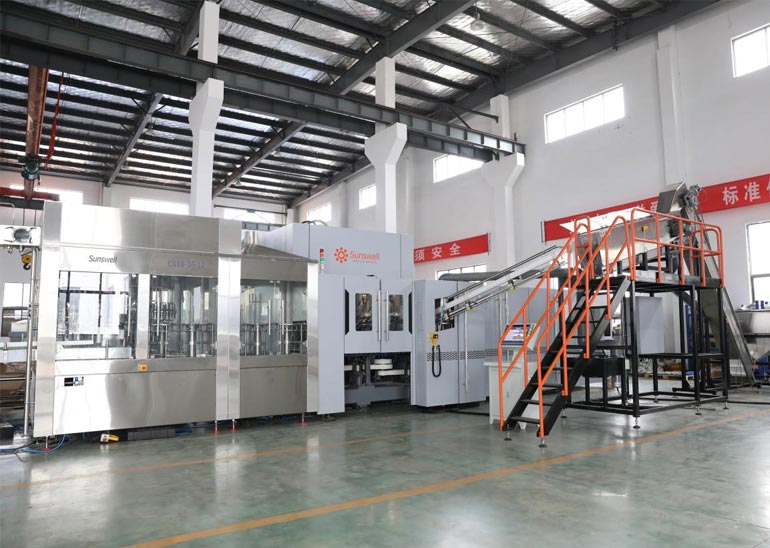
Have a specific project in mind?
Tell us product, target BPH, bottle sizes and market. We reply with a draft layout, equipment list and lead time estimate.
Fill the inquiry form ↑