Jordan is one of the most water-scarce countries in the world, and bottlers in Lebanon have built and rebuilt plants through years of power shortages. Neither market lacks demand: tap water is distrusted in both countries, and bottled water sells through supermarkets, kiosks and a large home-and-office channel every day. The real constraints for a new entrant are water treatment, the JISM and LIBNOR paperwork, and choosing a line size that fits small, high-frequency distribution instead of copying a large European plant.
Bottled water is the recommended entry product in Jordan and Lebanon: it needs the least product-side registration, and scarcity keeps demand steady. Plan on a 3,000 BPH water filling machine to start, or 6,000-8,000 BPH if you already hold distribution. Budget roughly USD 100,000-180,000 for a 3,000 BPH monoblock line with shrink wrapper and date coder, FOB China, and USD 160,000-280,000 at 6,000-8,000 BPH. For planning purposes, treat JISM (Jordan) and LIBNOR (Lebanon) standards plus Arabic labeling as fixed entry requirements. These cost bands are planning estimates, not quotations; equipment price follows configuration, not the other way around.
Jordan has no meaningful surplus water: municipal supply is rationed in many areas, and private desalination plants already supply local bottlers — a 2026 study of desalination plants in Mafraq assessed exactly this production route for drinking-water microbial safety. Consumers buy purified water as a utility, not a luxury. Commercial research also tracks the segment continuously: the Jordan bottled water market is analyzed by pack size, PET versus glass, and the home-and-office delivery channel, which signals a mature, structured market rather than an experimental one.
Lebanon's case is different. The bottling industry is old and capable — SMLC, the PepsiCo bottler, was named PepsiCo's Bottler of the Year 2025 — but years of economic pressure and unreliable grid power pushed plants toward generators and smaller, more flexible production. New entrants compete on cost and route density, not on premium positioning. Both markets therefore reward the same profile: a compact line, a short local supply chain, and formats consumers already buy: 500 ml, 1 L and 1.5 L.
Equipment itself is rarely the paperwork bottleneck. What consumes calendar time is product registration and water testing. Jordan works through the Jordan Standards and Metrology Organization (JISM), which sets the national drinking and bottled water standards. Lebanon applies Lebanese Standards Institution (LIBNOR) standards, and beverages are registered with the Ministry of Agriculture under its food product framework; IDAL, the Lebanese investment authority, lists agrifood projects among its supported investments, which can help with licensing for production projects.
| Requirement | Jordan | Lebanon |
|---|---|---|
| Standards body | JISM | LIBNOR |
| Water quality | JISM drinking/bottled water standard, lab tests | LIBNOR standard, accredited lab tests |
| Product registration | Via Jordan Food & Drug Administration (JFDA) route | Ministry of Agriculture food product registration |
| Labeling | Arabic labeling standard | Arabic labeling standard |
| Halal | Not required for plain water; required for flavored/juice drinks | Same: plain water exempt in practice, flavored drinks need certification |
Confirm the current document list with your importer before ordering equipment; standards bodies revise references periodically, and a customs broker can price duties for the machine class before you commit.
Municipal water in Amman arrives hard and, in many districts, rationed; Beirut's municipal supply is unreliable for industrial use. Most new plants therefore treat borehole, municipal or purchased water through the same chain: multimedia filtration, activated carbon, softening, reverse osmosis, mineral dosing, then ozone or UV before filling. A single-pass RO unit removes dissolved solids well enough for still water; add a second pass only when feed TDS is extreme or you bottle for export-sensitive buyers.
| Stage | Purpose in a Levant plant |
|---|---|
| Multimedia filter | Remove suspended solids before membranes |
| Activated carbon | Chlorine removal and taste compounds |
| Softener | Protect membranes from hardness |
| RO (single pass) | Core purification; sized to fill rate plus CIP demand |
| Mineral dosing | Stabilize taste and conductivity after RO |
| Ozone / UV | Microbial safety without residual taste |
A water treatment system of this kind typically equals 20-30% of total project cost. Do not let the filler decision run ahead of the water test: send a raw-water sample to the treatment supplier before finalizing any line, because TDS and hardness decide the membrane stages and the CIP chemical set.
The most common entry error is copying a 20,000 BPH benchmark from a large export market. Levant distribution is dense but fragmented: a 3,000 BPH line running two shifts produces roughly 20 million 500 ml bottles a year at realistic efficiency, which is already a serious regional brand volume. A 6,000-8,000 BPH line suits buyers who hold existing distribution or win a retail tender before buying. Reserve 20,000 BPH and above for national players or contract packing, where utilization is contracted rather than hoped for.
| Capacity | Best fit | Planning cost range (line with wrapper + coder, FOB) |
|---|---|---|
| 2,000-3,000 BPH | New brand, regional startup | USD 100,000-180,000 (estimate) |
| 6,000-8,000 BPH | Existing distribution, second line | USD 160,000-280,000 (estimate) |
| 12,000 BPH+ | Retail tenders, contract packing | Quoted on configuration |
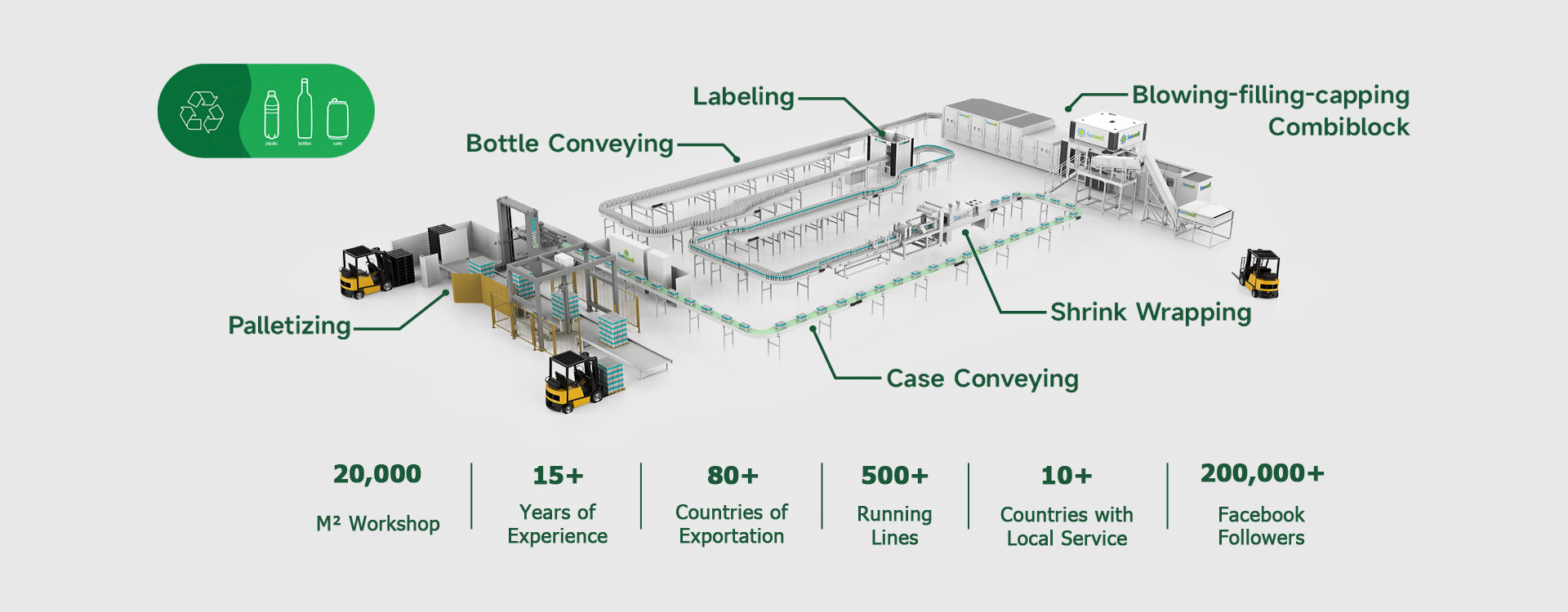
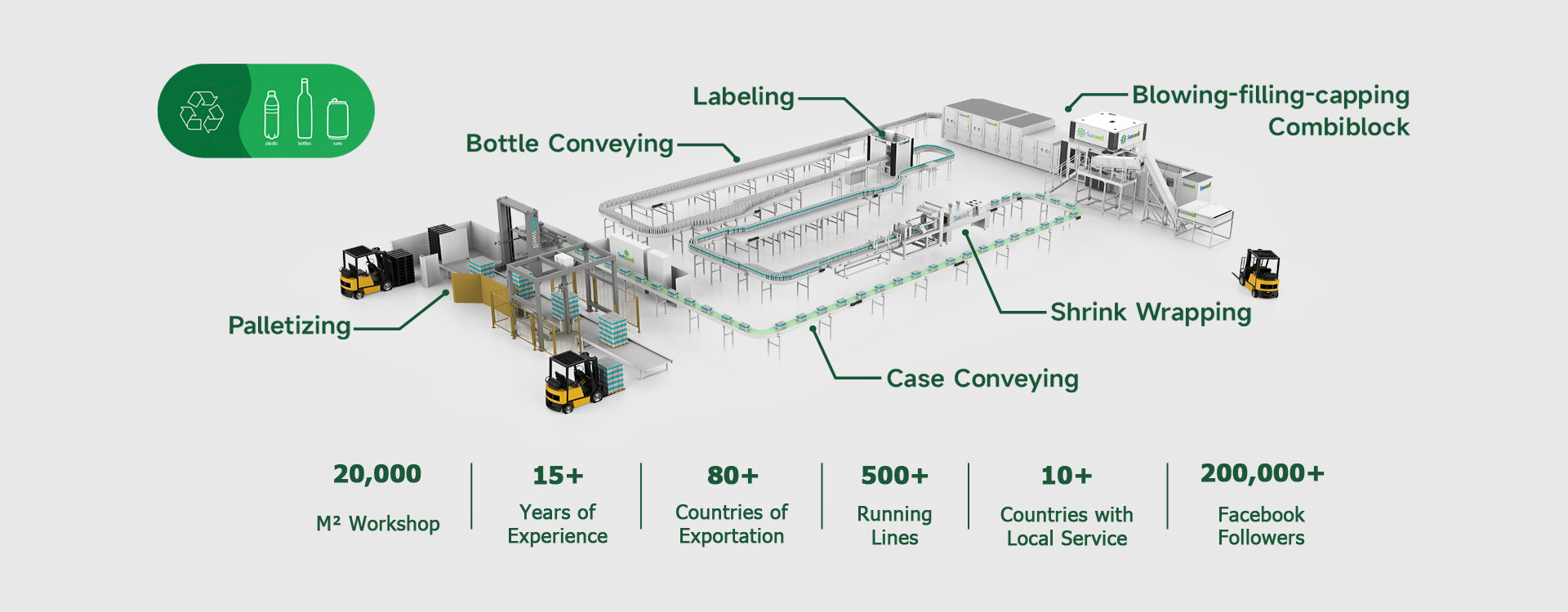
A compact 3-in-1 rinser-filler-capper monoblock keeps footprint small and changeover simple, which matters when you run three formats per shift. Add an automatic shrink wrapper and a date coder; a 5 L handle-bottle module is worth adding in Jordan where home delivery of large formats is established. Generator readiness is not optional in Lebanon and prudent in Jordan: size a backup for the filler drive, air compressor and wrapper, and specify soft-start or VFD drives so a generator switchover does not stall the line.
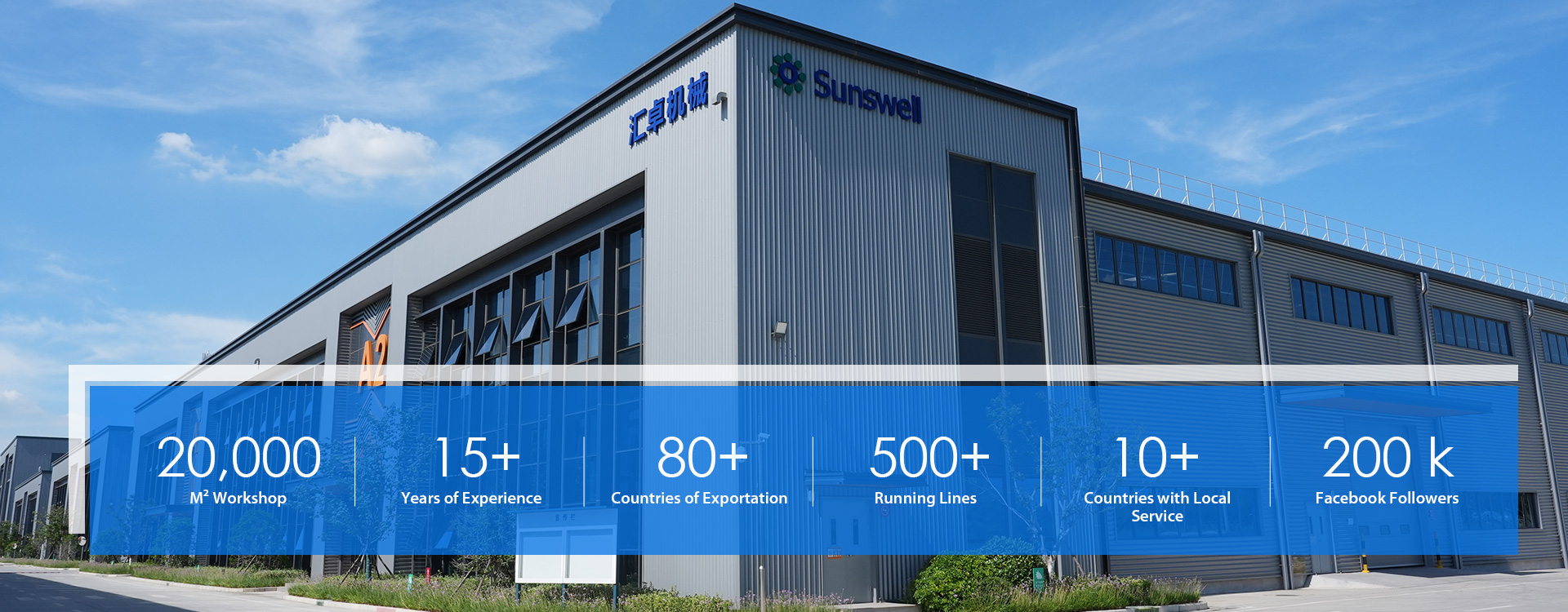
Sunswell builds this profile as a water production line with a 1-stage RO water treatment system sized to the filler. The practical question to answer before sourcing is whether the supplier documents CE or ISO 9001 certificates for the importer and ships the machine crated for humidity — Levant ports and storage are hot, and rusted stainless is a preventable failure.

For planning, roughly USD 150,000-350,000 including a 3,000-6,000 BPH line, treatment, installation and local works. Land, licensing fees and working capital are additional.
Count on two to four months for water lab tests and registration documents in each market once the plant files are complete; start the paperwork alongside machine production, not after delivery.
Yes, and most local plants do. Request CE documentation, rust-protected crating and English manuals, and have the importer verify electrical conformity before the container arrives.
Plain water is effectively exempt. Flavored water, juice drinks and any ingredient-based product need halal certification in both countries.
Send your raw-water test, target capacity and bottle formats to contact Sunswell, and ask for a line configuration with the treatment chain quoted to your water analysis — that combination, not a bare filler price, is what a Levant plant actually runs on.



 +86 13921964455
 [email protected]

A2 Dongjiu Industrial Park, 30 East Jintang Road, Tangshi, Zhangjiagang, Jiangsu 215600, China