
| Valve type | Hot-fill, up to 85 C |
| Capacity range | 6,000-36,000 BPH at 0.2-2 L |
| Container | Heat-resistant PET geometry, or glass |
| Line | Hot-fill monobloc with tunnel pasteuriser |
| Products | Juice, tea, nectar, functional drinks |
| Key control | Fill temperature, hold time, cap seal |
Hot filling does two jobs at once: it pasteurises the product on the way to the filler, and the residual heat sanitises the bottle and cap. That is why a hot-fill line can run an acidic juice without a separate bottle steriliser. The price is a heat-resistant bottle and a longer cooling tunnel.
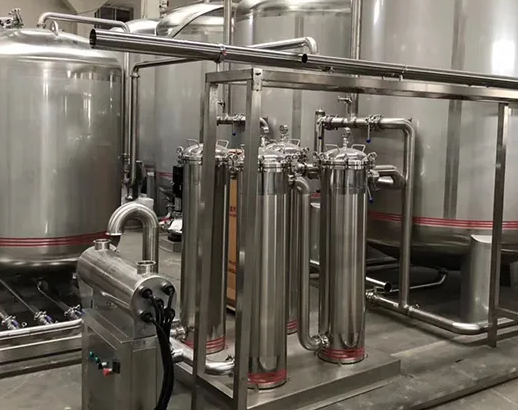
The required separation, feed composition, temperature and recovery objective then guide pretreatment and membrane selection.
Compare them on the product, not on the machine. Hot fill suits acidic juice and tea in heat-resistant PET. Cold fill needs a preservative system or a separate sanitising step, but it protects heat-sensitive flavours and vitamins and uses a lighter bottle. The decision is a product decision with a packaging cost attached.
| Route | Temperature | What it costs |
|---|---|---|
| Hot fill | Up to 85 C | Heat-resistant bottle and a cooling tunnel |
| Cold fill with preservative | Ambient | Formulation constraint, not a machine constraint |
| Cold fill with in-line pasteuriser | Product-side only | Separate pasteuriser and a closed filling zone |
| Hot fill in glass | Up to 85 C | Glass mass, slower line, higher transport cost |
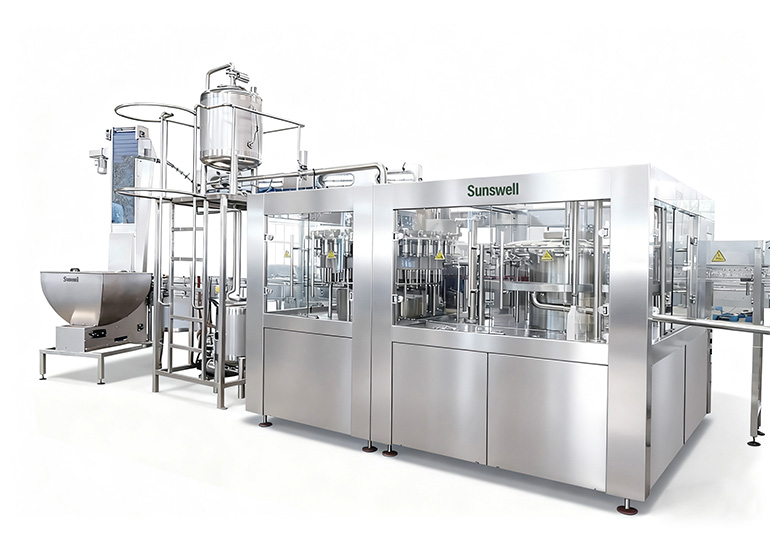
Sizing for this duty runs through the Hotfill Type Filling Machine for Juice, where the valve count is set out.
Cold filling protects heat-sensitive flavour and colour and allows a lighter bottle. It needs either a preservative system or a validated cold chain, and it moves the microbial control to the product and the plant rather than to the filler. The decision is commercial before it is technical.
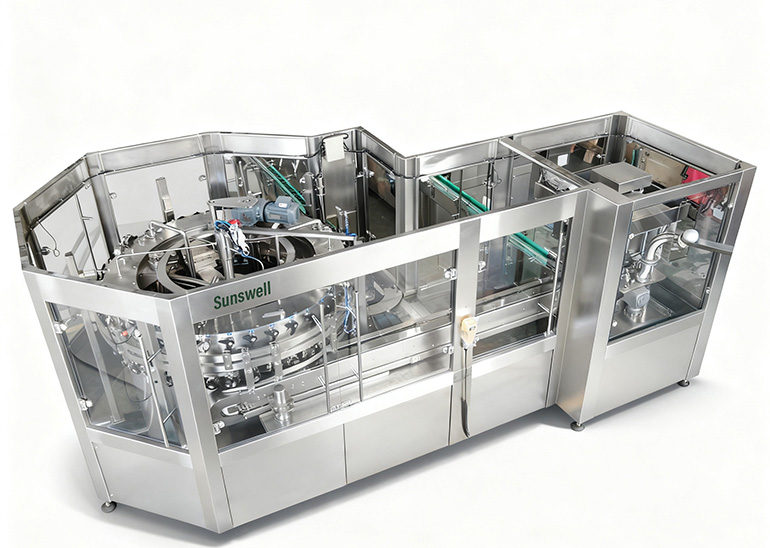
Where this becomes a line rather than a single machine, the Juice By Volumetric Filler is the starting point.
Glass brings mass, breakage and a slower line. It also brings a closure decision: crown, lug or screw. A glass hot-fill line usually runs at a lower rate than the same filler on PET, and the difference is handling and inspection, not the valve.
The same question is worked through from another angle in How to Reduce Downtime in Hotfill Juice Lines.
With a storage trial on the actual product, bottle and closure, held at the intended temperature and sampled on a schedule. Changing the fill temperature, the bottle or the cap invalidates the previous result, which is why those three are treated as one specification.
The engineering review should cover microbiological quality, suspended matter, conductivity, hardness, alkalinity and relevant dissolved constituents.
Up to 85 C, set per product and per bottle. The exact set point and tolerance belong in the product specification, because acidity, pulp content and bottle wall thickness all move it.
It replaces the bottle steriliser for acidic products, because the fill temperature and hold time do the microbial work. It does not replace correct product formulation or a validated hold tube.
Usually fill temperature above the bottle rating, or a vacuum that forms as the product cools. Check the fill temperature against the bottle specification and the cap seal before changing the cooling profile.
It depends on the hold tube volume and the heater capacity. The line is not production-ready until the return temperature is stable, so start-up time belongs in the daily plan rather than being discovered at shift start.
Yes, if the filler, the recipe and the downstream cooling are specified for both. Tea usually needs a finer filtration step and a different deaeration setting, so the changeover is a recipe and filter change, not just a new label.
Country: Turkey
Product: Glass and PET Bottled Juice
Capacity: 20000BPH(330ml) Glass Bottle; 4000BPH(3L) PET Bottle
Solution:Juice Production Line
Country:Kazakhstan
Product: PET Bottled Sparkling Water, Canned Soft Drink, Canned Tea
Capacity: 25000CPH (250ml)
Solution:Three Lines,7000BPH(1.5L), 15000CPH(330ml),15000CPH(450ml)



 +86 13921964455
 [email protected]

A2 Dongjiu Industrial Park, 30 East Jintang Road, Tangshi, Zhangjiagang, Jiangsu 215600, China


