


Cost · FAQ
Bottling Line Cost FAQ — What Drives the Price and Where Money Goes
Nobody publishes honest line prices, so buyers ask the same questions: why does the quote vary so much, what actually sets the number, and where does the money go. This FAQ answers those questions with cost logic — not with figures invented for one supplier or one country.
2,000–48,000
BPH combiblock range
444+
Lines delivered
71+
Countries exported
3–15
L large-bottle range
20,000
m² workshop
Short answer: A bottling line's price is set by five variables: output, valve type, packaging format, automation level and certification scope — in that order of influence. The machine that looks similar in photos can differ by a large factor in price because of what is inside: valves, servo drives, stainless quality and control systems. Budget for the line, then add installation, spare parts, freight and customs — the sum of the package, not the headline machine price, is what matters.
🎯 Key takeaways
- Output is the biggest price driver: double the BPH is not double the price, but it is not far off.
- Valve type (mechanical vs volumetric vs load cell) changes cost and give-away per bottle.
- Automation and stainless quality move the number more than photos suggest.
- Budget the package: machine + installation + spare parts + freight + customs + certification.
- A smaller line running at capacity beats a bigger line with idle capacity.
On this page
1. What actually sets the price
Five variables set the price, in rough order of influence: output (BPH), valve type, packaging format, automation level and certification. Two quotes for 'the same line' differ when any of these differs — and they usually differ on valve type and automation, which are invisible in photos.
Compare quotes on the specification sheet, not the brochure. Output on the agreed bottle, valve type by name, stainless grade, servo vs pneumatic motion, and the control system brand are the fields that explain a price gap.
2. Output and valve type
| Variable | What it changes | Why |
|---|---|---|
| Output (BPH) | Turret size, valve count, conveyor width | More stations and bigger infeed cost more |
| Valve type | Mechanical vs volumetric vs load cell | Weighing and metering hardware is expensive |
| Packaging | PET, glass, can, cap type | Different handling and capping stations |
| Automation | Servo vs pneumatic, PLC level | Servos cost more and save changeover time |
| Certification | CE, EAC, country approvals | Documentation and testing per market |
Valve type deserves special attention: a load-cell filler costs substantially more than a mechanical one, and it only pays back where product is expensive, dense or declared by weight. On still water sold by level, the mechanical valve is the honest choice.
3. Packaging and automation
Packaging format drives price more than buyers expect. Glass needs a gentler infeed and a different capper; cans need a seamer and often a nitrogen doser; a 19 L returned bottle needs a washer. Each format change adds a station and removes flexibility.
Automation is the other invisible driver. Servo-driven motion, recipe management and quick-change tooling raise the price but cut changeover time on multi-format lines. A single-format line can run simpler pneumatics and save money — spend on automation only where it earns back in changeover or labour.
4. The full package cost
The machine price is the headline; the package is the budget. Add: installation and commissioning (technician, travel, housing), a first-year spare-parts kit, freight and insurance, customs duty and certification (EAC where applicable), and civil works for utilities. These can add a material share on top of the machine — plan the budget on the package, and ask suppliers for a package quotation with these lines itemised.
Ask for the package breakdown in writing: machine, installation, spares, freight, certification. A supplier who itemises is a supplier who has done the project before.
A package quotation also protects you: the 'surprises' that appear after order — customs, wiring, spare parts — are already priced.
5. Small plants and budget lines
For outputs below roughly 2,000 BPH, a full monobloc is often overkill. Semi-automatic fillers and compact standalone machines cost far less and match a small plant's real demand. The rule: size to year-one sales, not to ambition.
Small plants also gain from buying the package — a compact line with washer, filler and capper from one supplier avoids the integration cost of mixing brands.
6. New vs second-hand
Second-hand lines cost a fraction of new ones but carry hidden risk: no warranty, no certification package, unknown wear, and integration work that a new line includes. For a first project, the predictable path is a new line with a fixed package price; for an experienced operator with in-house engineers, a well-documented used line can be rational.
If you buy used, budget a rebuild and commissioning budget anyway — the difference between a bargain and a liability is usually the documentation, not the steel.
7. Questions to ask before quoting
Send every supplier the same spec: product, output on the actual bottle, packaging, hall size, utilities, certification scope. Then ask each for: a layout drawing, the valve and drive spec by name, a package price breakdown, a lead-time commitment with penalty, and a FAT plan. The answers separate suppliers who build lines from suppliers who sell brochures.
Start with the water filling machine or combiblock category page, work out the spec, then send it to three suppliers at once.
Frequently asked questions
Why do quotes for 'the same line' differ so much?
Because output, valve type, automation and stainless quality differ under the same photo. Compare the specification sheet, not the brochure.
Which price driver matters most?
Output, then valve type, then packaging. Doubling BPH roughly scales turret size and cost; a load-cell filler costs far more than a mechanical one.
Should I buy the most automated line?
Only if changeover or labour cost earns it back. A single-format line runs fine with pneumatic motion; automation pays on multi-format lines.
What is the real budget beyond the machine price?
Installation, spare parts, freight, customs and certification can add a material share on top. Ask for the package price itemised in writing.
Is a used line a good first purchase?
Usually not for a first project — no warranty, no certification package, unknown wear. Experienced operators with in-house engineers can make used lines work.
Can Sunswell give a package price?
Yes — Sunswell quotes machine, installation, spare parts, freight and certification as a package. Send the product, output and bottle drawing for a spec.
About the author
Written by the Sunswell engineering team — led by Howie SUN, Founder & CEO, with 14 years in filling and blow-moulding equipment R&D and turnkey project delivery across 71+ countries.
Last reviewed: 2026-08-28 · Reviewed by Sunswell engineering team
Ask our engineering team →
Project references
-
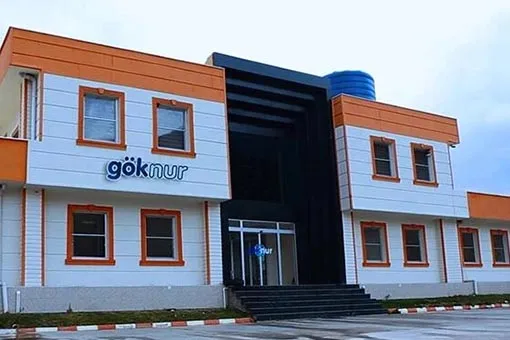
Goknur, 2 Sets of 18,000BPH Bottling Lines for Juice, Turkey
Country: Turkey
Product: Glass and PET Bottled Juice
Capacity: 20000BPH(330ml) Glass Bottle; 4000BPH(3L) PET Bottle
Solution:Juice Production Line
Read More + -

Vizit, 12,000BPH 1L Bottling Line with Combiblock for CSD, Kazakhstan
Country: Kazakhstan
Product: PET Bottled Carbonated Soft Drinks
Capacity: 12000BPH (1L)
Solution:Carbonated Drinks Production Line
Read More + -
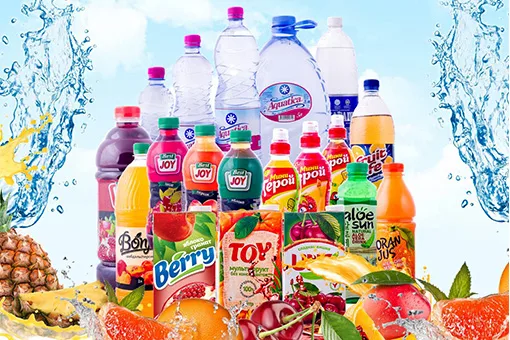
Rauan, 8 Sets of Bottlingand Canning Lines from 12,000-24,000BPH for Water, CSD and Juice, Kazakhstan
Country:Kazakhstan
Product: PET Bottled Sparkling Water, Canned Soft Drink, Canned Tea
Capacity: 25000CPH (250ml)
Solution:Three Lines,7000BPH(1.5L), 15000CPH(330ml),15000CPH(450ml)
Read More +
Have a specific project in mind?
Tell us product, target BPH, bottle sizes and market. We reply with a draft layout, equipment list and lead time estimate.
Fill the inquiry form ↑