


FAQ · Glass Bottle
Glass Bottle Filling — Frequently Asked Questions
Selection, technical, installation, certification and commercial questions, answered with parameters for glass lines.
2,000–18,000
BPH glass lines
4
Closure types
444+
Lines delivered
71+
Countries exported
9+
Countries with service
Short answer: Glass bottle filling runs as a rinser-filler-capper, not a combiblock, because glass arrives finished rather than blown from a preform. Carbonated drink needs isobaric counter-pressure valves; juice and tea need hot-fill at 85–88 °C; still water and wine use gravity or mechanical valves. Glass fills bottom-up to limit foam and breakage. This page answers the questions buyers ask most, grouped by subject.
🎯 Key takeaways
- Glass runs as rinser-filler-capper, not a combiblock — no blowing stage
- CSD needs isobaric valves; juice/tea need hot-fill 85–88 °C
- Glass fills bottom-up to limit foam, oxygen and breakage
- Breakage is designed out by soft handling and a rinser reject, not by slowing the line
- Scope-normalise quotations — rinser grade, CIP, cap feeder and commissioning are common exclusions
- Ask three questions in writing: sustained output on your bottle, exclusions, changeover time
On this page
1. Selection questions
The questions buyers ask before a specification exists. The full selection logic is in the glass bottle selection guide.
What output should I size a glass line for?
On the volume you can sell within roughly two years, not the market you hope to hold in ten. A craft or regional start-up is usually served by 2,000–12,000 BPH. Idle capacity still carries installed power, footprint and a larger spare part inventory. Plan the building for a second line rather than over-sizing the first.
Can one machine run beer, juice and water in glass?
Across the same carousel only if the valve family supports it. Still water and wine use gravity or mechanical valves; beer and CSD need isobaric; juice and tea need hot-fill. A line built with isobaric valves can run still product but not the reverse without a different filler. Multi-product plants specify the broadest valve they will use and accept the cost.
Do I need a combiblock for glass?
No. A combiblock blows PET from a preform and only applies to PET. Glass runs as a rinser-filler-capper with no blow moulder. See the selection guide for why the blowing stage is absent.
What information does a supplier need to quote?
- Target output at a named bottle size and fill volume
- Every bottle format and closure you intend to run, including later ones
- Bottle drawing: diameter, height, neck finish, grammage
- Product and fill temperature (ambient, chilled, or 85–88 °C hot-fill)
- Site conditions: power, compressed air, water, building dimensions and door openings
- Scope items: rinser grade, CIP, labeller, packer, palletiser
2. Technical questions
Which filling principle is most accurate for glass?
Volumetric or load cell dosing, followed by gravity and mechanical level filling. For products sold by exact volume, measured dosing removes the scatter that level filling shows when bottle volume varies. Wine and still water with a normal tolerance are usually fine on level filling.
Why is glass filled bottom-up?
To keep the fill tube submerged below the rising liquid, which limits foam, limits oxygen pickup and reduces the shock that breaks bottles. Top filling glass foams and splashes and is rarely used except on very slow non-carbonated lines.
How is the line cleaned?
Through a CIP circuit on the product path: rinse, detergent circulation, intermediate rinse, sanitisation and final rinse. Glass lines benefit from CIP specified with the line rather than added later, because retrofitting a cleaning circuit into an installed path is expensive.
What causes fill-level variation?
| Symptom | Most common cause | Check first |
|---|---|---|
| Drift across a shift | Tank level or supply pressure change | Level control and feed pump |
| Bottle-to-bottle scatter | Bottle volume variation | Bottle weight and finish consistency |
| One valve different | Worn seat or blocked vent | That valve's service history |
| Step after changeover | Format or height setting | Changeover checklist |
| Slow drift over months | Meter or calibration drift | Calibration log and interval |
3. Installation and commissioning questions
What does the building need?
- Level floor with load capacity and any foundation work done
- Power at correct voltage and frequency, stable to the machine
- Compressed air sized for the capper and any pneumatic stages
- Treated water for rinse and CIP at required quality and flow
- Drainage, ventilation and lighting in the production area
- Access route for machine sections, including door widths and lift capacity
How long does commissioning take?
In phases: mechanical installation, utility connection, water running, product running and speed ramp, then training. Still and wine commission faster than carbonated product because there is no foaming to tune; hot-fill adds a temperature-stability step. Delays are usually site readiness — power, air or water not ready when engineers arrive.
What is checked at the factory acceptance test?
Mechanical operation, controls, safety interlocks, output at rated speed and fill quality on your own bottles and closures. Send real bottles and caps in production quantity; testing on generic items then finding yours differ defeats the purpose. Agree acceptance criteria in writing first.
4. Certification and compliance questions
What certification does Sunswell hold?
ISO 9001 and CE certification, with SGS audit. Equipment is built in a 20,000 m² facility and 444+ lines have been delivered to 71+ countries. These are company and equipment credentials; market-entry approval for your destination is a separate process with your importer.
Who handles destination-market certification?
Handled with your importer, because the scheme depends on the destination and on who is the responsible importer. Sunswell supplies the technical documentation, drawings and declarations. Start it early — certification runs in parallel with manufacturing.
What food-contact documentation is available?
Material specifications for product-contact parts, including stainless steel grades and elastomer types, supplied with the machine documentation. State the destination market at quotation if a specific food-contact standard applies, because it can change the gasket specification.
5. Commercial questions
How much does a glass filling line cost?
Price scales with output, valve family, valve count, capper type and automation, then with contact-part material and downstream scope. Figures without a defined scope mislead. Send the bottle drawing, format mix and target output and request a written quotation against a stated scope. Tiers are compared in glass machine configurations compared.
What is usually missing from a cheap quotation?
Rinser grade, CIP, cap feeder, labeller, packer, palletiser, format parts for extra sizes, installation, commissioning, training and a commissioning spare part set. Build one scope list, send it to every supplier and require line-by-line answers including exclusions.
What are the main running costs?
Electricity first, then water for rinse and CIP, labour, consumables such as caps and labels, and spare and wear parts. Glass breakage is a real but design-manageable cost; it belongs in the handling specification, not in a higher speed across the board.
What after-sales support is available?
Sunswell runs local service in 9+ countries and supports installations across 71+ export markets with remote diagnostics, spare parts and engineer visits. Agree response expectations and the spare part list in the contract rather than after the first breakdown.
Three questions that prevent most disputes. Ask every supplier, in writing: what is the sustained output on my bottle; what is excluded from this quotation; and what is the changeover time between my two most common formats. Those three separate comparable quotations from ones that only look comparable.
6. Related resources
Longer treatments of the subjects above:
- Glass bottle filling machine selection guide — output, bottle format and valve by product
- Glass bottle machine configurations compared — economy, mainstream and high-speed tiers with TCO
- Filling valve types compared — gravity, mechanical, isobaric, volumetric and load cell
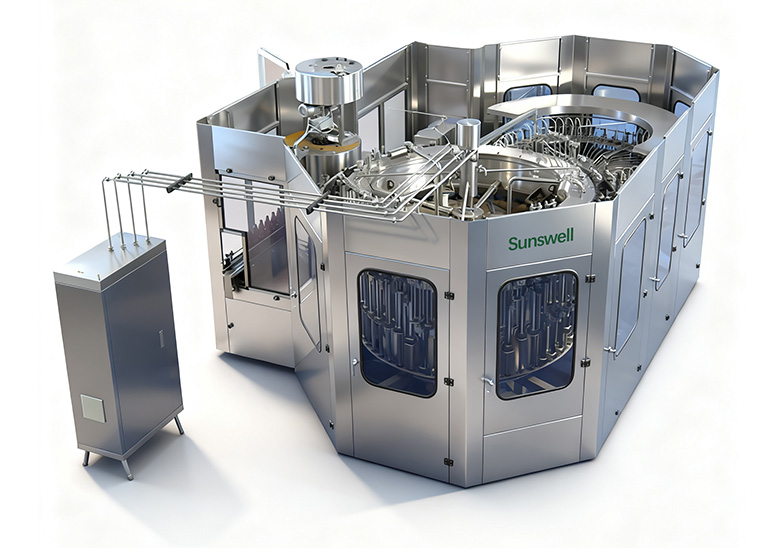
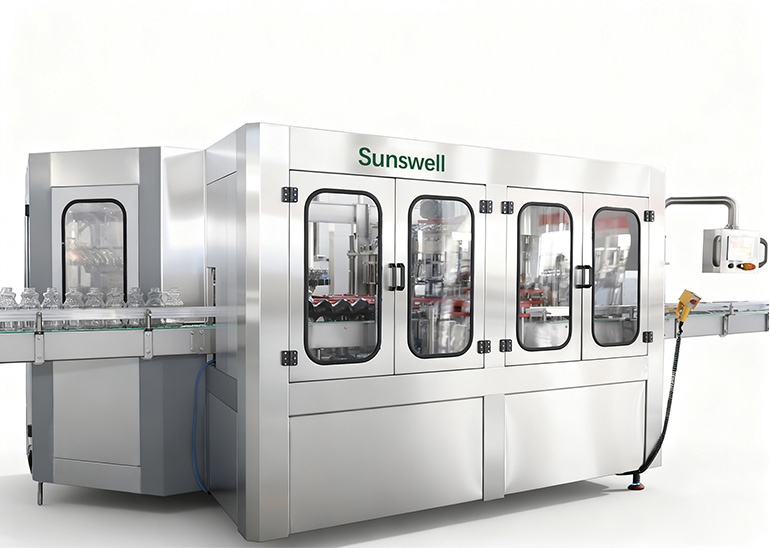
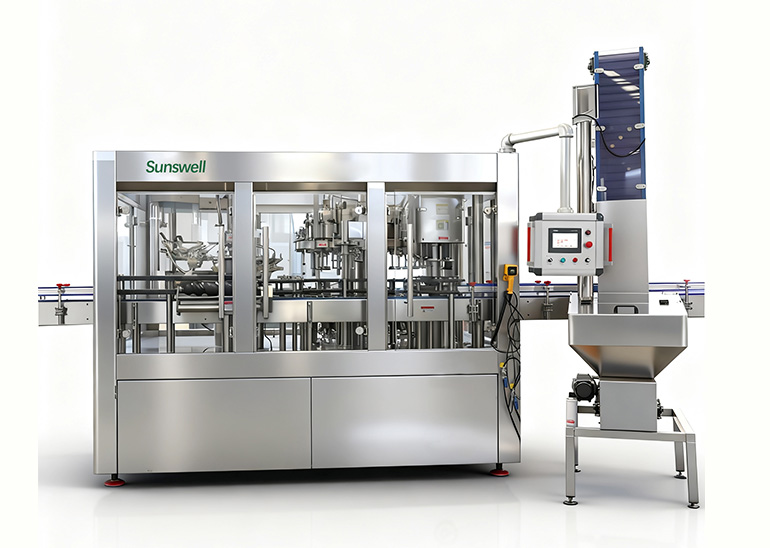
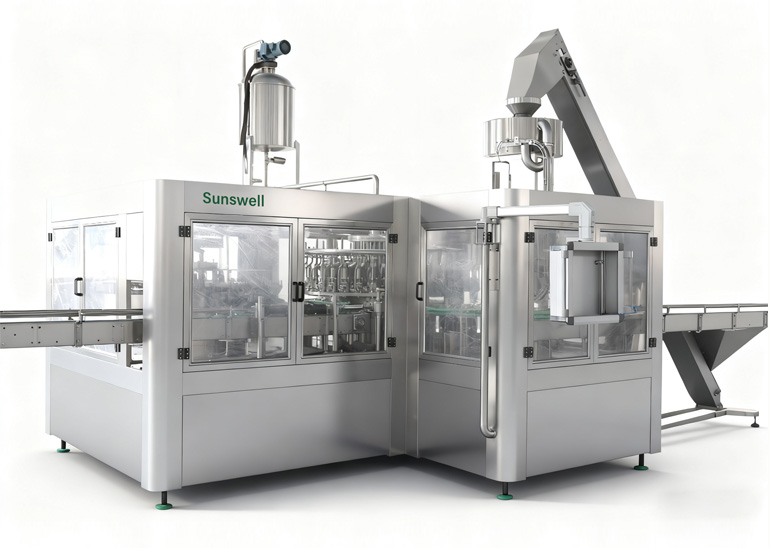
- Glass bottle filling machines — the full range
- Beer production line solution — complete glass lines
Reference installations include C003 Goknur, two 18,000 BPH juice lines in Turkey, and C004 Dahman, a 24,000 CPH canning line for CSD in Syria.
Frequently asked questions
Can glass and PET run on the same filler?
Generally no on one carousel. Glass and PET differ in diameter, weight, handling and neck finish, and a carousel pitched for one does not accept the other without rework. Plants selling both usually run two lines, or a glass line plus a separate PET combiblock. State both formats at quotation if either is planned.
How is a glass bottle cleaned before filling?
By a bottle rinser at the front of the line — typically an inverted air and water or sterile-water rinse that removes dust and fragments, with a reject for chipped or cracked bottles. Returnable glass needs a stronger wash stage before the rinse. The rinse grade is part of the scope, so confirm it.
Why does carbonated glass need counter-pressure?
Because releasing the pressure difference between a carbonated drink and the air in the bottle causes violent foaming and CO₂ loss. The isobaric valve equalises pressure with CO₂ first, fills, then recovers the gas. A non-isobaric valve cannot hold carbonation through the fill.
What temperature is hot-fill juice in glass?
85–88 °C. The hot product heat-treats the bottle and closure at fill, then cools and the headspace is snifted to pull a partial vacuum. The bottle must be rated for the temperature and thermal shock, which is a bottle specification as much as a machine one.
How much floor space does a glass line need?
More than a PET line of equal output, because there is no combiblock compressing the blowing and filling into one block — glass has a separate rinser, filler, capper and usually a longer infeed. Layout is drawn against your building dimensions before the order is confirmed.
What causes glass breakage on the line?
Hard handling, mistimed star wheels, chipped bottles reaching the filler, and thermal shock on hot-fill. It is designed out with soft timed handling, a rinser reject for damaged bottles, and a bottle rated for the fill temperature — not by slowing the whole line.
What spare parts should be held for a glass line?
Seals and gaskets for the valves, capper change parts, star-wheel and timing belts, and a commissioning set of wear items. For hot-fill, heat-rated seals; for isobaric, CO₂ path seals. Identify long-lead items at handover.
Is training included with a glass line?
Operator and maintenance training is delivered during commissioning and should be written into the contract with defined duration and scope. It covers running, changeover, cleaning, calibration and first-line fault diagnosis, in the languages your team uses.
About the author
Written by the Sunswell engineering team — led by Howie SUN, Founder & CEO, with 14 years in filling and blow-moulding equipment R&D and turnkey project delivery across 71+ countries.
Last reviewed: 2026-08-10 · Reviewed by Sunswell engineering team
Ask our engineering team →Recommend Products
Project references
-
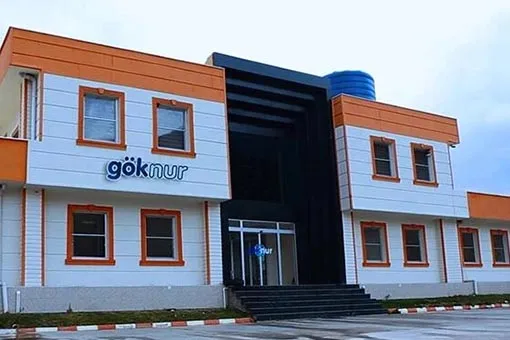
Goknur, 2 Sets of 18,000BPH Bottling Lines for Juice, Turkey
Country: Turkey
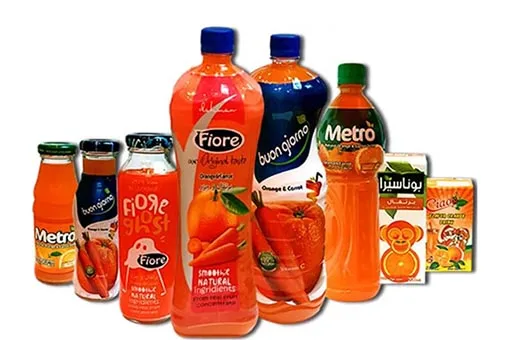
Product: Glass and PET Bottled Juice
Capacity: 20000BPH(330ml) Glass Bottle; 4000BPH(3L) PET Bottle
Solution:Juice Production Line
Read More + -
Dahman, 24,000CPH Canning Line for CSD, Syria
Country: Syria
Product: Aluminum Canned Carbonated Soft Drinks
Capacity: 24000CPH (250ml)
Solution:Carbonated Drinks Production Line
Read More +
Have a specific project in mind?
Tell us product, target BPH, bottle sizes and market. We reply with a draft layout, equipment list and lead time estimate.
Fill the inquiry form ↑