


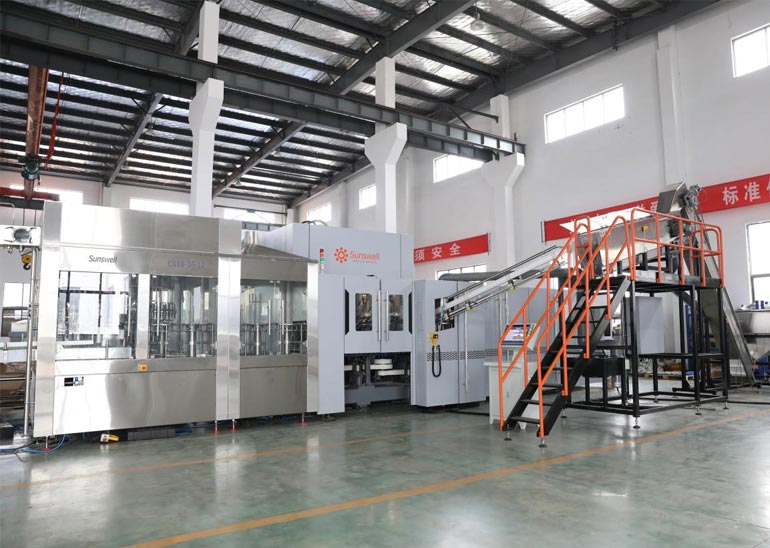
Engineering · Combiblock
Combiblock FAQ — 25 Questions Buyers Ask Before Ordering
The questions buyers ask most, grouped by what they are really about: selection, technical fit, installation, certification, maintenance and commercial terms.
25
Questions answered
2,000–48,000
BPH covered
444+
Lines delivered
71+
Countries exported
14 yrs
Filling equipment focus
Short answer: The questions buyers ask most before ordering a combiblock fall into six groups: selection (capacity, block vs separate, product type, bottle sizes, filling technology), technical fit (fill accuracy, CIP, utilities, changeover, air), installation (timeline, site prep, FAT, shipping, slips), certification (CE, ISO, export docs, EAC, standards), maintenance (schedule, wear parts, spares, training) and commercial terms (price drivers, lowest quote, warranty, staging, references). Each answer is a working rule; the specifics depend on your capacity, product and site, and the linked pages carry the detail.
🎯 Key takeaways
- 25 questions, six groups — selection, technical, install, cert, maintenance, commercial
- Selection decides the configuration, and the configuration decides the rest
- Compare quotes like for like — same capacity, product, scope
- Most slips are buyer-side — finish the building before the machine
- Maintenance is scheduled, not reactive — swap wear parts on hours
- Weigh total cost of ownership, not the headline price
On this page
Before you read the questions
These are the questions buyers ask most before ordering a combiblock, grouped by what they are really about: selection, technical fit, installation, certification, maintenance and the commercial terms. Each answer is a working rule, not a quote — the specifics depend on your capacity, your product and your site, and the linked pages carry the detail. Read the selection and technical sections first; they decide the configuration, and the configuration decides everything else, including the price and the install window.
If you are new to the format, start with what a blow-fill-cap combiblock is, then move to the capacity selection guide and combiblock vs separate line. The rest of this page answers the questions those two raise.
These are working rules, not a quotation. Specifics depend on your capacity, product and site; confirm every figure in the linked pages and in your contract before you commit budget.
| Topic | Short answer | Where to read it |
|---|---|---|
| Capacity | 2,000–48,000 BPH, set by carousels and cavities | Capacity selection guide |
| Architecture | Block for volume; separate line for breadth | Combiblock vs separate line |
| Filling | Volumetric, flow-meter, load-cell, isobaric | Filling valve types |
| Products | Still, CSD, juice hot-fill, oil, 5 L | Selection by product |
| Lead time | 8–20 weeks on site from arrival | Installation timeline |
| Ownership | Energy, changeover, maintenance, service | Price, changeover, maintenance |
1. Selection questions
How do I choose the right capacity?
Convert your annual volume to BPH at your main bottle, add the growth you will actually use in the contract period, and pick the band that covers it without paying for cavities you will not run. The bands run 2,000 to 48,000 BPH; capacity is the first and largest price driver, so get it right before anything else. Over-specifying is wasted spend, under-specifying caps your output at peak.
Should I choose a block or a separate line?
Choose the block when one bottle family dominates and floor, operators and integration cost matter; choose the separate line when the SKU range is wide and changeover is frequent, because the separate train reconfigures more easily. The decision is a total-cost call, not a price call, and it should be made before the quote is shaped so the configuration matches your mix.
What product types can one block run?
A block is scoped to a product family: still water is the baseline; CSD adds isobaric filling; juice and tea add hot-fill temperature control; edible oil adds load-cell weighing; 5 L adds a larger handling and capping set. Running several product families on one block is possible but costs more in valves and changeover, so be honest about the full range up front rather than adding it after the line is built.
Can the block handle multiple bottle sizes?
Yes, within a neck family, by swapping moulds, star wheels, filler height and capper tooling. A second neck finish pulls more of the machine into the change; a bottle-size change within one neck is the quick one. Design the SKU range around one neck where the market allows, because that single decision removes most of the long changeovers before the line is ordered.
What filling technology should I specify?
Match the technology to the product and the tolerance you need: volumetric and mechanical fillers at the simpler end, flow-meter and load-cell systems for tighter accuracy and easier change, isobaric filling for CSD. More capable systems cost more up front and can return it in saved product and rework, so pay for the capability you will use and no more.
2. Technical questions
How accurate is the fill?
Fill accuracy depends on the filling system and the product. Volumetric and flow-meter systems hold tight tolerances on consistent products; load-cell weighing is used where weight is the spec, as with edible oil. Agree the tolerance in the contract and confirm it at FAT and at site, because accuracy is what both sides measure and what protects you from give-away and from under-fill rejects.
How is the line cleaned between products?
The product path is cleaned by CIP, and a product change flushes and re-sanitises it; switching within one valve family is a short clean, switching to CSD or hot-fill is a full clean. CIP is scheduled maintenance as much as hygiene, and a calibrated cycle protects the seals and the utility budget together. Set the interval to the product, not to habit.
What utilities does the block need?
High-pressure air for blowing, electrical power for the carousels and controls, and water for CIP and cooling. The block saves air and floor by removing the air conveyor, but its electrical load for equal output is close to a separate line because the same work is done. Size each utility for rated output and specify air recovery and variable-speed drives at build; the detail is in combiblock energy and utilities.
How fast is a format changeover?
Indicatively 20 to 60 minutes for a bottle-size change within one neck family, longer for a neck or base change, and longer still for a different-valve-family product switch. The time is driven by part count, tool-less design, stored recipes and crew practice; the first three are set at build. The full picture is in combiblock changeover.
Does the block need special compressed air?
It needs high-pressure air sized to the net blow demand after recovery at the blower, with dryer and filtration specified for the full demand at the machine, not just at the compressor room. Moisture down a long main causes bottle defects, so the dew point is checked at the machine. A variable-speed compressor tracks demand and avoids wasting energy holding pressure off-rate.
3. Installation questions
What is the typical installation timeline?
Indicatively 8 to 20 weeks on site from arrival to commercial output, set by capacity, custom options and site readiness. Build, FAT and shipping precede that window, so the clock starts at shipment, not at order. The phase-by-phase plan and the responsibilities are in combiblock installation and commissioning.
What does the buyer prepare before arrival?
The foundation or steel frame, the high-pressure air, the electrical supply sized to the running load plus the compressor, water and drainage for CIP, and the crane or forklift for offloading. The supplier sends the drawing and the utility figures; the buyer builds to them and signs them off before shipment so the install team is not waiting on civil works on arrival.
What is FAT and why attend it?
Factory Acceptance Test runs the line at the supplier's plant on your bottles and products before it ships, catching integration and recipe problems while they are cheap to fix. It sets the baseline that site commissioning is measured against. The acceptance criteria are in quality control and FAT; attend it or send an inspector rather than accepting only at site.
Who handles shipping and customs?
The supplier books and insures the shipment under the agreed incoterm, and the shipping and lead-time picture for export is in shipping, installation and commissioning. Confirm the incoterm and insurance before booking, because they decide who owns the risk during transit and who clears the line at the destination port.
Can the timeline slip, and what causes it?
Yes, and the usual causes are site not ready, utilities undersized, custom options added late, or certification waiting on documents. Most slips are buyer-side, not machine-side. Lock the scope early, finish the building before the machine is booked, and keep the option list frozen once FAT is scheduled, and the date holds.
4. Certification questions
What certifications does the machine carry?
The plant runs under ISO 9001 and the machines are built to CE; the equipment is SGS audited. Certification is part of the supplier's baseline, not an option, and the documents travel with the line. Confirm the exact marks for your destination market at quotation, because some markets need additional local marks beyond CE.
Do you provide export documentation?
Yes, the commercial and technical documents needed for export and customs are part of the handover, alongside the drawings, utility schedule, spare-parts list and commissioning report. Ask for the document set in a named format up front so nothing is recreated late, and keep it with the contract as the basis for any later upgrade or service visit.
What about EAC certification for my market?
For markets in the EAEU the line and its documents are prepared for EAC / EAC certification, which covers technical regulation compliance for the customs union. The certification and documentation path for the region is handled as part of the export scope; name the destination and the required marks in the contract so the line is built and documented to match.
Are the materials and electrical standards documented?
Material certificates, the control and electrical standards, and the utility specifications are part of the technical dossier delivered at handover. Confirm the electrical standard (voltage, phase, frequency) for your grid at quotation, because a line sized for one supply behaves differently on another, and that difference shows up as nuisance trips rather than a clean spec failure.
5. Maintenance questions
What maintenance does the line need?
Daily checks on the carousels, capper and sensors, a CIP cycle on the product path, and the scheduled swap of wear parts before they fail. The intervals scale with running hours and product, not the calendar, so a two-shift line or an acidic drink needs parts sooner. Keep the plan from commissioning and follow it; the schedule and wear-parts list are in combiblock maintenance and wear parts.
Which parts wear out first?
The parts in contact with product and motion: filling valves and seals, capper tooling, star wheels and guides, conveyor belts, blow moulds and the carousel bearings. None fails without warning if inspected on the schedule, and most are cheap compared with a stopped line. The commissioning wear-parts list names each one with its part number and interval.
What is a spare parts strategy?
It is the set of parts you hold on site, the lead time you can tolerate, and the reorder rule, so a worn part never becomes a stopped line. Hold the high-wear items locally and source the long-life ones against a known lead time; the approach is in spare parts strategy for imported lines. Size the holding to the capacity band you actually run.
Is training included, and on what?
Operator and maintenance training is delivered during commissioning and covers the compressor, CIP, changeover and the daily checks, in your team's languages. Write the scope and duration into the contract so the handover is complete, and schedule a refresher after the first month of full production, because that is when the real questions surface.
6. Commercial questions
What drives the price?
Capacity is the first driver, then whether it blow-fill-caps in one block, the filling technology, the product type and the options added. Two quotes are only comparable on the same capacity, product and scope, and the cheaper one is usually the thinner. The full breakdown is in what drives combiblock price.
Should I buy on the lowest quote?
No. The lowest quote is often the thinnest scope or the weakest build standard, and the real cost shows up as downtime, rework and short wear-part life. Compare total cost of ownership across energy, changeover, maintenance and service, and weigh the supplier's delivered references, not just the number on the page. A cheaper machine can be the dearer line by year three.
What warranty and service terms apply?
Warranty and service terms are agreed in the contract alongside the price, covering the machine warranty period, the spare-parts supply and the remote or on-site support. For export plants agree the response time and the diagnosis channel up front; the structure is in global service and support. Put the terms in writing so both sides measure the same thing.
Can I stage the options to control cost?
Yes. Freeze the capacity and product, drop the options you will not use in year one, and stage the rest as a later add-on, because a turnkey scope costs more than a machine-only scope but moves risk to the supplier. Decide what you want to own versus what you want delivered running, and the price difference is mostly that choice, not the machine itself.
What references can you show?
Delivered lines across 71-plus exported countries, including combiblock lines for water, CSD and juice in Kazakhstan, Maldives, Turkey and Syria, are the working references. Ask for a reference that matches your product and capacity, because a line running at a quoted reference plant is a line you can trust to run at yours; the supplier's delivered base is the better evidence than any single spec sheet.
Related resources
For selection, read the capacity selection guide and combiblock vs separate line. For the engineering detail, see energy and utilities, changeover, installation and commissioning, maintenance and wear parts and what drives price. The full block family is in the combiblock range.
Frequently asked questions
What is a blow-fill-cap combiblock?
A blow-fill-cap combiblock blows the PET bottle, fills it and caps it in one machine frame, with no air conveyor between blowing and filling. It is the compact form of a PET bottling line and the subject of what a blow-fill-cap combiblock is. The block removes the conveyor and shortens the line, at the cost of less flexibility across a very broad bottle range.
How do I choose the capacity?
Start from your daily and annual volume, convert to BPH at your main bottle, and add the near-term growth you are willing to pay for. The bands run from 2,000 to 48,000 BPH, and the choice drives most of the cost; the logic is in the capacity selection guide. Over-specifying wastes money, under-specifying caps your output.
Is a combiblock cheaper than a separate line?
On machine price the two can sit close at equal capacity and product, but the block usually wins on total installed cost once floor, conveyor and labour are counted. The separate line wins where the SKU range is broad and changeover is frequent. The full trade-off is in combiblock vs separate line.
How long is the lead time?
Indicatively 8 to 20 weeks on site from machine arrival, set by capacity, custom options and site readiness; build, FAT and shipping happen before that window. The phase-by-phase plan is in combiblock installation and commissioning. Most slips are buyer-side, so finish the building before the machine is booked.
What does maintenance cost over the life?
Scheduled: daily checks, CIP and wear-part swaps on running hours. The plan from commissioning names each part and interval, and the detail is in combiblock maintenance and wear parts. A line on a plan rarely stops; one run until failure stops at the worst moment.
What is included in the price?
Usually the block and its controls; often excluded are moulds, labeller, conveyor, depot equipment, building, utilities, shipping and install. Confirm the scope line by line, because two quotes that look similar often include different things. The cost breakdown is in what drives combiblock price.
Do you support lines overseas?
Yes. The service structure for export markets is in global service and support, covering remote diagnosis and, where covered, local presence. Agree the response time and the channel in the contract, because a line on another continent is only as supported as the agreement written before it shipped.
About the author
Written by the Sunswell engineering team — led by Howie SUN, Founder & CEO, with 14 years in filling and blow-moulding equipment R&D and turnkey project delivery across 71+ countries.
Last reviewed: 2026-08-10 · Reviewed by Sunswell engineering team
Ask our engineering team →Recommend Products
Project references
-

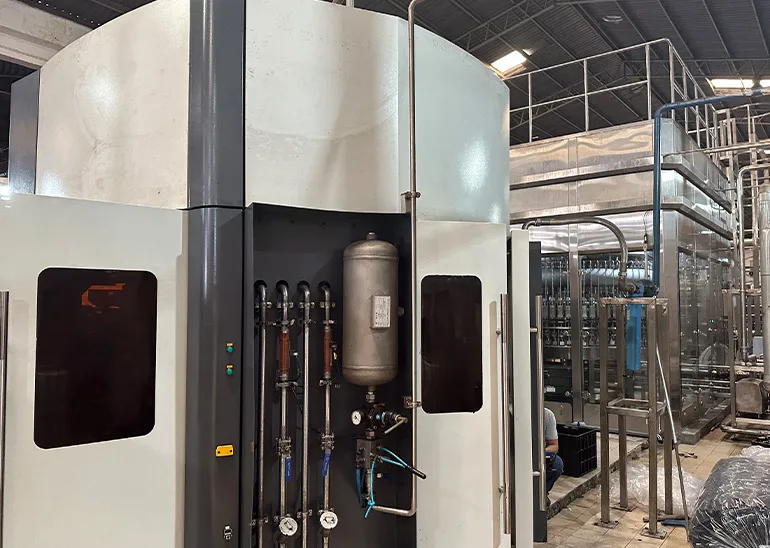
Vizit, 12,000BPH 1L Bottling Line with Combiblock for CSD, Kazakhstan
Country: Kazakhstan
Product: PET Bottled Carbonated Soft Drinks
Capacity: 12000BPH (1L)
Solution:Carbonated Drinks Production Line
Read More + -

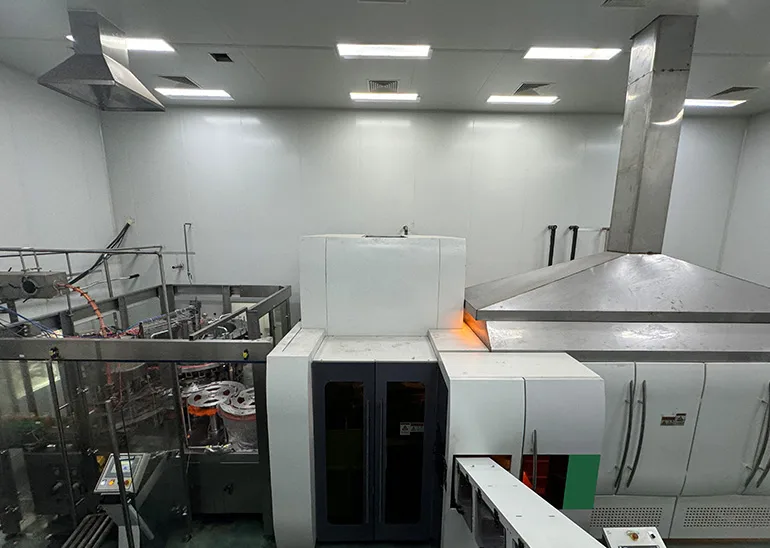
Taza, 4 Sets of 12,000BPH 1.5L Bottling Lines with Combiblock for Water, Maldives
Country: Maldives
Product: PET Bottled Mineralized Water
Capacity: 24,000BPH (500ml); 2 Lines
Solution:Water Production Line
Read More + -

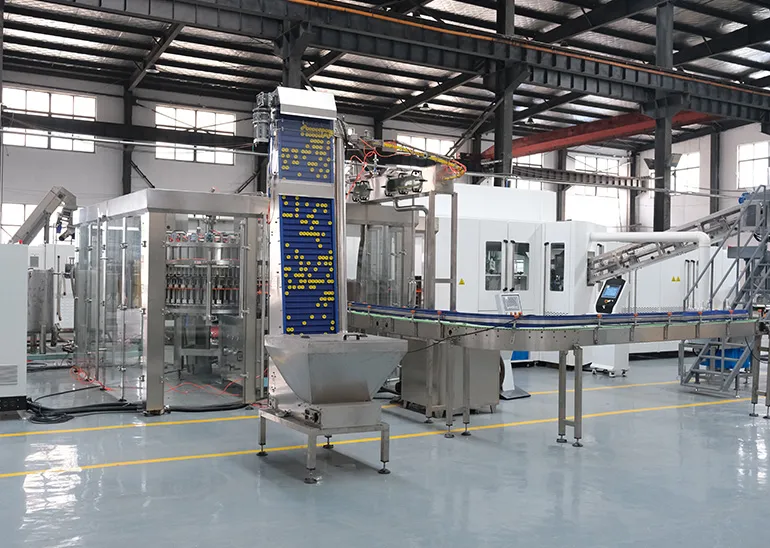
Rauan, 8 Sets of Bottlingand Canning Lines from 12,000-24,000BPH for Water, CSD and Juice, Kazakhstan
Country:Kazakhstan
Product: PET Bottled Sparkling Water, Canned Soft Drink, Canned Tea
Capacity: 25000CPH (250ml)
Solution:Three Lines,7000BPH(1.5L), 15000CPH(330ml),15000CPH(450ml)
Read More +
Have a specific project in mind?
Tell us product, target BPH, bottle sizes and market. We reply with a draft layout, equipment list and lead time estimate.
Fill the inquiry form ↑