


Company · Quality Assurance
Quality Control & Factory Acceptance Test (FAT) Process
Every line runs on water at rated speed before it is crated — and you get the data sheet.
6
QC checkpoints
ISO/CE
Certified · SGS audited
444+
Lines delivered
1–7 days
Typical FAT duration
20,000 m²
Manufacturing facility
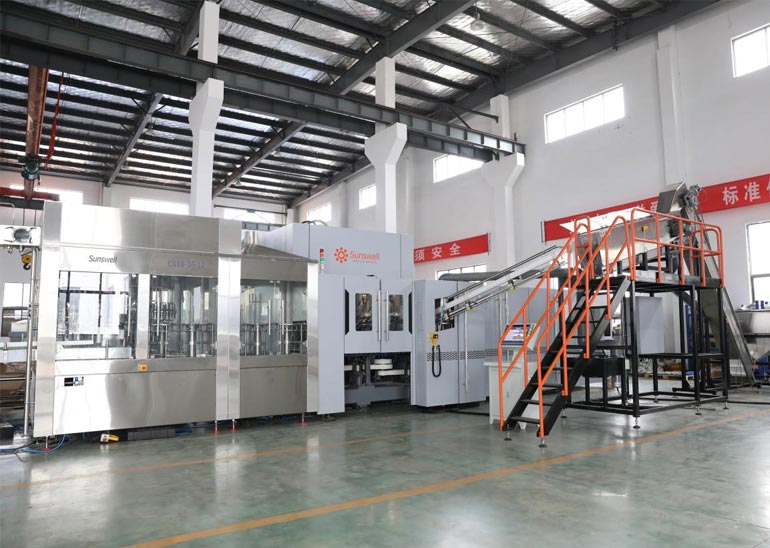
Short answer: A Factory Acceptance Test is a measured test run at the manufacturer's plant before shipment: the line is assembled, run on water at rated speed, and checked against contract figures for output, fill accuracy, capping torque, reject logic and safety circuits. Sunswell runs FAT on every line and issues a signed FAT report that becomes the baseline for site acceptance.
🎯 Key takeaways
- FAT is run on every line — water run at rated speed before the machine is crated
- Six QC checkpoints ahead of shipment; each stage down the chain multiplies the cost of the same defect
- Measured items: output, fill accuracy, capping torque, reject and safety logic, each with a numeric pass criterion
- Send your real preforms and caps in advance — closures cause more post-installation trouble than machines do
- The signed FAT report is the baseline for site acceptance, warranty claims and future line expansion
- FAT ≠ SAT: water vs product, factory utilities vs yours. Gaps at site are usually air, power or water quality
On this page
1. Why FAT is the cheapest insurance in the project
A filling line that fails on the buyer's floor costs three things at once: engineer time at overseas rates, air-freighted parts, and lost production during the plant's launch window. The same fault caught in the test bay costs an afternoon. That arithmetic is why the Factory Acceptance Test exists and why skipping it to save a week is a false economy.
FAT also changes the negotiating position. Once output, fill accuracy and reject rate are measured and signed at the factory, both sides have the same numbers. Site disputes stop being arguments about whether the machine is capable and become investigations into which variable changed — usually compressed air quality, preform batch or voltage stability.
2. The quality system behind the test
A single end-of-line test cannot rescue a machine built without control. Four checkpoints sit ahead of the FAT, each catching a defect while it is still cheap:
| Stage | Checked | Failure caught here costs |
|---|---|---|
| Incoming material | Stainless grade certificate, component brand, model, batch | A replacement order — hours |
| In-process machining | Critical dimensions, concentricity, surface finish | Re-machining one part — a day |
| Sub-assembly | Valve leak test, capping torque calibration, blow station timing | Rebuilding one assembly — a day |
| Pre-FAT dry run | Rotation, interlocks, emergency stops, sensor mapping | Rewiring and re-testing — days |
| FAT | Speed, fill accuracy, reject logic, coupled-line behaviour | Delaying shipment — a week |
| Site (no FAT) | Everything above, discovered by the customer | Engineer travel, air freight, lost launch window — weeks |
Engineering note. The cost column is the argument. Every row down that table multiplies the cost of the identical defect by roughly an order of magnitude. Quality control is not about perfection; it is about catching things early enough that fixing them is boring.
3. What the FAT actually measures
The protocol is agreed before the test, not improvised on the day. A standard turnkey FAT covers the following, each with a pass criterion written in numbers:
3.1 Output
The line runs at contract rated speed for a sustained continuous period with no unplanned stops. Bottles are counted by the line counter and cross-checked manually. Rated speed is always stated with the bottle size and product it applies to — an output figure without those two qualifiers means nothing.
3.2 Fill accuracy
A sample of filled bottles is weighed on a calibrated scale and the deviation from target is recorded. Acceptance is stated as a tolerance band, and the band depends on valve type: load cell and volumetric valves hold tighter tolerances than gravity or mechanical valves, which is precisely why they cost more.
3.3 Capping torque
Application and removal torque are measured with a torque tester across a sample. Too loose leaks and loses carbonation; too tight cracks the closure or strips the neck thread. The acceptable window comes from the cap supplier's specification, so bring your actual caps to the test.
3.4 Reject and safety logic
Faults are deliberately induced: a missing cap, a bottle jam, an open guard door, an emergency stop. Each must produce the correct machine response — reject, controlled stop, or immediate stop with restart interlock. This section of the test protects operators, and it is the one buyers most often skip watching. Watch it.
4. What the buyer should bring or send in advance
A FAT is only as realistic as the materials it runs on. Testing with generic bottles and then discovering your caps behave differently defeats the purpose. Send in advance:
- Preforms from your intended supplier, in production quantity — several thousand, not a sample bag.
- Caps of the exact type and liner you will buy. Cap behaviour is the most common source of post-installation trouble.
- Bottle drawings and, if available, sample bottles of the target design.
- Labels and film if labelling and shrink packing are in the line scope.
- Your product specification — density, viscosity, temperature, sugar content, CO₂ volumes, pulp content and particle size.
Caps and preforms decide more than the machine does. Two plants with identical lines can run at very different efficiencies because one buys consistent closures and the other buys the cheapest available batch. If you change cap supplier after commissioning, expect to re-tune the capping heads.
5. The FAT report and what to do with it
The report is a data document, not a certificate of goodwill. It should contain:
- Machine serial numbers and configuration as built
- Measured output with bottle size, product and test duration stated
- Fill accuracy sample data with the calculated deviation
- Capping torque sample data
- Reject and safety test results, item by item
- Photographs of the assembled line and control cabinets
- Component brand list as actually installed
- Open points, if any, with an agreed closure plan
Keep it. The report is referenced at site acceptance, at warranty claims and when the plant later wants to add a second line and needs to know exactly what was installed the first time. It also travels with the line if the plant is ever sold or refinanced — documented capacity is an asset.
6. From FAT to Site Acceptance Test
| FAT (factory) | SAT (your plant) | |
|---|---|---|
| Medium | Water | Your real product |
| Utilities | Factory supply, known stable | Your compressed air, power and water |
| Materials | Buyer-supplied preforms and caps | Full production materials |
| Duration | 1–7 days | Runs at the end of commissioning |
| Measures | Mechanical capability | Real production capability |
| Used for | Shipment release | Final payment and warranty start |
The gap between the two is where projects get uncomfortable, and it is almost always utilities. Wet compressed air, unstable voltage or untreated water will pull real output below the factory figure on a machine that is functioning perfectly. Fix the utility, not the machine. The sequence and responsibilities are set out in shipping, installation and commissioning.
Frequently asked questions
What is a Factory Acceptance Test?
A structured test run at the manufacturer's plant before shipment. The line is assembled, run on water at rated speed, and measured against the contract specification — output, fill accuracy, capping torque, reject logic and safety circuits. Results are recorded in a signed FAT report.
Do I have to attend the FAT in person?
No, but attending is worth the airfare on a turnkey line. If you cannot travel, we run the test on a scheduled video call, record the full run and send the data sheets. A third-party inspection company is the third option and is common for letter-of-credit contracts.
What is tested with water instead of product?
Mechanical function, speed, fill level repeatability, capping torque, transfer and reject logic. Water cannot reproduce foaming, viscosity or hot-fill temperature behaviour — those are tuned during on-site commissioning with real product.
How long does a FAT take?
A single machine is 1–2 days. A turnkey line is 3–7 days, because each machine is tested separately and then the line is run coupled with conveyors and accumulation.
What happens if the line fails the FAT?
It does not ship. Faults are corrected and the failed test items are re-run. This is the whole point of testing before packing — the same fix costs a fraction of what it costs after the machine has crossed an ocean.
Is the FAT report legally useful?
Yes. It is the documented baseline for site acceptance. If measured output at your plant is below the FAT figure, the difference points to a utility or material variable, and having signed factory data makes that conversation short and factual.
What certificates come with the machine?
CE declaration of conformity, ISO 9001 quality system certificate, material certificates for product-contact stainless steel, and component brand certificates. EAC/EAEU documentation is prepared for Customs Union destinations. See certifications and compliance.
About the author
Written by the Sunswell engineering team — led by Howie SUN, Founder & CEO, with 14 years in filling and blow-moulding equipment R&D and turnkey project delivery across 71+ countries.
Last reviewed: 2026-08-26 · Reviewed by Sunswell engineering team
Ask our engineering team →Recommend Products
Project references
-
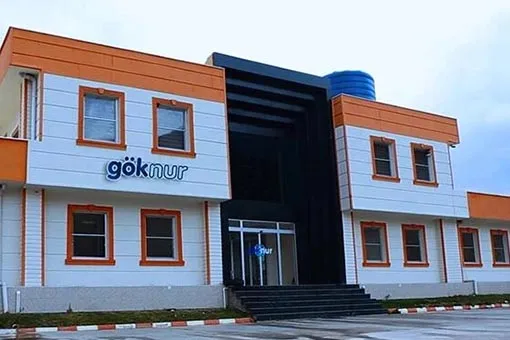
Goknur, 2 Sets of 18,000BPH Bottling Lines for Juice, Turkey
Country: Turkey
Product: Glass and PET Bottled Juice
Capacity: 20000BPH(330ml) Glass Bottle; 4000BPH(3L) PET Bottle
Solution:Juice Production Line
Read More + -

Vizit, 12,000BPH 1L Bottling Line with Combiblock for CSD, Kazakhstan
Country: Kazakhstan
Product: PET Bottled Carbonated Soft Drinks
Capacity: 12000BPH (1L)
Solution:Carbonated Drinks Production Line
Read More +
Have a specific project in mind?
Tell us product, target BPH, bottle sizes and market. We reply with a draft layout, equipment list and lead time estimate.
Fill the inquiry form ↑