


Company · Service & Support
Global Service & Support — Installation, Commissioning, Training and Spare Parts
What happens after the container arrives — and what your plant must have ready before it does.
71+
Countries exported
444+
Lines delivered
9+
Countries with service
12 mo
Standard warranty
80+
Staff · in-house R&D
Short answer: Sunswell service covers pre-shipment FAT, on-site installation supervision, commissioning to rated output, operator and maintenance training, a 12-month warranty, remote PLC diagnosis and a stocked spare parts programme. Commissioning is typically 15–30 days with 2–4 engineers, and the biggest variable is how ready the plant is before they arrive.
🎯 Key takeaways
- 2–4 engineers, 15–30 days on site for a typical turnkey line
- Commissioning escalates in fixed stages: dry run → empty bottle → water → product → speed ramp → SAT
- Plant readiness is the #1 schedule risk — floor, power, air, water and consumables in production quantity
- 12-month warranty from commissioning or 15 months from B/L, wear parts excluded
- Remote PLC diagnosis via VPN resolves most electrical faults without a site visit
- Buy the two-year spare parts list with the machine — a 200 USD sensor should never stop a line for three weeks
On this page
1. What "service" actually covers
Service is the part of a machinery contract buyers read last and need most. The word covers four separate obligations, and they are priced and scheduled differently. Confusing them is how projects end up with an installed line and nobody able to run it.
| Phase | What happens | Typical duration | Who is on site |
|---|---|---|---|
| Pre-shipment | Factory Acceptance Test, water run, buyer inspection | 3–7 days | Buyer or third-party inspector |
| Installation | Positioning, levelling, utility hook-up, alignment | 7–15 days | Buyer's contractor + our engineer |
| Commissioning | Dry run, water run, product run, speed ramp-up | 7–15 days | Our engineers |
| Training | Operation, changeover, CIP, first-line maintenance | Runs in parallel | Our engineers + your team |
| After-sales | Remote diagnosis, spare parts, revisit if needed | 12-month warranty | Remote + on demand |
Installation and commissioning overlap in practice, but the responsibility split does not. Positioning the frames, running cable trays and connecting compressed air is local work. Our engineer supervises, checks tolerances and signs off — then takes over for commissioning.
2. What must be finished before our engineers land
The single largest cause of extended commissioning is a plant that is not ready. Engineers who arrive to find no compressed air and an unfinished floor still consume their allocated days. A readiness checklist goes out with the shipping documents:
- Floor. Concrete cured, flat within ±3 mm over 2 m, drainage channels cut and grated.
- Power. Main cable pulled to the line's incoming panel, correct voltage and phase confirmed, earth resistance measured.
- Compressed air. Low-pressure and high-pressure supply piped to the machine tie-in points, with dryer and filtration in service. Blowing air quality decides bottle quality.
- Water. Treated water to the filler, plus service water and drains at the rinser.
- Consumables on site. Preforms, caps, labels, film and product concentrate — in production quantity, not samples. A line cannot be speed-tested on 200 preforms.
- People. Named operators, one maintenance technician and one electrician available for the whole commissioning window, not borrowed from another shift.
Engineering note. Send photographs of the poured floor and the utility tie-in points two weeks before the engineers travel. We have redirected shipping schedules on the basis of those photos more than once, and it costs far less than idle engineer-days on site.
3. How commissioning runs, day by day
Commissioning follows a fixed escalation: nothing moves until the previous stage is signed off. The sequence protects the machine and the buyer's material budget.
- Dry run. Every drive is jogged, rotation direction checked, safety interlocks and emergency stops tested. No bottles, no product.
- Empty bottle run. The line runs with bottles but no liquid. Star wheels, guide rails and transfer points are adjusted until zero jams over a sustained run.
- Water run. Water replaces product. Fill level accuracy, capping torque and reject logic are tuned and recorded.
- Product run. Real product at low speed, then stepped up. Foaming, temperature drift and viscosity behaviour appear only at this stage.
- Speed ramp and stability test. The line runs at rated output for a continuous agreed period. This is the run that matters for acceptance.
- Site Acceptance Test. Output, fill accuracy and reject rate are measured against contract figures and signed by both sides.
4. Training that survives staff turnover
Training delivered as a one-off lecture is forgotten within a month. We structure it around the three roles that actually keep a line running, and we train them on the moving line.
4.1 Operators
Start-up and shutdown sequence, recipe selection, fault-code response, bottle-size changeover, CIP initiation. Operators perform each task themselves under supervision before sign-off — watching is not training.
4.2 Maintenance technician
Lubrication schedule and points, gasket and seal replacement, conveyor chain tensioning, capping-head torque verification, which wear parts to stock and at what re-order level.
4.3 Electrician
PLC navigation, sensor diagnosis and replacement, VFD parameter access, safety-circuit architecture, and how to connect the remote-support router. This person is the plant's first line of defence and the one we speak to during remote sessions.
Documentation is handed over in English as standard: operation manual, electrical drawings, pneumatic diagram, spare parts catalogue with part numbers, and the PLC programme backup. Russian documentation is available for Central Asian projects.
5. After-sales: warranty, remote support, spare parts
5.1 Warranty terms
12 months from commissioning or 15 months from bill of lading, whichever comes first. Covers manufacturing defects in mechanical and electrical components. Excludes wear parts, damage from utility failure — unstable voltage, wet compressed air, untreated water — and unauthorised modification.
5.2 Remote diagnosis
A VPN-capable router in the control cabinet lets our engineers read the PLC live. Most electrical faults, sensor failures and recipe problems are resolved in a session of under an hour. The plant needs to provide a stable internet drop at the cabinet — this is the cheapest piece of infrastructure in the whole project.
5.3 Spare parts logistics
| Category | Examples | Lead time | Stock advice |
|---|---|---|---|
| Fast-moving wear | Gaskets, O-rings, filter elements, cap chute liners | 3–5 days by air | Hold 12 months' usage on site |
| Electrical | Proximity sensors, photo-eyes, relays, contactors | 5–10 days | Hold 2 of each critical type |
| Drive components | Servo motors, VFDs, gearboxes | 10–20 days | Hold 1 of the most-used rating |
| Format parts | Change parts for a new bottle size | 20–35 days | Order with the bottle design, not after |
| Moulds | Blow moulds for a new bottle | 30–45 days | Order 2 months before launch |
Every line ships with a recommended two-year spare parts list. Buying it with the machine avoids the worst case: a 200 USD sensor stopping a line for three weeks because it has to clear customs on its own.
6. Where our service reach actually is
Sunswell has exported to 71+ countries and maintains engineer deployment capability in 9+ countries with regular project activity — Kazakhstan, Uzbekistan, Russia, Turkey, Saudi Arabia, UAE, Egypt, Nigeria and the Maldives among them. In those markets a service visit typically means a 3–7 day mobilisation. Elsewhere the engineer travels from Zhangjiagang and the lead time depends on visa processing.
Be direct about this. A Chinese manufacturer promising a local service centre in every market is telling you what you want to hear. What matters is documented response time, a spare parts list you can stock, and an engineer who answers the phone. Ask for reference contacts in your region and call them.
7. Service clauses worth writing into the contract
| Clause | Why it matters |
|---|---|
| Number of engineers and on-site days | Prevents a two-week job being staffed for five days |
| Who pays flights, hotel, meals, visa | The most common post-award argument |
| Buyer readiness checklist as an annex | Makes plant readiness a contractual obligation, not a hope |
| SAT acceptance criteria and measurement method | Output, fill accuracy and reject rate in numbers |
| Warranty start date definition | Commissioning date, not shipment date, where possible |
| Spare parts price list valid for 24 months | Stops price escalation on your second order |
| Remote support response time | Commit to hours, not "as soon as possible" |
| Extra engineer-day rate | Fixed in advance, so overruns are budgeted not negotiated |
Frequently asked questions
Do you send engineers for installation?
Yes. Sunswell sends commissioning engineers to site for every turnkey line. Typical deployment is 2–4 engineers for 15–30 days depending on line length and how much civil and utility work the buyer completed before arrival.
Who pays for the engineers' travel and accommodation?
The standard contract covers engineer salary and the manufacturer's internal cost. The buyer covers international flights, local transport, accommodation, meals and visa invitation support. This is written into the contract so there is no dispute on arrival.
What happens if a visa is refused?
We prepare the invitation documents the destination embassy requires and, where the market allows it, nominate an engineer holding a valid multi-entry visa. If travel is still blocked, commissioning switches to remote mode: video walk-through, annotated photos and a local electrician working under instruction.
How long is the warranty?
12 months from commissioning or 15 months from bill of lading date, whichever comes first. Wear parts — gaskets, seals, filter elements, cap chute liners — are excluded, as they are consumables with a defined service interval.
Can you support the line remotely after warranty?
Yes. The PLC can be reached through a VPN router if the plant provides an internet drop at the control cabinet. Most electrical and recipe faults are diagnosed this way without a site visit.
How fast do spare parts ship?
Common wear parts are held in stock and dispatched within 3–5 working days by air courier. Machined items made to order take 10–20 working days. A recommended two-year spare parts list is supplied with every line so critical items can be stocked on site from day one.
Do you train our operators?
Training is part of commissioning, not an extra. Operators, one maintenance technician and one electrician are trained on the running line, and the training is repeated on the night shift if the plant runs two shifts.
About the author
Written by the Sunswell engineering team — led by Howie SUN, Founder & CEO, with 14 years in filling and blow-moulding equipment R&D and turnkey project delivery across 71+ countries.
Last reviewed: 2026-08-26 · Reviewed by Sunswell engineering team
Ask our engineering team →Recommend Products
Project references
-
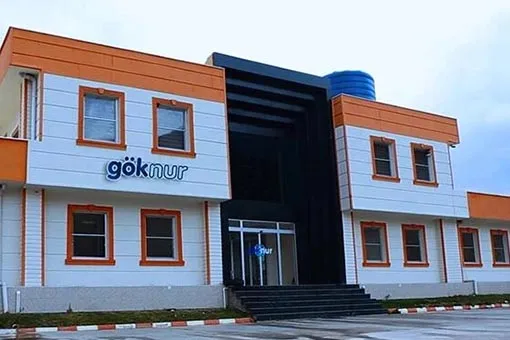
Goknur, 2 Sets of 18,000BPH Bottling Lines for Juice, Turkey
Country: Turkey
Product: Glass and PET Bottled Juice
Capacity: 20000BPH(330ml) Glass Bottle; 4000BPH(3L) PET Bottle
Solution:Juice Production Line
Read More + -
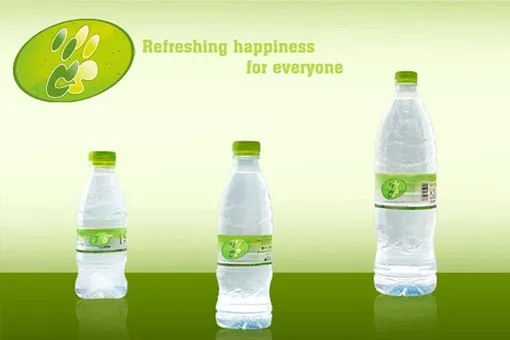
Taza, 4 Sets of 12,000BPH 1.5L Bottling Lines with Combiblock for Water, Maldives
Country: Maldives
Product: PET Bottled Mineralized Water
Capacity: 24,000BPH (500ml); 2 Lines
Solution:Water Production Line
Read More + -

Rauan, 8 Sets of Bottlingand Canning Lines from 12,000-24,000BPH for Water, CSD and Juice, Kazakhstan
Country:Kazakhstan
Product: PET Bottled Sparkling Water, Canned Soft Drink, Canned Tea
Capacity: 25000CPH (250ml)
Solution:Three Lines,7000BPH(1.5L), 15000CPH(330ml),15000CPH(450ml)
Read More +
Have a specific project in mind?
Tell us product, target BPH, bottle sizes and market. We reply with a draft layout, equipment list and lead time estimate.
Fill the inquiry form ↑