Plant-based milk—oat, soy, almond, pea—has moved from niche to mainstream, and its filling requirements are unlike any traditional beverage. High viscosity, suspended solids, heat-sensitive proteins and a short, oxygen-sensitive shelf life force a different line design. According to Fortune Business Insights, the global plant milk market exceeds USD 25 billion and grows near 10% CAGR. For producers in Europe and Southeast Asia, getting the filler and sterilization right decides shelf life and recall risk.
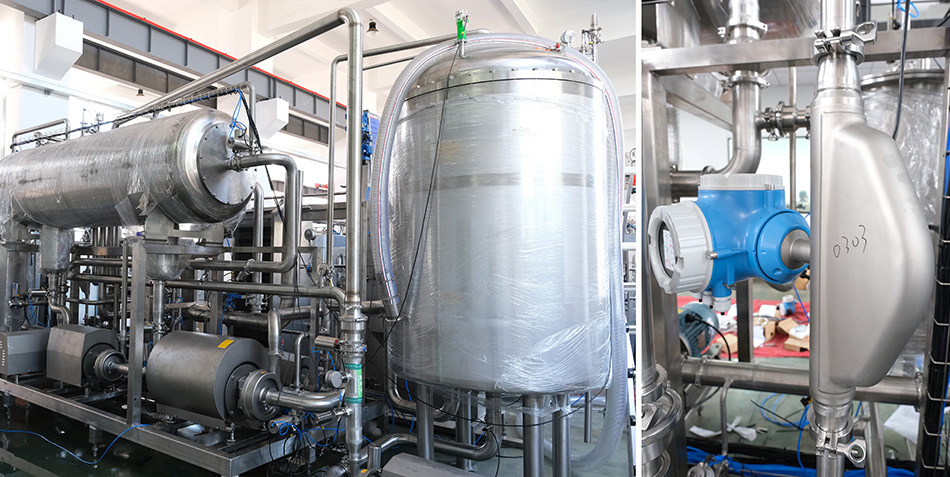
Plant milks need UHT or ESL sterilization, aseptic filling for ambient shelf life, and fillers that handle viscosity and pulp without shear damage. A processing train with homogenization and deaeration precedes the filler. Lines are frequently sourced from China with aseptic juice-style or viscous-product fillers adapted for the matrix.
| Challenge | Cause | Line solution |
|---|---|---|
| Sedimentation | Insoluble fiber (oat/soy) | Agitation, piston / positive-displacement filler |
| Viscosity | Protein + fat matrix | Volumetric / piston, heated product path |
| Shelf life | Micro + oxygen | UHT + aseptic fill + nitrogen dosing |
| CIP | Protein fouling | High-temp CIP, cleanable design |
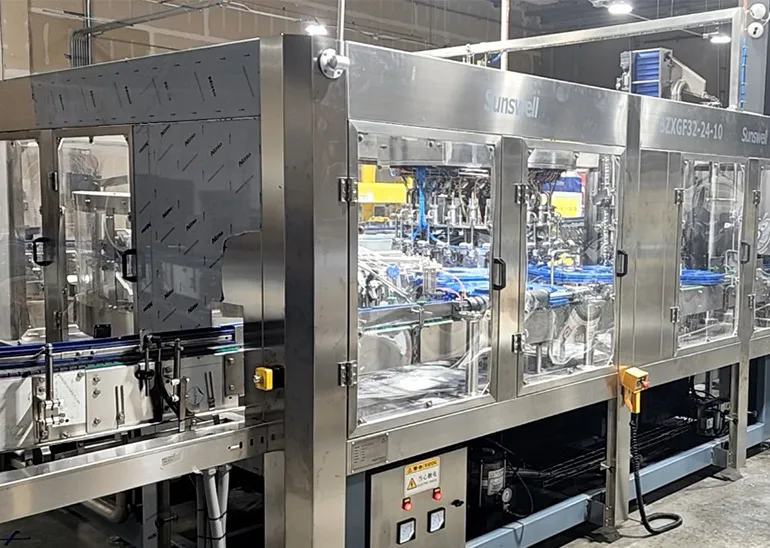
For ambient stable product, an aseptic aseptic filler keeps the sterile barrier to the cap. Where product carries pulp, a piston filling machine for viscous product gives stable dose despite viscosity.
Refrigerated distribution allows hot-fill, using a hot-fill filler plus a pasteurizing tunnel—cheaper than aseptic but needs cold chain.
Plant proteins foul fast. Specify cleanable product contact surfaces, CIP sprays on every dead leg, and a validation routine. This mirrors viscous-product hygiene practice.
Only with modifications: stronger agitation, a shear-sensitive filler, and aseptic or refrigerated path; pulp settling will otherwise cause dose variation.
For cold-chain products yes, and it is cheaper than aseptic; for ambient shelf life you need full aseptic filling.
Design your line with processing equipment and aseptic juice-style fillers from Sunswell.



 +86 13921964455
 [email protected]

A2 Dongjiu Industrial Park, 30 East Jintang Road, Tangshi, Zhangjiagang, Jiangsu 215600, China