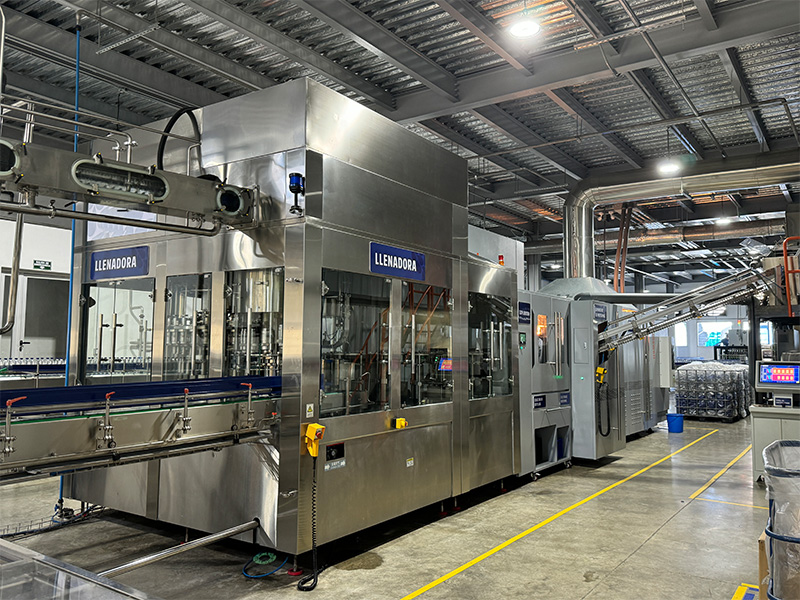
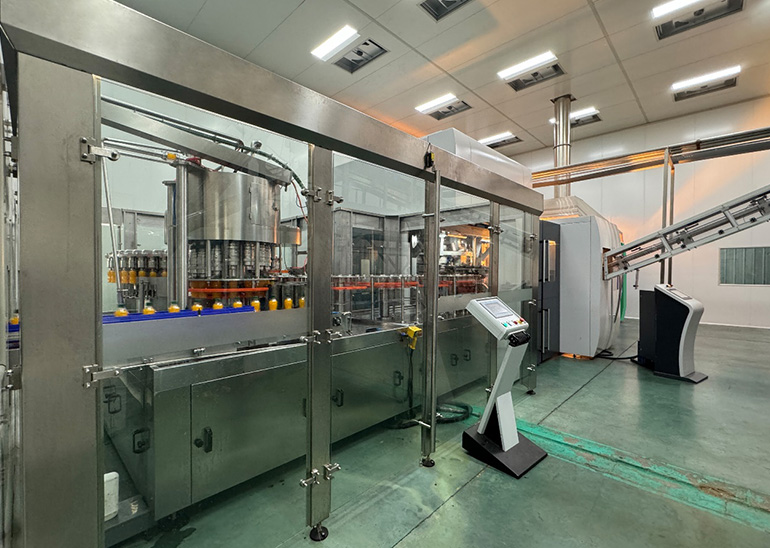
| Scope | Filling, capping and closing equipment |
| Filling principles | Gravity, volumetric, isobaric, piston, load cell |
| Capacity | 2,000-48,000 BPH by configuration |
| Accuracy basis | Volume, weight or fill level |
| Wetted parts | SUS 304 product contact, CIP-ready |
| Key control | Fill accuracy, closure integrity, CIP time |
Filling principle comes from the product, not from the target BPH. Still liquid at a steady density runs gravity or volumetric; carbonated product needs isobaric; thick product with solids needs a piston; product sold by weight runs a load cell. A machine picked ahead of the product usually gets picked again.
The capping head is built for one closure family. A screw cap, a crown and a ROPP cap need different heads, different heights and different checks. Changing closure after the line is ordered means a new head, and sometimes a new bottle finish, not a setting change.
| Principle | Doses by | Fails when |
|---|---|---|
| Gravity | Fill level in the bottle | Bottle geometry varies |
| Volumetric | Chamber volume | Valve seal wears |
| Isobaric | Volume under counter-pressure | Pressure or temperature drifts |
| Piston | Displacement | Product carries solids |
| Load cell | Net weight | Product temperature moves |
The Gravity Filling Machine for Still Water is the reference unit for this configuration.
It saves capital and floor space, and it costs labour per shift. Manual loading, manual packing and manual palletizing are the usual trades. For a small plant with a single format and a flexible crew, that is a sensible trade; for a plant running three shifts it is not.
Valve count, utility schedule and footprint sit on the Volumetric Filling Machine for Still Water page.
The neck finish sets the rinser clamp, the filling valve seal and the capping head. A change of a millimetre in the thread is a change of change parts and often of the capper. It is the single most under-specified item in a filling line enquiry.
The same question is worked through from another angle in How Gravity Fillers Preserve Delicate Beverages.
A single frame carrying the rinser, the filler and the capper, driven and controlled together. It removes two transfers and the floor space between three separate machines.
From tens of minutes to over an hour, set by the circuit volume and the soil. It is a fixed cost per production day and should be planned as downtime, not squeezed into the shift.
Valve seals, piston seals, capping head inserts, guide rail blocks and one set of change parts for the second format. These are the items that stop a line for days when they fail.
Rated BPH is a steady-state figure at one format. Real output subtracts changeover, CIP, label changes and downstream stops, which is why planning uses a factor of 0.65-0.85.
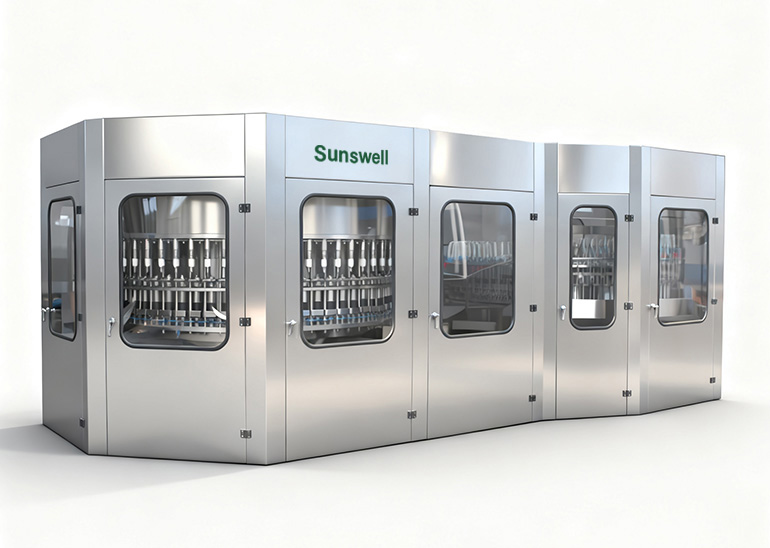
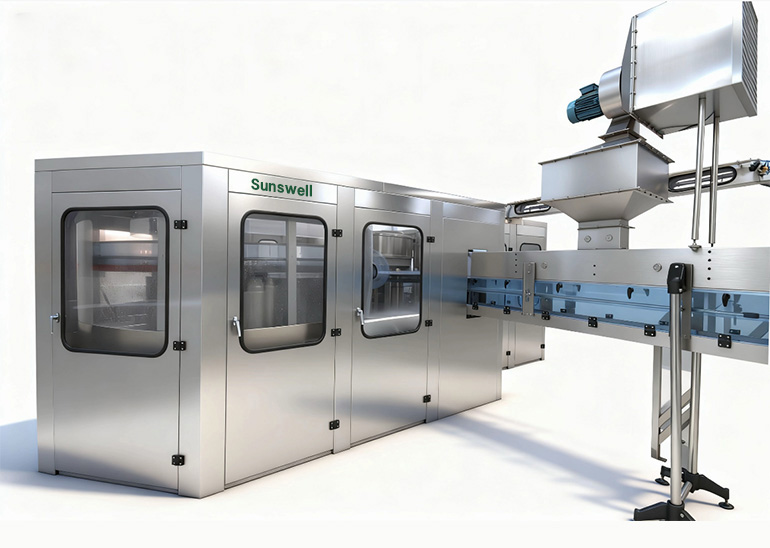
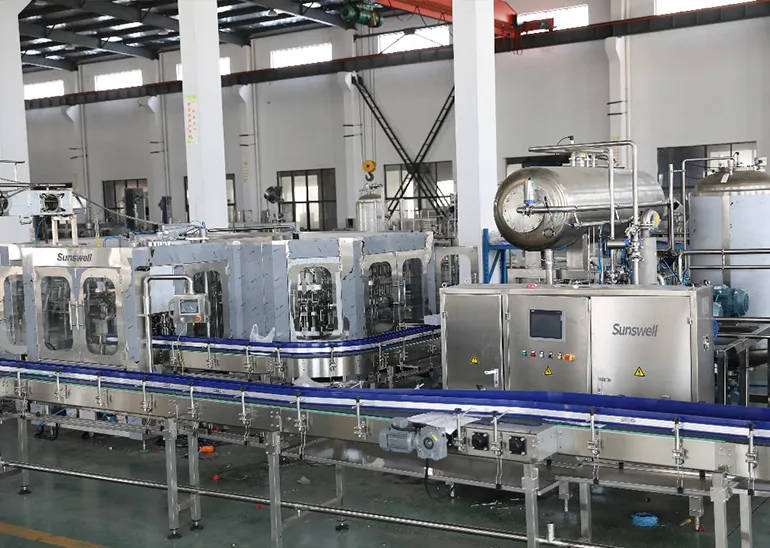
Country:Kazakhstan
Product: PET Bottled Sparkling Water, Canned Soft Drink, Canned Tea
Capacity: 25000CPH (250ml)
Solution:Three Lines,7000BPH(1.5L), 15000CPH(330ml),15000CPH(450ml)



 +86 13921964455
 [email protected]

A2 Dongjiu Industrial Park, 30 East Jintang Road, Tangshi, Zhangjiagang, Jiangsu 215600, China