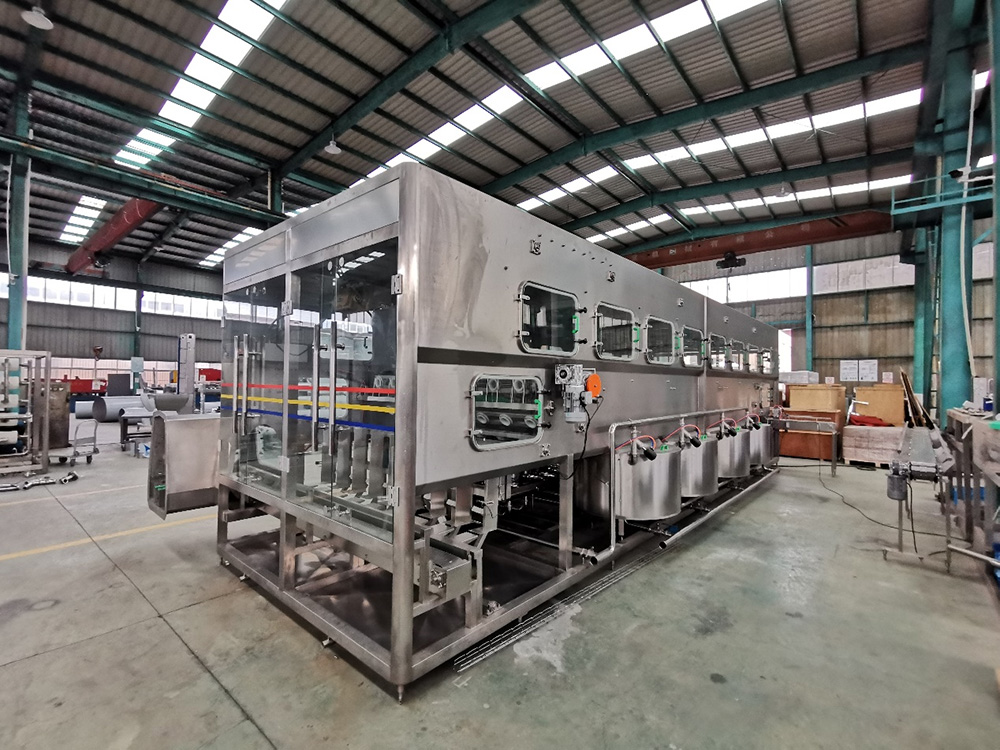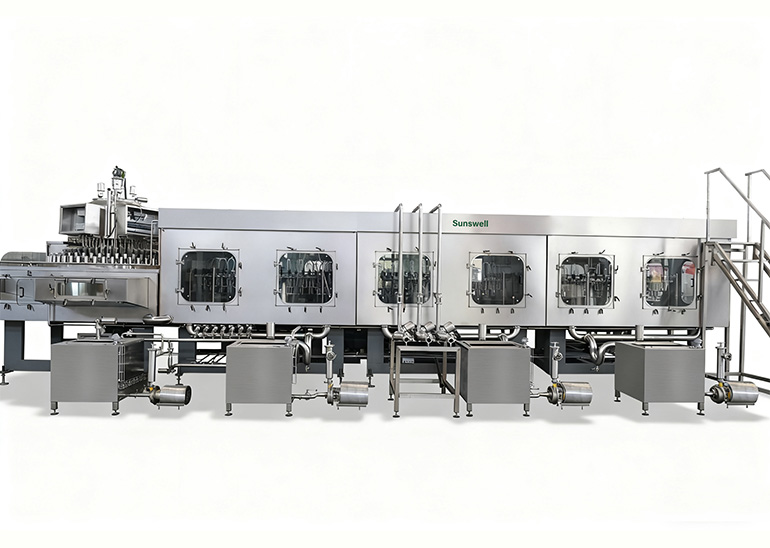
| Supply scope | Filling, capping and closing equipment |
| Filling principles | Gravity, volumetric, isobaric, piston, load cell |
| Rated output | 2,000-48,000 BPH by configuration |
| Accuracy basis | Volume, weight or fill level |
| Wetted parts | SUS 304 product contact, CIP-ready |
| Key control | Fill accuracy, closure integrity, CIP time |
Start from the symptom and work back to the mechanism, not from the part list. Most filling faults show up in three places: fill weight or level, closure integrity, and product condition. Which of the three moved first tells you whether the cause is mechanical, thermal or product-side.
Four variables sit behind a fill number: the dosing principle, the product temperature, the bottle geometry, and the condition of the valve or piston seal. A machine that holds its tolerance on the factory test can drift in the plant when the product arrives warmer or the bottle wall gets thinner.
| Principle | Doses by | Fails when |
|---|---|---|
| Gravity | Fill level in the bottle | Bottle geometry varies |
| Volumetric | Chamber volume | Valve seal wears |
| Isobaric | Volume under counter-pressure | Pressure or temperature drifts |
| Piston | Displacement | Product carries solids |
| Load cell | Net weight | Product temperature moves |
Sizing for this duty runs through the Gravity Filling Machine for Still Water, where the valve count is set out.
The capping head is built for one closure family. A screw cap, a crown and a ROPP cap need different heads, different heights and different checks. Changing closure after the line is ordered means a new head, and sometimes a new bottle finish, not a setting change.
The Volumetric Filling Machine for Still Water is the matching unit when this becomes a line project.
The parts cost is small; the time is not. A format change touches star wheels, guide rails, grippers, the cap chute and the recipe. On a line with two formats and two changes a day, the annual hours lost exceed the price of a second small machine in many plants.
The same question is worked through from another angle in Filling Machines for Products with Aluminum Foil Seals.
Yes, with change parts: star wheels, guide rails, grippers and a recipe. The parts are cheap compared with the changeover time, which is why most plants specify one dominant format.
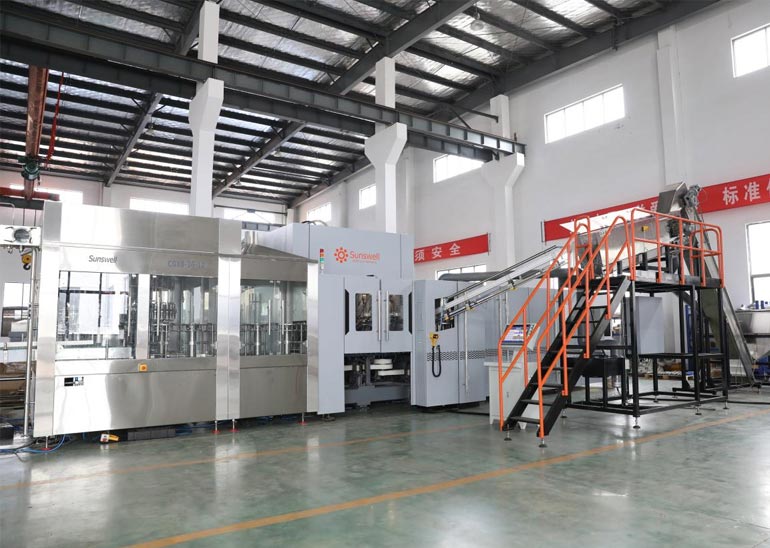
A single frame carrying the rinser, the filler and the capper, driven and controlled together. It removes two transfers and the floor space between three separate machines.
Bottle capacity variation, product temperature, valve wear or foam. On glass, mould-to-mould capacity variation alone is enough to make level filling inconsistent, which is why glass lines often check-weigh.
Rated BPH is a steady-state figure at one format. Real output subtracts changeover, CIP, label changes and downstream stops, which is why planning uses a factor of 0.65-0.85.
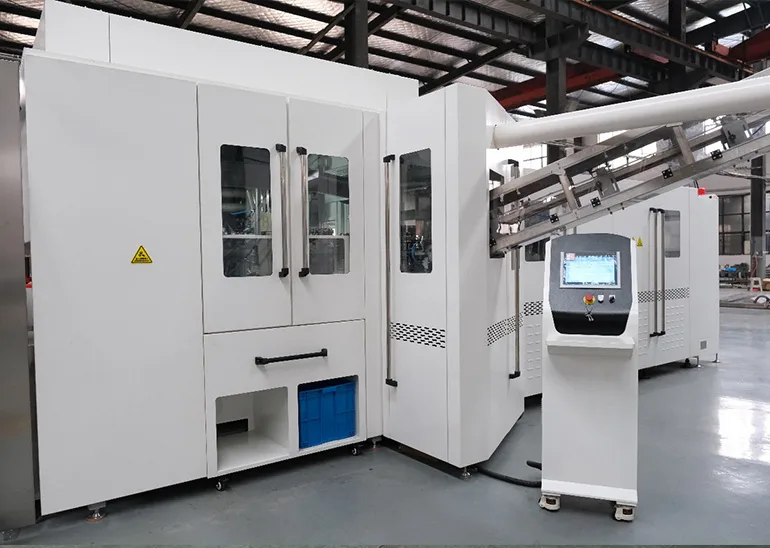
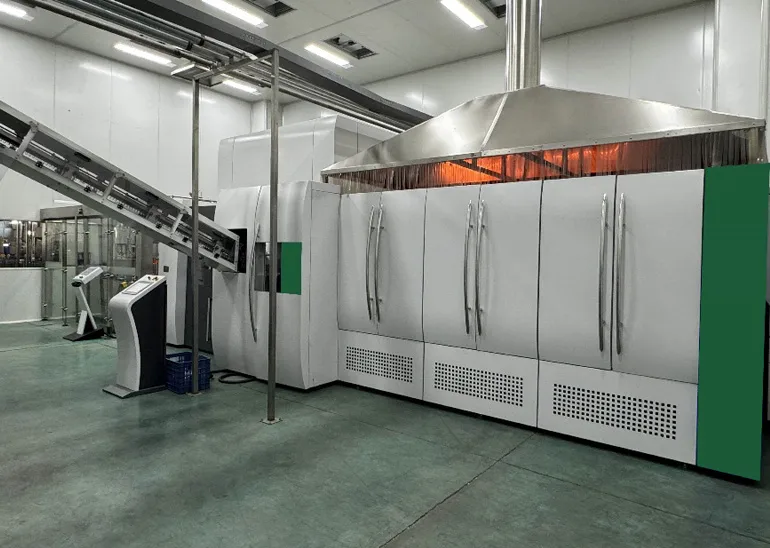
Country:Kazakhstan
Product: PET Bottled Sparkling Water, Canned Soft Drink, Canned Tea
Capacity: 25000CPH (250ml)
Solution:Three Lines,7000BPH(1.5L), 15000CPH(330ml),15000CPH(450ml)



 +86 13921964455
 [email protected]

A2 Dongjiu Industrial Park, 30 East Jintang Road, Tangshi, Zhangjiagang, Jiangsu 215600, China