The right upstream and supporting technology decides whether a beverage filling machine line runs efficiently, compliantly and profitably. In this guide Sunswell breaks down Advanced CIP Validation for B2B buyers planning or upgrading a production line.
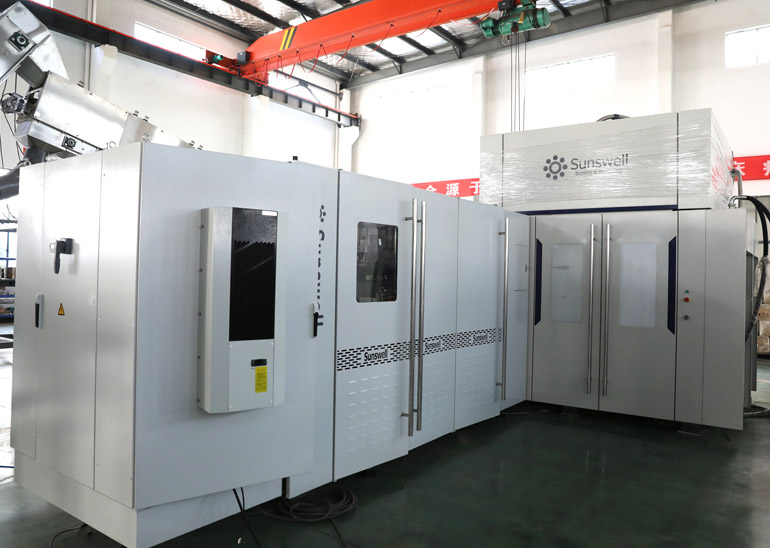
CIP (clean-in-place) must be validated, not assumed. Modern lines instrument the wash with conductivity, temperature and flow sensors so every filling machine cycle is provably sanitary. This guide explains how conductivity confirms caustic/sanitizer presence, how temperature logging proves kill step, and how flow/turbulence assure full coverage — the three pillars of auditable CIP on a Combiblock.
Validation demonstrates that each circuit reaches the required chemical concentration, temperature and contact time to deliver a specified log reduction of microbes. It protects food safety and satisfies ISO 22000 / 3-A audits.
Conductivity confirms the right detergent/sanitizer is present and flushed; temperature logging proves the thermal kill step; flow & turbulence (Reynolds number) confirm the fluid actually scrubbed every surface.
| Parameter | What it confirms | Typical target |
|---|---|---|
| Conductivity | Detergent/sanitizer concentration & rinse end | Profile vs recipe |
| Temperature | Thermal kill step | ≥ 75–85 °C for caustic |
| Flow / velocity | Turbulent coverage (Re > 3000) | 1.5–3 m/s in lines |
| Contact time | Dwell at target | Per validated SOP |
Put conductivity and PT100 sensors on supply and return of each circuit, and a flow meter on the CIP supply pump. Data logs feed the MES so every batch has a CIP certificate. Processing Equipment and the Pasteurizing Tunnel share the same CIP skid.
The controller flags a cycle red if any parameter drifts outside the validated window, blocking the next production run until resolved — essential for Water Treatment Systems and beverage lines exporting to regulated markets.
Annually, after any recipe/circuit change, or after a contamination event. Keep the last validation on file for auditors.
No — conductivity proves chemistry but not heat or coverage. All three signals together give a defensible Combiblock sanitation record.
Build an auditable CIP into your Processing Equipment and Combiblock with Sunswell.



 +86 13921964455
 [email protected]

A2 Dongjiu Industrial Park, 30 East Jintang Road, Tangshi, Zhangjiagang, Jiangsu 215600, China