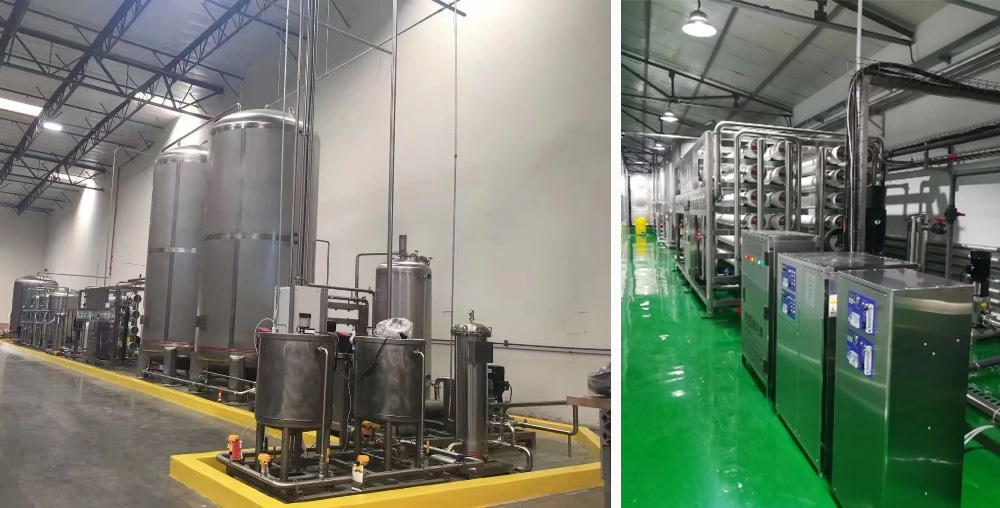
| Stages | Pre-treatment, RO, disinfection |
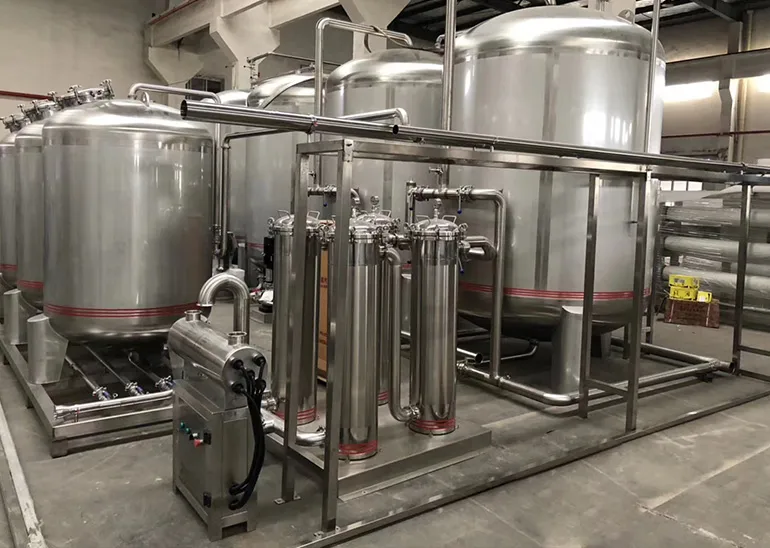
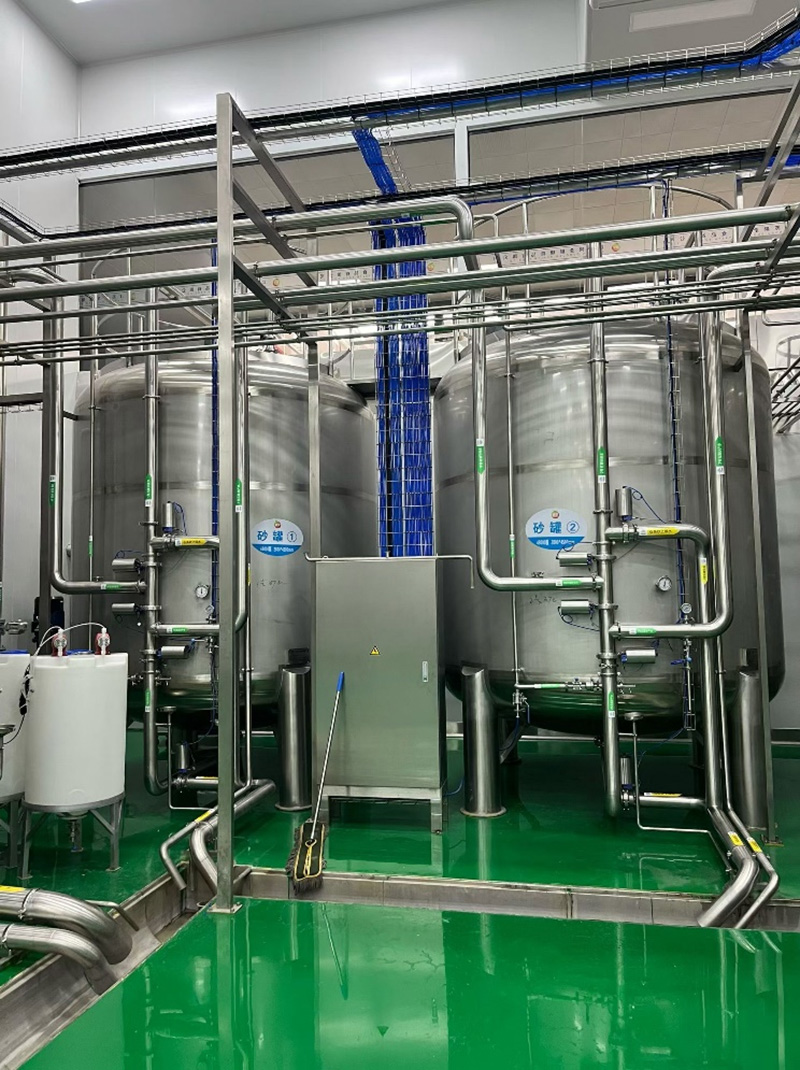
| Pre-treatment | Multi-media filter, carbon filter, softener |
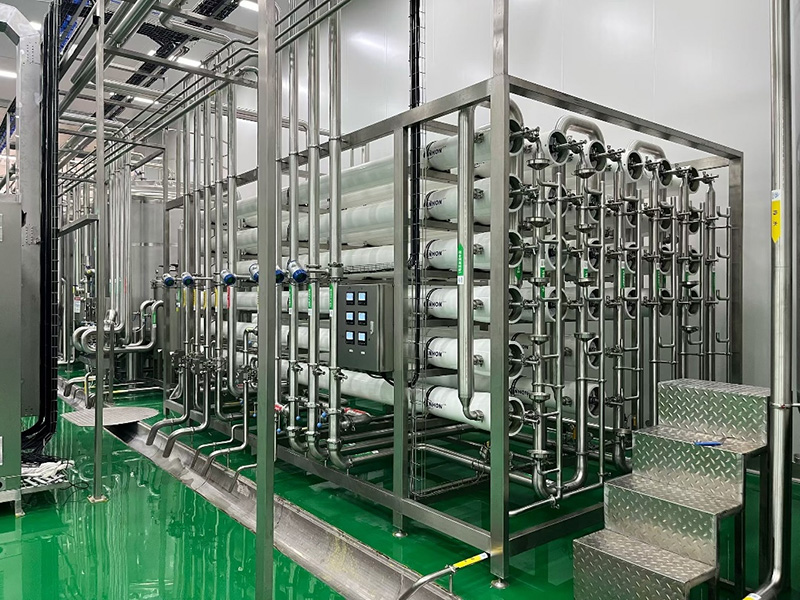
| RO | Reverse osmosis with a storage and buffer tank |
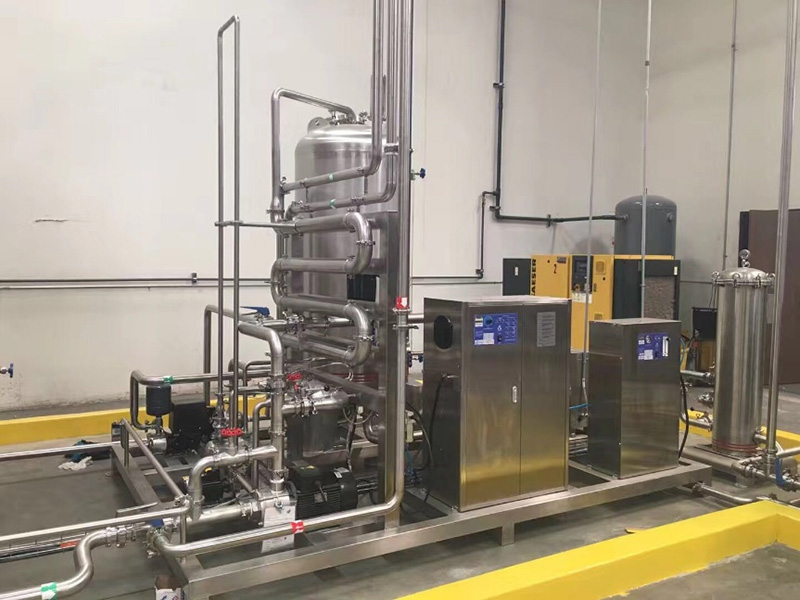
| Disinfection | UV, ozone, or both |
| Key control | Raw water analysis, recovery rate, conductivity |
| Key decision | Which stages the raw water actually needs |
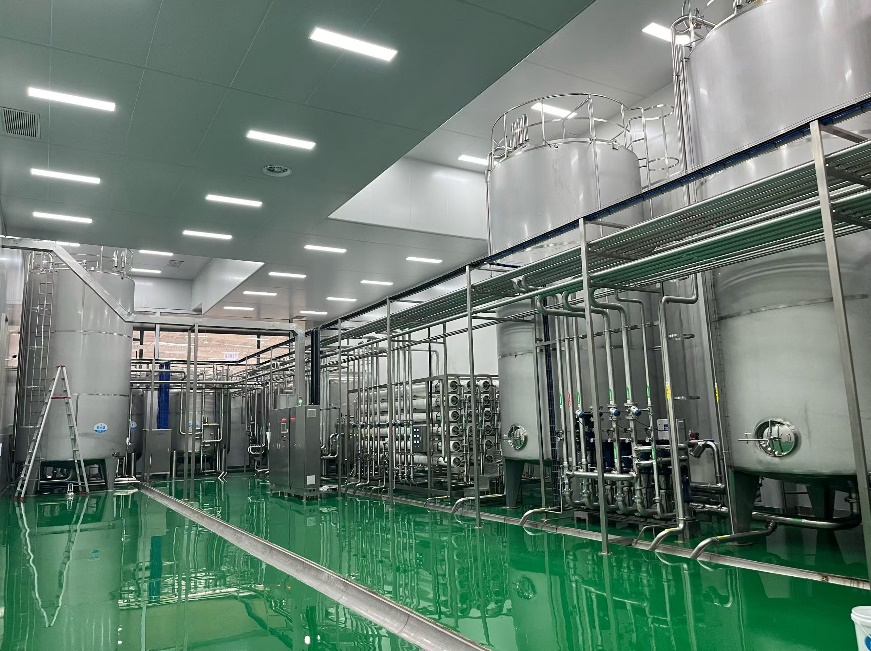
The raw water analysis decides it. Surface water usually needs multi-media filtration, carbon and RO; hard well water needs softening before the RO; low-hardness municipal water may only need carbon and disinfection. A package bought without an analysis is either oversized or short of a stage.
Because calcium and magnesium content in raw water is very high, and RO salt-removing rate is about 97%, which may cause deposit of calcium carbonate, magnesium carbonate, bitter salt, etc. on concentrated water side.
RO produces permeate and rejects concentrate. The recovery rate sets how much of the feed becomes product water, and the buffer tank size sets how long the line can run when the RO is in flush or maintenance. A filler that outruns the RO starves at shift start, which looks like a filler problem and is not.
Deposit adhered on RO membrane surface and may block passage of components and causes pressure difference increase, water output decrease and salt-removing rate decrease, which influence normal running and usage span of RO.
| Stage | Removes | Driven by |
|---|---|---|
| Multi-media filter | Suspended solids | Turbidity of raw water |
| Carbon filter | Chlorine and organics | Municipal dosing and taste |
| Softener | Hardness | Calcium and magnesium in the analysis |
| RO | Dissolved salts | Conductivity target of the product |
| UV or ozone | Micro-organisms | Storage time and final barrier |
Throughput and change-part lists are on the Water Treatment page rather than in this note.
UV leaves no residue and acts instantly, but it has no residual effect in the bottle. Ozone leaves a residual that protects the water in storage, and it needs a destruction step before filling. Many plants run both: ozone for storage, UV as a final barrier.
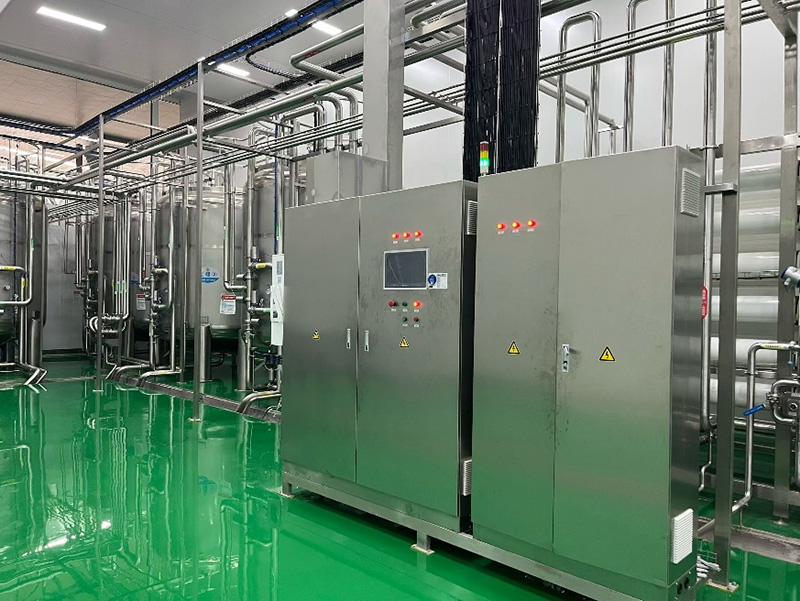
The unit behind this configuration is the Pre-treatment.
Flow, temperature, concentration and time, all four together. A CIP that meets the temperature but not the flow does not clean the far end of the circuit, and the failure appears as a micro result weeks later. The station is sized on the largest circuit it serves.
RO system can wash surface of RO membrane by low-pressure timely and periodically.
The same question is worked through from another angle in How Water Treatment Improves Beverage Taste.
It can be used only after analysis. Borehole water often carries hardness, iron or manganese, all of which need a stage before the RO or before filling.
RO removes minerals as well as contaminants, and very low-mineral water tastes flat. Some plants blend or re-mineralise. The target is a specification set with the product, not the lowest possible conductivity.
RO removes minerals as well as contaminants. Very low-mineral water tastes flat, so some plants blend or re-mineralise to a specification rather than chasing the lowest conductivity.
On chlorine breakthrough and on the supplier recommendation, not on a fixed calendar. A carbon bed that is exhausted lets chlorine reach the RO membrane.
Country: Maldives
Product: PET Bottled Mineralized Water
Capacity: 24,000BPH (500ml); 2 Lines
Solution:Water Production Line
Country:Kazakhstan
Product: PET Bottled Sparkling Water, Canned Soft Drink, Canned Tea
Capacity: 25000CPH (250ml)
Solution:Three Lines,7000BPH(1.5L), 15000CPH(330ml),15000CPH(450ml)



 +86 13921964455
 [email protected]

A2 Dongjiu Industrial Park, 30 East Jintang Road, Tangshi, Zhangjiagang, Jiangsu 215600, China