


Food safety · FAQ
Hygiene, HACCP and Food Safety FAQ for Beverage Plants
Food safety in a beverage plant is designed in, not inspected in: hygienic machine design, clean water, CIP cleaning and documented controls are what a HACCP plan is built on. This FAQ answers the questions that decide whether a line can pass an audit.
444+
Lines delivered
71+
Countries exported
20,000
m² workshop
80+
Staff
2011
Sunswell founded
Short answer: A food-safe beverage line is the product of hygienic design (cleanable stainless, no dead legs, openable guards), a correct CIP system, food-grade materials, safe water and documented procedures — which together form the plant's HACCP foundation. The machine must be cleanable and documented; the plant must run the procedures. Neither replaces the other.
🎯 Key takeaways
- HACCP is a documented risk-control system, and the line's hygienic design is its foundation.
- Cleanable design — stainless, radii, no dead legs — is decided at specification, not retrofit.
- CIP cleans the product path without dismantling; the chemistry and cycle are engineered, not improvised.
- Water safety (treatment, disinfection, monitoring) is the plant's biggest single risk control.
- Auditors check documents as much as surfaces: procedures, records and training.
On this page
1. What HACCP means for a line
HACCP is a systematic approach to food safety: identify where contamination can enter, control it, and prove the control with records. For a beverage line, the hazards are microbial (water, product, surfaces), chemical (cleaning residues, lubricants) and physical (foreign material). The line's job is to make the controls possible — cleanable surfaces, closed paths, safe materials — and the plant's job is to run them and record them.
A line that is hard to clean makes the HACCP plan fiction. A line that is cleanable makes the plan realistic. Both sides are bought together.
2. Hygienic design
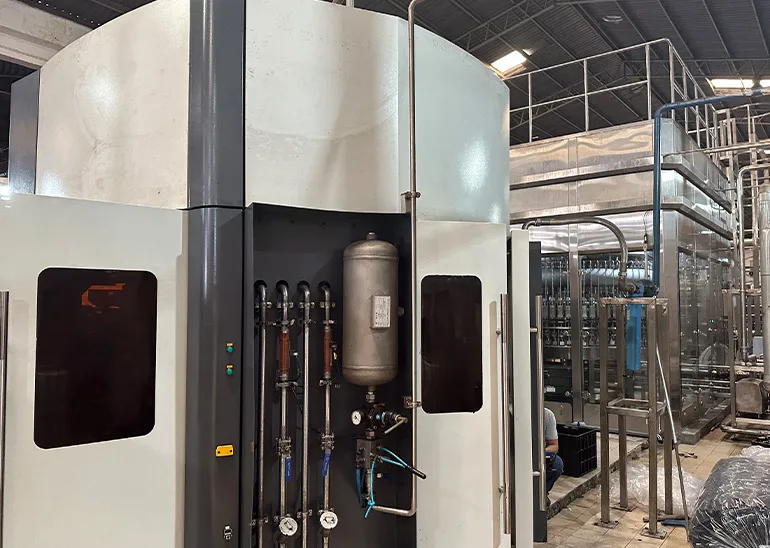
Hygienic design means: stainless product contact surfaces, radii instead of sharp corners, drainable low points, no dead legs where product stagnates, guards that open for cleaning, and separations between wet and dry zones. These choices are made at specification — retrofitting hygienic design is expensive and rarely complete.
Ask the supplier to state the hygienic design features in the technical agreement: material grades, surface finish, drainability and CIP connectivity. If it is not written, it is not included.
The difference between a cleanable line and a decorative one is visible in the drawings, not the photos.
3. CIP cleaning
Clean-in-place (CIP) circulates cleaning and rinse solutions through the product path without dismantling: pre-rinse, caustic, rinse, and acid where needed, followed by final rinse and verification. The cycle, the chemistry and the flow rates are engineered around the product and the soil it leaves — syrup and juice soil differently from water.
The CIP return path, the tank capacities and the control programme are part of the line design. Ask for the CIP specification with the proposal, and confirm the line can be verified clean (conductivity or pH check at the return).
4. Water safety
Water is the main ingredient and the main risk. Treatment (filtration, softening or demineralisation, disinfection) is designed around the source analysis, and monitoring — microbial and chemical — is a routine, not a crisis response. The polishing step before the filler protects the product from the last metre of pipe.
Water safety is the control that most audits probe first. Keep the analysis, the treatment design and the monitoring records current and consistent.
5. Food-grade materials
Product-contact materials must be food-grade: stainless for the product path, food-grade elastomers for seals and gaskets, and food-grade lubricants where contact is possible. The materials are part of the specification and part of the audit — a certificate for the material grade is worth having on file.
Confirm the food-grade scope in the contract, especially for seals, valves and conveyor components that touch the product or the bottle mouth.
6. Documentation and records
Auditors verify with records: water test results, CIP cycle logs, temperature records, maintenance logs and training records. The line should produce the data that supports them — logged parameters, alarm records and traceability data where the process requires it. A line that cannot log its own process makes every audit harder.
Build the documentation habit from day one. The first audit is easier when the records were always kept than when they were recreated for the visit.
7. Passing an audit
An audit checks three things: is the design capable (hygienic, cleanable, safe materials), are the procedures followed (CIP, monitoring, records), and is the staff trained. The line contributes the first; the plant runs the second and third. A supplier with food-industry delivered projects — juice, water, dairy — has the design history; the plant's operator makes it pass.
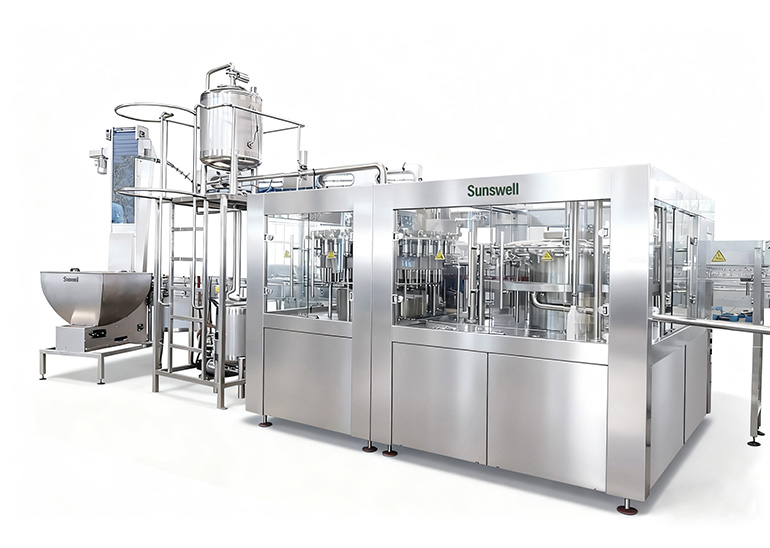
The machine side of a food-safe plant is a filling machine or combiblock specified with hygienic design from the start — the audit is the confirmation, not the test.
Frequently asked questions
Do I need a HACCP plan for a beverage plant?
In most markets, yes — for registration, export or major retail customers. The line's hygienic design is the foundation the plan is built on.
What is hygienic design in practice?
Cleanable stainless surfaces, radii, drainable low points, no dead legs, openable guards and wet/dry separation — decided at specification.
How does CIP work?
Solutions circulate through the product path without dismantling: rinse, caustic, rinse, acid if needed, final rinse and verification. The cycle is engineered per product.
What is the biggest food-safety risk?
Water, for most plants — it is the main ingredient and the main contamination route. Treatment and monitoring are the critical controls.
What will an auditor ask for?
Records: water tests, CIP logs, temperature and maintenance records, and training. The line should log what the procedures need.
Can Sunswell lines pass food-safety audits?
Yes — Sunswell supplies hygienically designed lines for water, juice, dairy and related products, with the CIP and materials spec written into the technical agreement.
About the author
Written by the Sunswell engineering team — led by Howie SUN, Founder & CEO, with 14 years in filling and blow-moulding equipment R&D and turnkey project delivery across 71+ countries.
Last reviewed: 2026-08-28 · Reviewed by Sunswell engineering team
Ask our engineering team →
Have a specific project in mind?
Tell us product, target BPH, bottle sizes and market. We reply with a draft layout, equipment list and lead time estimate.
Fill the inquiry form ↑