


Industry Guide · Sourcing
Zhangjiagang Beverage Machinery Cluster — Why This City Supplies the World
How a Yangtze river city became the centre of mid-market filling equipment — and how to choose well inside it.
2 hrs
From Shanghai
20,000 m²
Manufacturing facility
444+
Lines delivered
71+
Countries exported
80+
Staff · in-house R&D
Short answer: Zhangjiagang is a city in Jiangsu Province on the Yangtze, about two hours from Shanghai, where a large share of the world's mid-market beverage filling equipment is built. The cluster grew from early packaging machinery workshops into a dense supply chain of stainless fabrication, CNC machining, mould shops and integrators, with an ocean-capable river port. It contains genuine builders, assemblers and traders — and telling them apart is the buyer's main job.
🎯 Key takeaways
- Two hours from Shanghai, with an ocean-capable Yangtze port — heavy crates load near the factory
- The cluster grew by skill diffusion and supply-chain thickening, not by planning
- Stainless fabrication, CNC machining, mould shops and electrical supply all sit within a short drive
- Builders, assemblers and traders look identical online — ask what is machined in house and visit the floor
- A test bay is the strongest single indicator: no test bay means your plant becomes the test bay
- Export practice is built in: CE, EAC/EAEU and SASO documentation are routine, not exceptional
On this page
1. Where the city sits and why that matters
Zhangjiagang is a county-level city in Jiangsu Province, on the south bank of the Yangtze about two hours from Shanghai. Its relevance to a beverage producer in Almaty or Lagos is not geography for its own sake — it is that a significant share of the world's mid-market filling equipment is designed and built within a radius of a few dozen kilometres.
Three features of the location did the work:
| Feature | Practical consequence |
|---|---|
| Yangtze river port handling ocean vessels | Heavy crated machinery loads close to the factory instead of trucking to a distant port |
| Two hours from Shanghai | Buyers can fly in, visit and fly out inside a short trip; air freight for urgent parts is straightforward |
| Dense Jiangsu manufacturing base | Stainless fabrication, CNC machining, mould shops and electrical suppliers within a short drive |
The port matters more than it sounds. A turnkey filling line fills several forty-foot containers and includes crates that are awkward to move. Loading near the factory removes a handling stage, and every handling stage is a chance to damage a control cabinet.
2. How the cluster formed
Industrial clusters are not planned into existence; they accumulate. The pattern in Zhangjiagang followed a familiar sequence.
- Early packaging machinery workshops. Small shops building simple filling and sealing equipment for the domestic food industry established a base of mechanical skill.
- Supply chain thickening. Where machine builders concentrate, stainless fabricators, machining shops and mould makers follow, because the demand is next door.
- Skill diffusion. Engineers trained in one workshop started their own. Each generation of companies inherited the accumulated practice and specialised further.
- Export orientation. As domestic beverage demand matured, builders turned outward. Export requirements — CE marking, English documentation, overseas commissioning — became routine rather than exceptional.
- Specialisation. The cluster now contains companies focused narrowly on blow moulding, on labelling, on packing, and integrators building complete lines from those pieces.
Why the buyer should care about specialisation. It explains why a turnkey line from this cluster can combine a strong blow moulder, a strong filler and a capable labeller without any single company having to be world-class at all three. The integrator's job is choosing and combining well — and that judgement is what you are actually evaluating during a factory visit.
3. What the local supply chain contains
For a buyer, the cluster's value is response time. A design change, a damaged part or a new bottle format does not have to become a national logistics exercise.
| Local capability | What it means for your project |
|---|---|
| Stainless steel fabrication and welding | Product-contact parts and tanks made and finished locally, not subcontracted across provinces |
| CNC machining shops | Format parts and change parts cut quickly, including replacements years later |
| Blow mould makers | New bottle designs tooled without waiting on a distant supplier |
| Electrical component distributors | Mainstream PLC, servo and sensor brands in stock nearby |
| Conveyor and end-of-line specialists | Labelling, shrink packing and palletising integrated into one delivery |
| Freight forwarders experienced in machinery | People who have crated a filler before and know what documentation the destination wants |
4. Choosing well inside the cluster
Concentration cuts both ways. The same density that produces capable builders also hosts trading companies with polished websites and no workshop. Separating them is a practical exercise, not a matter of intuition.
4.1 Questions that separate builders from traders
- What do you machine in house? A builder answers with a specific list — frames, carousels, valves, star wheels, format parts — and can walk you through the shop where it happens.
- Who wrote the PLC programme? If the answer is a subcontractor, ask who supports it when a fault appears at your plant at midnight.
- Can I see a machine at the same stage as mine would be? A working assembly floor always has machines in progress. An empty floor is informative.
- What is your component brand schedule? Specific answers indicate a real specification process; vague answers indicate an assembler quoting to a price.
- Which plants in my region run your equipment? Ask for contactable references, then telephone two of them.
4.2 What to look at during a factory visit
- Is there a machining shop with chips on the floor, or only an assembly area?
- Are machines in progress at several different stages, or is everything either boxed or absent?
- Is there a test bay where lines are run on water before shipment?
- Are electrical cabinets built on site, and is there a wiring bench?
- Do the engineers answer technical questions directly, or defer everything to a sales manager?
The test bay is the strongest single indicator. A builder that runs complete lines on water before crating has invested in the space, the utilities and the discipline to do so. A supplier who cannot show you where machines are tested is telling you that your plant will be the test bay.
5. Export practice built into the cluster
Because the cluster is export-oriented, several things that would be unusual elsewhere are standard here:
- CE conformity as the default for machine safety design and documentation
- EAC/EAEU documentation for Russia, Kazakhstan and the Customs Union, where a large share of the cluster's output goes
- SASO for Saudi Arabia and equivalent regimes for other Gulf markets
- English technical documentation as standard, with Russian available for Central Asian projects
- Overseas commissioning teams with existing visa histories in the main destination markets
Certification requirements should still be fixed in the contract at order stage rather than assumed. Retrofitting a compliance requirement to a completed machine is expensive and slow. The requirement set by destination is summarised in certifications and compliance.
6. What the cluster does not solve
Buying from a strong cluster improves your odds. It does not remove the work, and it is worth being clear about what the location cannot do for you.
- It does not guarantee build quality. The range between the best and the weakest builder in the cluster is wide. Proximity to good suppliers is an opportunity, not an outcome.
- It does not create a service network in your country. Engineers still travel, visas still take time, and parts still cross a border. What the cluster provides is fast part manufacture, not local presence.
- It does not fix your specification. A vague requirement produces a vague machine anywhere in the world. Output stated without bottle size and product remains the most expensive mistake a buyer can make.
- It does not substitute for utilities. Wet compressed air and unstable voltage will hold an excellent line below rated output indefinitely, and no supplier can fix that from a distance.
Treat the cluster as a shortlist filter rather than a decision. It narrows a global search to a manageable set of candidates; the diligence that follows — specification, factory visit, reference calls, witnessed testing — is what actually determines whether the line runs.
7. Where Sunswell sits
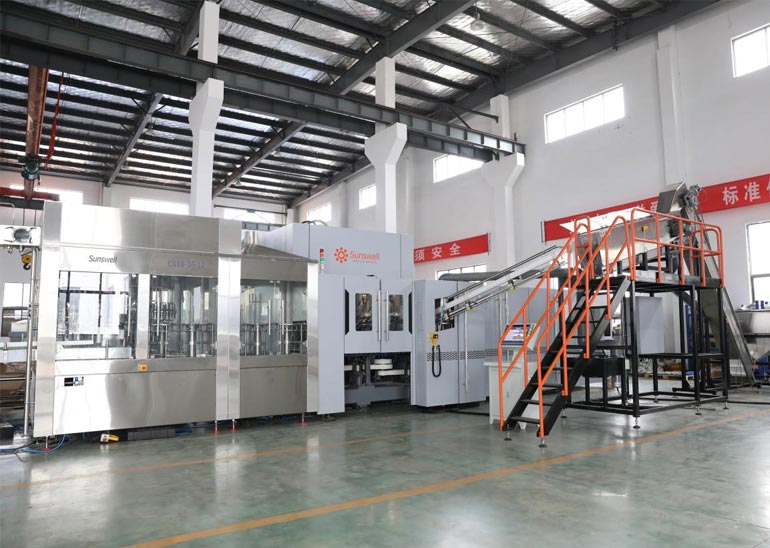
Sunswell manufactures in the cluster with a 20,000 m² plant and 80+ staff, including an in-house R&D and mechanical design group. Machining, sub-assembly, main assembly, electrical build and the test bay are in one building, which is the reason a change requested during assembly can be executed in days.
The delivered record is 444+ lines across 71+ countries, with regular project activity and engineer deployment capability in 9+ markets including Kazakhstan, Uzbekistan, Russia, Turkey, Saudi Arabia, the UAE, Egypt, Nigeria and the Maldives. Product focus is blow-fill-cap combiblocks and complete PET, glass and can lines for water, carbonated drinks, juice, tea and edible oil.
If you are shortlisting suppliers in this cluster, the process that works is in how to buy a beverage filling line from China — one written specification, three to five builders, and quotations normalised onto the same scope before you compare a single price.
Frequently asked questions
Where is Zhangjiagang?
A county-level city in Jiangsu Province on the south bank of the Yangtze River, roughly two hours by road from Shanghai and about ninety minutes from Suzhou. It has its own river port handling ocean-going vessels, which is unusual for a city of its size.
Why is beverage machinery concentrated there?
Three reasons compounding over decades: an early cluster of packaging machinery workshops, a dense local supply chain for stainless fabrication and machining, and a Yangtze port that makes shipping heavy crated equipment straightforward. Engineers trained in one workshop started others, and the skill base thickened.
Are all Zhangjiagang suppliers actual manufacturers?
No. The cluster contains genuine builders, assembly shops and pure trading companies, and their websites can look identical. Ask what is machined in house, ask for the component brand schedule, and visit the assembly floor if you can.
How do I get to Zhangjiagang for a factory visit?
Fly into Shanghai Pudong or Hongqiao, then approximately two hours by road. Suzhou is the nearest high-speed rail hub with onward road connection. Most suppliers arrange the pickup, and it is worth accepting the offer on a first visit.
Is equipment from this cluster suitable for export markets?
Yes — the cluster is export-oriented by design. CE conformity is routine, EAC/EAEU documentation for Customs Union destinations is common, and SASO for Saudi Arabia is well understood. Confirm the requirement for your specific market in the contract.
What is the advantage of buying from a cluster rather than a standalone factory?
Component and sub-supplier availability. Stainless fabrication, machining, moulds, electrical build and freight forwarding all sit within a short drive, so a design change or an urgent part does not become a logistics project.
How long has Sunswell been in Zhangjiagang?
Sunswell is based in the cluster with a 20,000 m² plant and 80+ staff including an in-house R&D group, and has delivered 444+ lines to 71+ countries. Manufacturing detail is on the manufacturing capability page.
About the author
Written by the Sunswell engineering team — led by Howie SUN, Founder & CEO, with 14 years in filling and blow-moulding equipment R&D and turnkey project delivery across 71+ countries.
Last reviewed: 2026-08-06 · Reviewed by Sunswell engineering team
Ask our engineering team →Recommend Products
Project references
-
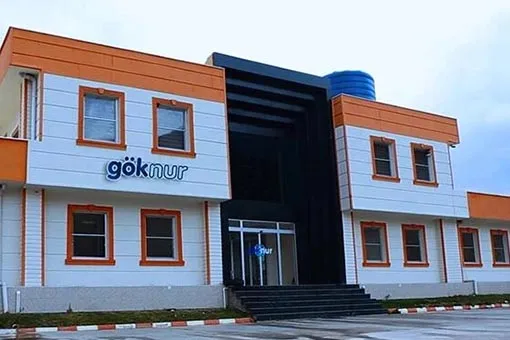
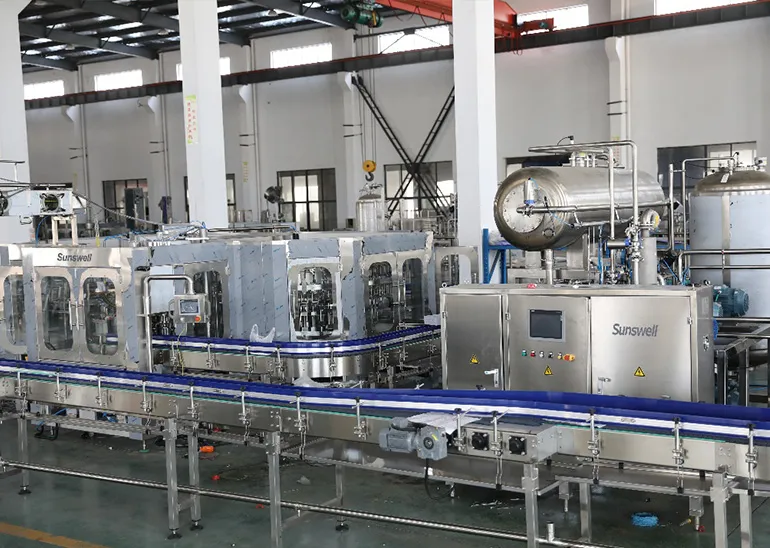
Goknur, 2 Sets of 18,000BPH Bottling Lines for Juice, Turkey
Country: Turkey
Product: Glass and PET Bottled Juice
Capacity: 20000BPH(330ml) Glass Bottle; 4000BPH(3L) PET Bottle
Solution:Juice Production Line
Read More + -
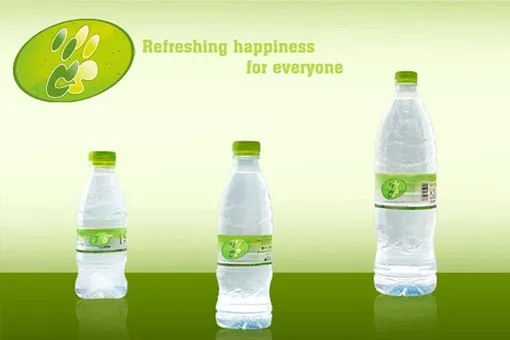
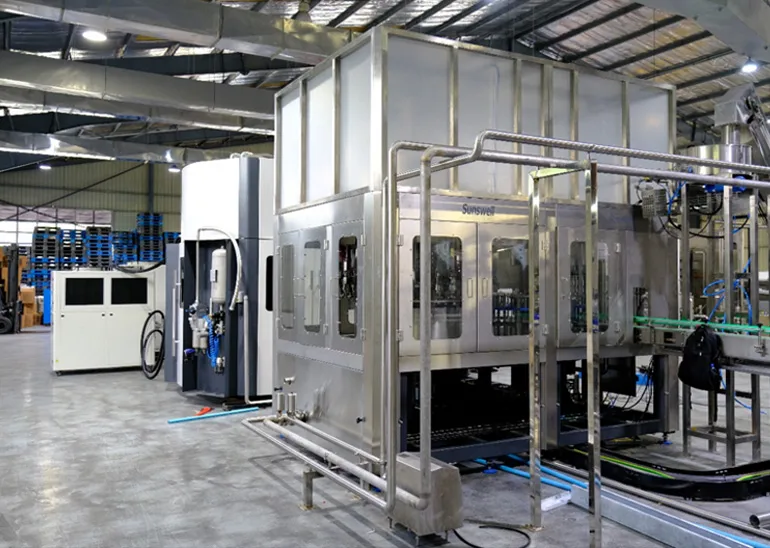
Taza, 4 Sets of 12,000BPH 1.5L Bottling Lines with Combiblock for Water, Maldives
Country: Maldives
Product: PET Bottled Mineralized Water
Capacity: 24,000BPH (500ml); 2 Lines
Solution:Water Production Line
Read More + -
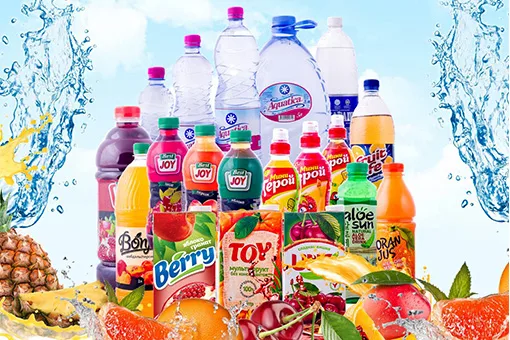
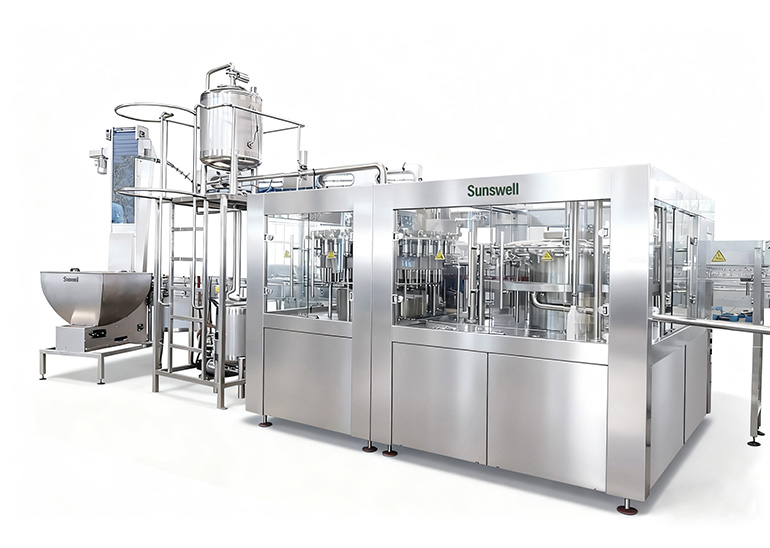
Rauan, 8 Sets of Bottlingand Canning Lines from 12,000-24,000BPH for Water, CSD and Juice, Kazakhstan
Country:Kazakhstan
Product: PET Bottled Sparkling Water, Canned Soft Drink, Canned Tea
Capacity: 25000CPH (250ml)
Solution:Three Lines,7000BPH(1.5L), 15000CPH(330ml),15000CPH(450ml)
Read More +
Have a specific project in mind?
Tell us product, target BPH, bottle sizes and market. We reply with a draft layout, equipment list and lead time estimate.
Fill the inquiry form ↑