


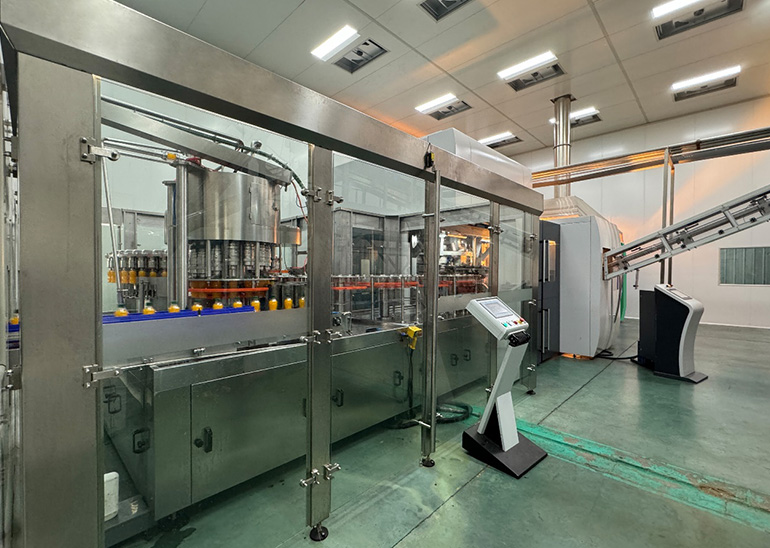
Comparison · Juice & Tea Hot-fill
Juice and Tea Hot-fill — Comparing Machine Configurations and Price Levels
Three tiers from 2,000 to 36,000 BPH, and why thermal energy decides the cost of ownership.
2,000–36,000
BPH tiers compared
3
Configuration tiers
85–88 °C
Filling temperature
444+
Lines delivered
ISO/CE
Certified · SGS audited
Short answer: Three tiers cover hot-fill juice and tea. Entry: piston or small standalone filler, 2,000–6,000 BPH, for coarse pulp and small batches. Mainstream: volumetric filler, 6,000–24,000 BPH, for mixed portfolios. High speed: mechanical hot-fill block, 24,000–36,000 BPH, for clear juice and tea. Capital falls per BPH as output rises, but thermal energy is the dominant running cost and it scales with litres, not with tier.
🎯 Key takeaways
- Three tiers: piston 2,000–6,000 BPH, volumetric 6,000–24,000 BPH, mechanical block 24,000–36,000 BPH
- The valve follows the product, not the budget — a carousel cannot be converted to another filling principle
- Thermal energy is the largest variable: about 290 kJ per litre to heat before regeneration, about 180 kJ per litre to cool again
- Regeneration efficiency and cooling-zone heat recovery change running cost more than the price on the quotation cover
- Hot-fill is cheaper to buy and more expensive per litre to run than routes relying on a different preservation approach
- The heat-set preform is a permanent cost; a few extra grams per bottle across annual volume often exceeds the energy gap
On this page
1. What actually differs between two hot-fill quotations
Two quotations for a hot-fill juice line at the same BPH can differ widely and both be correct. The gap is rarely in the filler itself. It sits in the valve principle, the heat exchanger type, the regeneration efficiency, the length and staging of the cooling tunnel, the level of CIP automation, and whether the process room is inside the scope at all.
This page sets out three configuration tiers and the cost structure behind them. Prices are expressed as relative levels; a firm figure requires the product specification, bottle drawings, format list and a written scope boundary. How to select the tier in the first place is covered in the juice and tea selection guide, and the process itself in combiblock for juice and tea, hot-fill configuration.
2. Three configuration tiers
2.1 Entry tier — 2,000 to 6,000 BPH
A piston filler or a small standalone hot-fill filler, fed by a compact process room. Heating is often a single-stage exchanger with modest regeneration, the buffer tank is small, inverting is done on a conveyor section rather than a rotary machine, and cooling is a short one- or two-zone tunnel. CIP runs from a portable skid with manual connections. This tier suits start-up producers, premium small-batch juice and high-pulp product where the piston stroke sets the ceiling anyway.
2.2 Mainstream tier — 6,000 to 24,000 BPH
A volumetric hot-fill filler, either standalone or inside a block, with 40 to 80 valves. Heating uses a properly sized plate or tubular exchanger with regeneration, the holding tube is instrumented with recording and flow diversion, and the buffer tank is jacketed and agitated. Inverting is a rotary or gripper machine, cooling is a three-zone tunnel, and CIP is semi-automatic through a valve manifold. Fill levels and dosing sit in recipes, so a format change is largely a recipe plus change parts.
2.3 High-speed tier — 24,000 to 36,000 BPH
A mechanical hot-fill combiblock for clear juice and tea, with 80 to 120 valves on a large carousel, heat-set blowing on the same frame and neck-handling transfer throughout. Regeneration is maximised because the energy bill is large enough to justify it, the cooling tunnel has three or four zones with heat recovery from the first zone, and CIP is fully automatic with recorded cycles. This tier is only rational on a narrow product range run at high utilisation.
3. Side-by-side comparison
| Entry | Mainstream | High speed | |
|---|---|---|---|
| Output band | 2,000 – 6,000 BPH | 6,000 – 24,000 BPH | 24,000 – 36,000 BPH |
| Filling principle | Piston dosing or small gravity filler | Volumetric metering | Mechanical gravity, level fill |
| Product range covered | Coarse pulp, viscous, small batches | Clear, cloudy and fine pulp; mixed portfolio | Clear juice and RTD tea |
| Dosing stations | 8 – 24 pistons | 40 – 80 valves | 80 – 120 valves |
| Machine arrangement | Standalone filler, separate blower or bought bottles | Standalone filler or hot-fill block | Blow-fill-cap hot-fill block |
| Heat exchanger | Single stage, limited regeneration | Plate for clear, tubular for pulp, with regeneration | High-regeneration exchanger, heat recovery designed in |
| Buffer tank | Small, jacketed | Jacketed and agitated, sized for line stops | Jacketed, agitated, level-controlled to the filler |
| Inverting | Inverting conveyor section | Rotary or gripper inverter | Rotary inverter integrated into the line |
| Cooling tunnel | One or two zones | Three zones | Three or four zones with heat recovery |
| Control system | International brand PLC, basic HMI | International brand PLC, recipe management, alarm history | International brand PLC, recipe management, production data output |
| Format changeover | Several hours, largely manual | Typically 1 – 2 hours with change parts and recipe | Blowing moulds dominate; filler side is recipe-driven |
| CIP automation | Portable skid, manual connections | Semi-automatic valve manifold | Fully automatic with cycle recording |
| Operators per shift | 4 – 6 | 4 – 6 | 3 – 5 |
| Relative capital, whole line | Baseline | Higher | Highest |
| Relative capital per BPH | Highest | Lower | Lowest |
| Relative energy per litre | Highest, weak regeneration | Moderate | Lowest, regeneration and heat recovery |
| Matching product references | P021, P025 | P005, P018, P026 | P004 |
4. What changes inside the tiers
4.1 The valve is a product decision, not a budget decision
Piston, volumetric and mechanical gravity valves are not three price points for the same job. Each is the correct answer for a different product. Buying a mechanical filler because it is cheaper per valve, and then discovering the portfolio needs pulp, produces a machine that cannot be fixed with money. Comparison of the principles is in filling valve types compared.
4.2 Regeneration efficiency
The heat exchanger recovers heat from outgoing hot product into incoming cold product. A unit with high regeneration costs more in surface area and floor space and returns that cost in fuel every hour the line runs. This is the single specification number with the clearest link to operating cost on a hot-fill line, and it is frequently absent from quotations. Ask for it explicitly and compare like with like.
4.3 Cooling tunnel staging
Cooling in stages protects the bottle and, on glass, avoids thermal shock. More zones mean a longer machine and more floor length, and they also make heat recovery from the first zone practical — the water leaving the hottest zone is warm enough to be useful elsewhere in the plant. Buyers usually price the tunnel by length; price it by water and energy as well.
4.4 CIP automation and cleaning frequency
Juice, and especially pulpy juice, sets a cleaning schedule that a water line never faces. The tiers differ in how much of the sequence depends on an operator following it correctly at the end of a long shift. Automatic CIP with recorded cycles costs capital and returns it in consistency and in audit evidence for customers who ask for it.
4.5 Control level
All three tiers run an international brand PLC. The difference is what the software does: interlocks and fault display at entry level, recipe management and alarm history in the mainstream tier, production data output at the top. None of it compensates for a buffer tank that loses temperature during slow running.
5. Hot-fill against the alternatives, as a cost structure
Hot-fill is not the only way to make a shelf-stable acidified drink, and the routes differ in where the money sits rather than in how much of it there is.
| Cost element | Hot-fill | Cold-fill routes with a different preservation approach |
|---|---|---|
| Filling equipment capital | Lower | Higher |
| Process room complexity | Conventional heat exchange and holding | More demanding environmental control and validation |
| Thermal energy per litre | High — heat then cool every litre | Low |
| Bottle cost | Higher — heat-set walls, crystallised neck, vacuum panels | Lower — standard lightweight bottle |
| Extra machines | Inverter and cooling tunnel | Different downstream set |
| Operating skill required | Moderate | Higher |
| Effect on product flavour and colour | Heat load is real; deaeration helps | Lower heat load |
| Overall shape of the cost | Cheaper to buy, more expensive per litre to run | More expensive to buy, cheaper per litre to run |
The practical consequence is volume-dependent. At modest annual volume the lower capital of hot-fill usually wins outright. As annual litres rise, the energy and resin difference compounds and the comparison narrows. Run the calculation with your own tariffs and your own planned volume rather than accepting either side of the argument as a general truth.
6. Cost of ownership: an estimation framework
The quantities below are engineering estimates for structuring your own calculation, not guarantees. Fill in your own tariffs, product cost and production plan.
| Cost line | How to estimate it | Comment |
|---|---|---|
| Capital, amortised | Machine scope divided over the planned life and output | Falls per bottle only if the line is well utilised |
| Heating energy | Raising product about 75 °C is roughly 290 kJ per litre before regeneration | With good regeneration the net duty is around 50–60 kJ per litre, about 25–30 kg steam per 1,000 L |
| Cooling energy and water | Cooling from 85 to about 38 °C is roughly 180 kJ per litre | On a tower loop, evaporative makeup alone is in the order of 70–100 L per 1,000 L of product |
| Standing heat loss | Buffer tank, hot piping and filler bowl surface area | Runs during stoppages as well as production; insulation quality is a real variable |
| Bottle and closure | Heat-set preform weight against a standard preform | A few grams per bottle multiplied by annual volume is often larger than the energy gap |
| Product loss | Pulp settling, line drain at CIP, start-up and shutdown volumes | Rises with the number of recipe changes, not with output |
| CIP water and chemicals | Cycles per week x volume per cycle | Pulpy portfolios clean more often than clear ones; set the schedule from your own results |
| Labour | Operators per shift plus changeover hours | Changeover hours dominate on multi-SKU plants |
| Spare parts | Valve or piston count, running hours, product abrasiveness | Pulp is abrasive; seal life is shorter than on clear product |
| Floor area | Filler, process room, tunnel length, CIP skid and bunding | The cooling tunnel is the longest single item and it is permanent |
Thermal energy is the variable that separates hot-fill from every other filling job you have costed. Every litre is heated and then cooled, so the energy line scales directly with production and never with the machine price. Two quotations that differ modestly in capital can differ far more over ten years if their regeneration efficiency and tunnel heat recovery are different. Ask for both numbers before comparing the covers.
7. Five ways this comparison goes wrong
- Forgetting that the heat-set preform costs more. Crystallised necks, vacuum panels and heat-set wall thickness all add grams, and the preform is bought on every bottle for the life of the product. Price the preform before signing for the filler.
- Leaving the cooling tunnel out of the layout and the water balance. It is the longest machine in the line, it is wet, and its makeup water is a site planning constraint in dry regions. Retrofitting it costs far more than drawing it in.
- Buying clear-juice capacity and then running pulp. A mechanical filler bought for 36,000 BPH of apple juice will not run mango with sacs. The carousel cannot be converted; the plant ends up buying a second machine.
- Comparing capital without comparing regeneration. A cheaper exchanger with weaker regeneration is paid for again in fuel, usually within a small number of years on a line running two shifts.
- Ignoring changeover and CIP hours. Multiply format changes and cleaning cycles per month by hours and by the value of an hour of output. On a multi-SKU juice plant that figure often exceeds the price gap between two tiers.
8. How to compare quotations fairly
- Write one scope list and send the same list to every supplier: process room, filler, capper, inverter, cooling tunnel, CIP, conveyors, labeller, packer, spares, installation, training.
- State the product portfolio with pulp percentage and maximum particle size for each item, and state the pH range.
- Ask for regeneration efficiency on the heat exchanger and the number of cooling zones with their design temperatures.
- Ask for changeover time between your two most different formats, and how it is achieved.
- Ask what is not included, in writing. The gap between two prices is usually in that answer.
- Convert every offer to cost per BPH of the identical scope, then check it again as cost per litre against your real production plan.
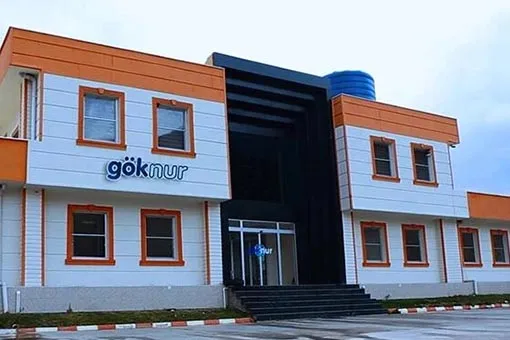
Sunswell builds hot-fill fillers and blocks across the 2,000–36,000 BPH range in PET and glass, including two 18,000 BPH juice lines delivered to Goknur in Turkey. Selection method is in the selection guide and common questions in the juice and tea hot-fill FAQ.
Frequently asked questions
Which juice hot-fill configuration is best?
It follows the product and the volume. Coarse pulp or viscous product means a piston filler at 2,000–12,000 BPH whatever the budget. Fine pulp and mixed portfolios suit a volumetric filler at 6,000–24,000 BPH. Clear juice and tea above 24,000 BPH belong on a mechanical hot-fill block, which gives the lowest cost per bottle.
How much does a hot-fill juice line cost?
Price depends on output, valve type and count, bottle format, and how much of the process room, cooling tunnel and CIP sits inside the scope. Figures given before those are fixed are indicative only. Compare suppliers on cost per BPH of an identical scope list rather than on the price of the filler.
Why is a hot-fill line more expensive to run than a cold-fill line?
Energy. Every litre is heated to roughly 92–95 °C and then cooled back to around 35–40 °C, and the heat-set bottle costs more resin than a standard one. Against that, hot-fill equipment capital is lower than routes that rely on a different preservation approach, and the process is simpler to operate and validate.
How much steam does hot-fill use?
With good regeneration on the heat exchanger, net heating duty is in the order of 50–60 kJ per litre, roughly 25–30 kg of steam per 1,000 litres. Without regeneration it is several times that. Regeneration efficiency is one of the few specification numbers that changes running cost immediately, so ask for it in writing.
How much water does the cooling tunnel use?
The tunnel recirculates, so consumption is makeup rather than throughput. On a cooling-tower loop the evaporative makeup alone is in the order of 70–100 litres per 1,000 litres of product, before drift and blowdown. In a water-scarce site this is a planning constraint, not a line item.
Does a faster line always cost less per bottle?
Only if it is used. Capital per BPH falls as output rises, but depreciation, maintenance and the energy standby load do not fall when the line is idle. Calculate cost per bottle actually sold against your real production plan, including the seasonal trough.
Can I buy a mechanical filler now and run pulp later?
No. A carousel cannot be converted from one filling principle to another at reasonable cost, and a high-speed mechanical valve blocks on coarse pulp. If pulpy product is anywhere in the three-year plan, buy the valve for it now and accept the output ceiling.
What changes most between the configuration tiers?
Changeover time, CIP automation and heat recovery. All three tiers fill at 85–88 °C and all three make shelf-stable product. What separates them is how many hours a format change costs, how much of the cleaning cycle depends on an operator, and how much heat is recovered rather than paid for twice.
About the author
Written by the Sunswell engineering team — led by Howie SUN, Founder & CEO, with 14 years in filling and blow-moulding equipment R&D and turnkey project delivery across 71+ countries.
Last reviewed: 2026-08-07 · Reviewed by Sunswell engineering team
Ask our engineering team →Recommend Products
Have a specific project in mind?
Tell us product, target BPH, bottle sizes and market. We reply with a draft layout, equipment list and lead time estimate.
Fill the inquiry form ↑