

| Application | Still water, RO water, mineral water |
| Filling method | Gravity or volumetric valve |
| Capacity range | 5,000-48,000 BPH at 500 ml |
| Bottle range | 200 ml to 16 L, by configuration |
| Wetted parts | SUS 304 product contact, CIP-ready |
| Line scope | Treatment, blowing, filling, capping, labelling, packing |
A water line stands or falls on three inputs: raw water analysis, neck finish, and how well filler and capper are matched. BPH takes the meeting; the neck finish and the capper match get the last five minutes. Rinser clamps and capping heads are cut for one neck finish; a 1 mm thread change means new change parts rather than a new machine.
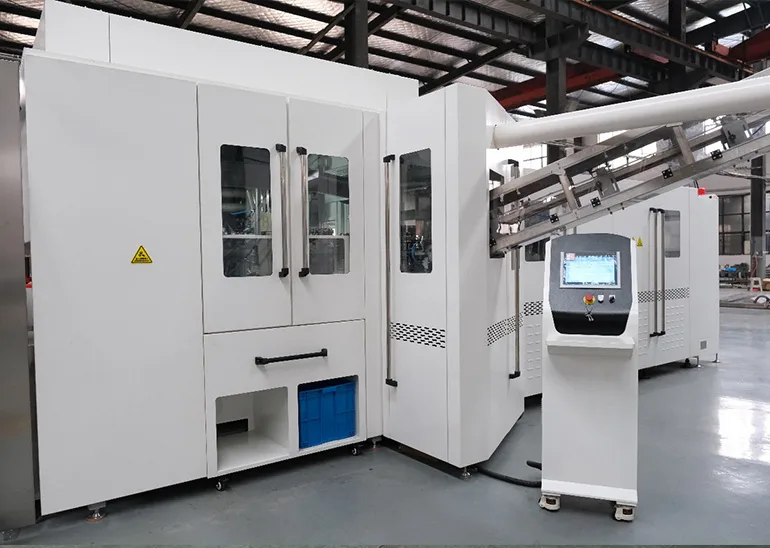
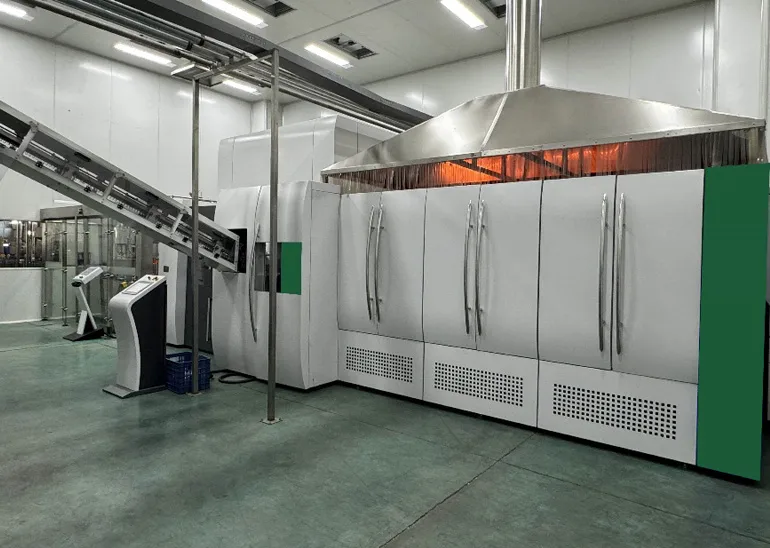
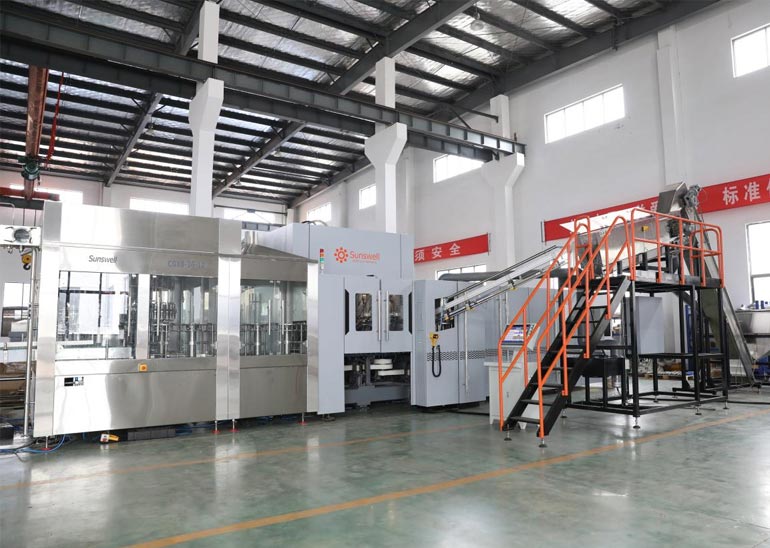
One whole set of 8000 bottles per hour water production line is loaded in Sunswell factory, this line belongs to Tanzania Military.
Gravity filling holds a level in a rigid bottle and costs least per valve. Volumetric filling doses a fixed volume into a chamber, so it holds accuracy across 3 L, 5 L and 10 L formats without changing the head. Isobaric filling is for carbonated product only, because it keeps CO2 in solution under counter-pressure. A still water line never needs it.
| Filling principle | Best for | Watch out for |
|---|---|---|
| Gravity | Still water, one rigid bottle size | Thin-wall bottles deform under head pressure |
| Volumetric valve | 3-15 L and mixed formats | Valve wear shows as slow drift, not a sudden error |
| Isobaric | Carbonated water only | Needs counter-pressure, so slower per valve |
| Load cell | Oil and high-value liquid | Slower cycle, higher cost per valve |
The Blow-fill-cap Combibloc for Still Water is the matching unit when this becomes a line project.
Work backwards from cases per day. Divide bottles per day by productive hours, then divide again by a production factor of 0.65-0.85. The factor covers changeover, CIP, label roll changes and downstream stops. Sizing at 1.0 is the most common and most expensive mistake in a water project, because the shortfall only appears once the line is running.
Rated output, change parts and services are listed on the Gravity Filling Machine for Still Water page.
Star wheels, guide rails, grippers, cap chute and filling recipe all change with the format. The parts are not the cost; the time is. Two formats on one line typically cost 40-90 minutes per switch, which is why the production factor falls from about 0.85 to 0.70 and why a second small line is sometimes cheaper than one flexible line.
The same question is worked through from another angle in How to Troubleshoot Common Issues in Water Filling Machines.
Yes, with change parts: star wheels, guide rails, grippers and a filling recipe. Budget 40-90 minutes per switch and expect the production factor to drop from about 0.85 to 0.70.
Gravity holds a fill level, so accuracy depends on bottle geometry. Because volumetric filling doses by chamber volume, accuracy holds across bottle sizes. For one rigid bottle size, gravity is enough; for 3-10 L or mixed formats, volumetric is safer.
It depends on whether blowing, packing and palletizing sit in the same hall. Fix the footprint by drawing the layout at 1:100 with conveyor radii included, then check the turning radius of the largest format.
Plan for 380 V three-phase power, 0.6-0.8 MPa compressed air, and a chiller if blow molding runs in-house. Exact consumption belongs in the utility schedule of the quotation, not in a rule of thumb.


Country: Maldives
Product: PET Bottled Mineralized Water
Capacity: 24,000BPH (500ml); 2 Lines
Solution:Water Production Line
Country:Kazakhstan
Product: PET Bottled Sparkling Water, Canned Soft Drink, Canned Tea
Capacity: 25000CPH (250ml)
Solution:Three Lines,7000BPH(1.5L), 15000CPH(330ml),15000CPH(450ml)



 +86 13921964455
 [email protected]

A2 Dongjiu Industrial Park, 30 East Jintang Road, Tangshi, Zhangjiagang, Jiangsu 215600, China


