


Plant setup · Africa
Bottled Water Plant Setup in Africa
An African water plant starts from the same question as anywhere — the source — but the plan must also answer the continent's realities: power reliability, water scarcity in some regions, road logistics and the retail format. This page walks the setup sequence with those realities in the plan.
444+
Lines delivered
71+
Countries exported
2,000–24,000
BPH typical scale
20,000
m² workshop
2011
Sunswell founded
Short answer: The setup sequence: confirm the source and its full analysis → size the plant to year-one sales → design treatment to the source → choose the line (combiblock or separate) → fix the package → plan power and logistics for the location → run import compliance in parallel → install, commission and train. The source is the foundation; power reliability and road access are the African variables that decide whether the line runs.
🎯 Key takeaways
- The water source and its analysis drive the treatment — test before you design.
- Power reliability is a design input: plan for grid instability with backup and conditioning.
- Size to year-one sales; the line follows the demand, not the ambition.
- Package and retail format follow the market — confirm what the shelf actually buys.
- Import compliance runs in parallel with building, per the destination country.
On this page
1. The water source
The source decides the project: its analysis drives the treatment, its yield drives the plant size, and its location usually fixes the site. Take a full water analysis across seasons before designing — a borehole and a spring, or a dry-season and wet-season sample, change the treatment spec. In water-scarce regions, the source's reliability is a strategic question, not a technical detail.
Send the full water analysis with the enquiry. The treatment quote follows the water, and the analysis is the cheapest insurance in the project.
Lock the supply right (bore licence, extraction agreement) before committing to the plant.
2. Power and utilities
Power reliability varies across Africa, and it is a design input, not a footnote: the line, the water plant and the packaging machines all need stable supply, and grid instability costs production. Plan the power solution with the supplier — supply conditioning, backup capacity and the line's tolerance — before order, because retrofitting power is costlier than ordering it right.
Water supply and drainage are the other utilities: confirm both before the equipment order, and size the water treatment on the line output plus the plant's own demand.
3. Water treatment
Treatment is designed around the source and the product: filtration, softening or demineralisation to the target profile, disinfection, and polishing before the filler. The system is sized on the line output and the source quality — and it is the station buyers most often under-budget, because it is invisible in photos and everything downstream depends on it.
In regions with seasonal water quality swings, the treatment design must hold the product target through the seasons — the analysis across seasons is what makes that possible.
4. The filling line
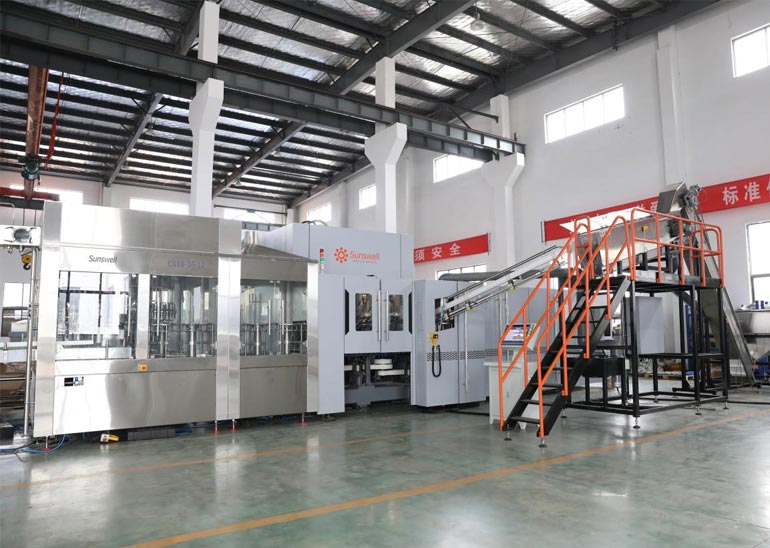
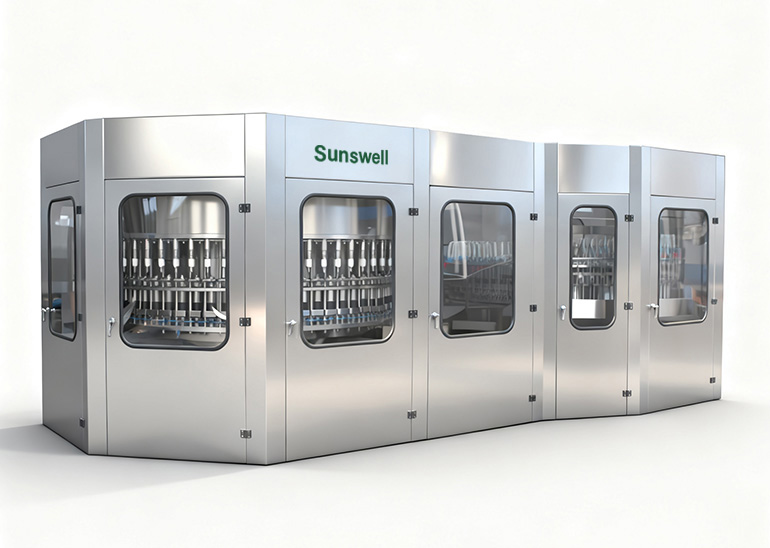
Two routes dominate: a blow-fill-cap combiblock (blow, fill, cap in one block — light bottle, small footprint, volume) and separate machines (flexible, bought-in bottles). Below roughly 8,000 BPH the separate route is often cheaper; above it the combiblock's savings compound. The line is rated on your bottle drawing — send it with the enquiry.
For small plants, compact monoblocs and standalone fillers match real demand at a fraction of the investment. The upgrade path is a second line.
5. Packaging decisions
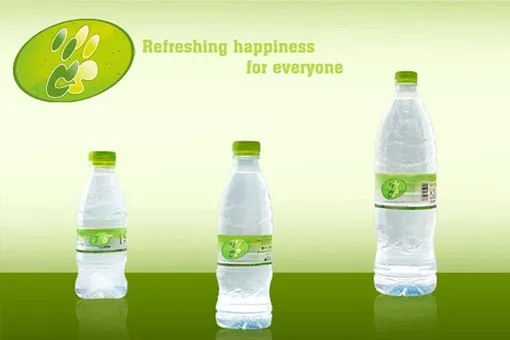
PET small formats carry the urban retail volume; larger formats serve home and catering; and the multipack style follows what the local shelf buys. Each package is a line decision — the filler, the capper and the packing follow the bottle and the pack. Confirm the retail format with distributors before the line is quoted, because the machine follows the package.
Preform and cap supply is an ongoing cost: confirm local suppliers or budget the import. The line is only as reliable as its consumables.
6. Logistics and distribution
Distribution in Africa is a business model in itself: roads vary, distances are long, and the cold chain (where needed) is a constraint. For still water, the distribution plan decides the pack (durable PET, multipacks) and the route-to-market — and it sets the plant's location relative to the market. Plan the distribution before the line is sized, because it is the line's demand side.
The import leg (port, clearance, inland trucking) is planned with the supplier and a broker — the equipment arrives the same way every other import does, and the process is routine when it is planned.
7. Staffing and commissioning
A line needs operators, a technician and a QC person, trained before the line arrives. The supplier's commissioning technician trains them during installation — typically one to two weeks — and the acceptance test runs at the rated output on your bottle. Power conditioning and site readiness are the buyer's jobs; confirm both before the technician travels.
Commissioning ends with the acceptance run, and the first pallet leaves after it, not before.
Frequently asked questions
What comes first in an African water plant?
The source and its full analysis — treatment is designed around the water, and the plant is located on it. Power reliability is the second input to plan.
How do I handle unstable power?
Plan it at design: supply conditioning, backup capacity and the line's tolerance, agreed with the supplier before order.
Combiblock or separate machines?
Below about 8,000 BPH, separate machines are often cheaper and more flexible; above it, a combiblock's savings compound.
What package works in Africa?
The one the local shelf buys — confirm the retail format with distributors before the line is quoted.
Is distribution part of the plan?
Yes — roads and distances make distribution the line's demand side. Plan route-to-market before sizing the line.
Can Sunswell deliver an African water plant?
Yes — Sunswell exports to 71+ countries with water plants from treatment to palletising, power-constrained designs and the import process coordinated.
About the author
Written by the Sunswell engineering team — led by Howie SUN, Founder & CEO, with 14 years in filling and blow-moulding equipment R&D and turnkey project delivery across 71+ countries.
Last reviewed: 2026-08-28 · Reviewed by Sunswell engineering team
Ask our engineering team →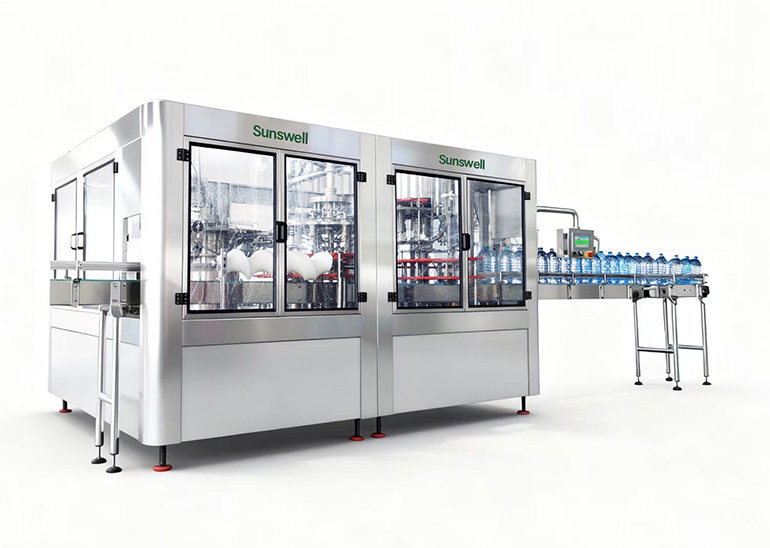
Have a specific project in mind?
Tell us product, target BPH, bottle sizes and market. We reply with a draft layout, equipment list and lead time estimate.
Fill the inquiry form ↑