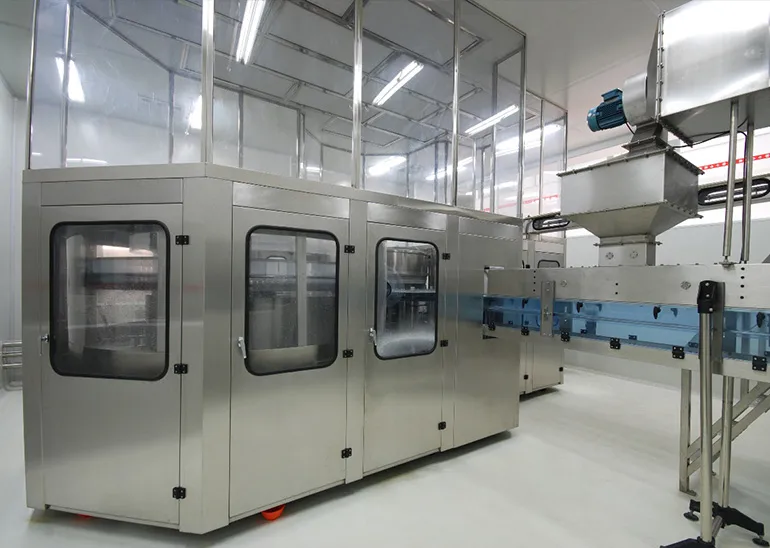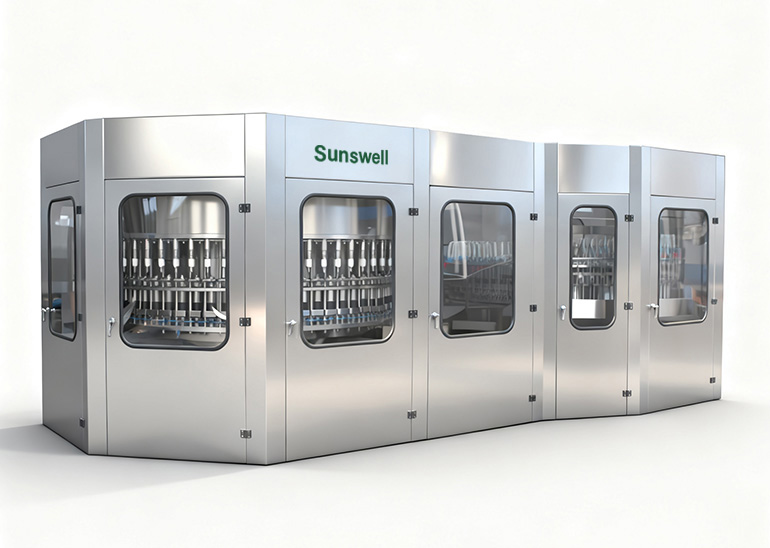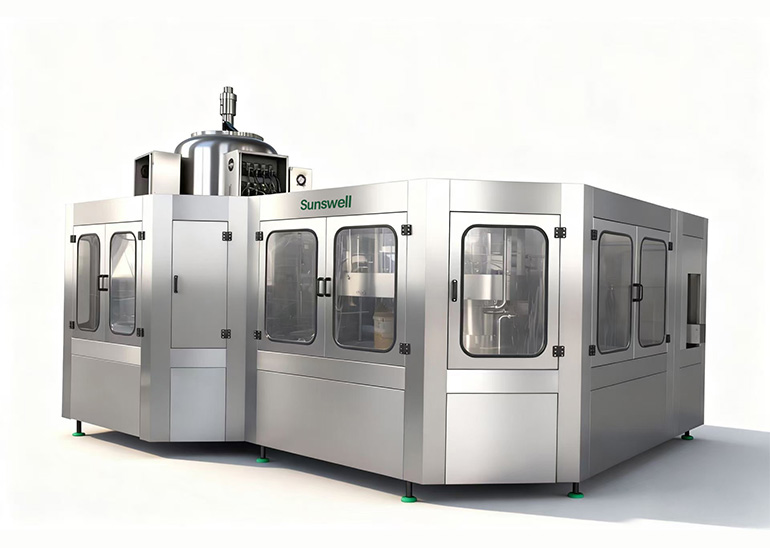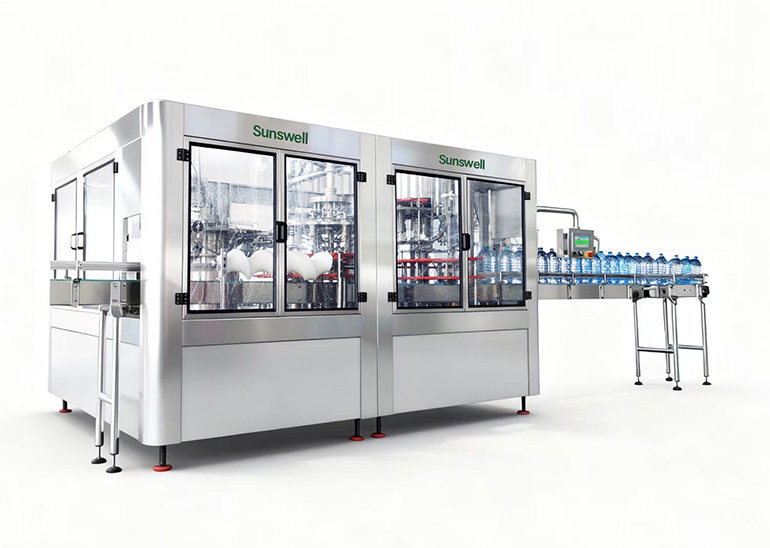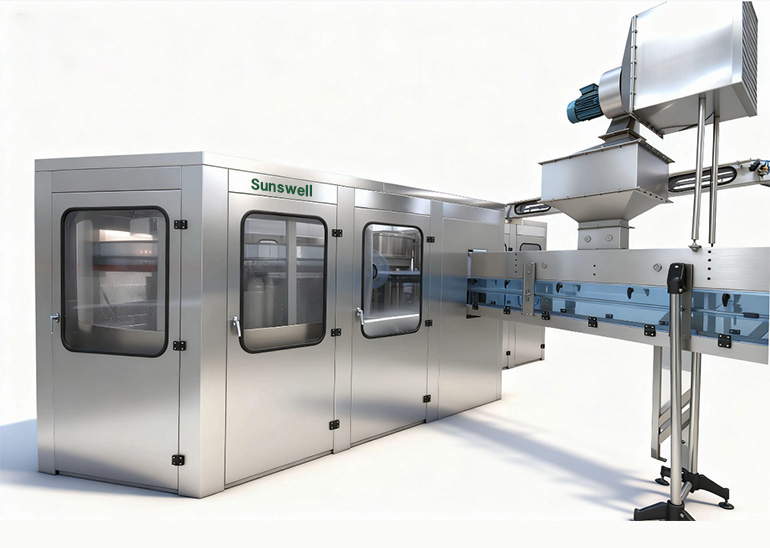
In the competitive landscape of the global beverage industry, the technical configuration of a production line often dictates the boundary between market leadership and operational stagnation. For plant managers and decision-makers, the water bottle filling machine is not merely a piece of hardware; it is the heartbeat of the facility. As consumer demand for bottled water shifts toward diverse formats—including lightweight PET, sustainable glass, and premium aluminum—the pressure on filling technology to deliver precision, hygiene, and high throughput has never been greater.
This technical guide analyzes the critical engineering benchmarks and strategic considerations necessary to optimize a water bottle filling plant for the next decade of production.
The core of any filling system is its dosing mechanism. When selecting equipment, technical directors must choose between traditional gravity-based systems and advanced electronic flow meters.
Atmospheric Gravity Filling: This remains the industry standard for non-carbonated water. It utilizes the pressure differential between the product tank and the bottle to initiate flow. Modern iterations incorporate high-precision mechanical valves with dual-speed filling cycles to prevent turbulence and foaming.
Electronic Flow Metering (Magflow/Massflow): For plants requiring extreme versatility and minimal product loss, electromagnetic flow meters offer non-contact filling. By eliminating the vent tube, these machines significantly reduce the risk of cross-contamination and allow for rapid changeovers between bottle sizes via a digital interface.
The traditional "linear" approach—where blowing, filling, and capping are separate units connected by extensive air conveyors—is being phased out by Combi-Block technology.
Integrating the rotary stretch blow molder directly with the filler and capper offers several technical advantages:
Footprint Optimization: Reduces the physical space requirement by up to $30\%$, allowing for higher output in smaller facilities.
Hygiene Control: By eliminating air conveyors, the "wet" area is isolated. This prevents dust and microbial contaminants from entering the empty bottles before they reach the filling zone.
Energy Efficiency: Modern Combi systems utilize heat recovery from the blowing ovens to stabilize the preform temperature, significantly lowering the total $kWh$ per unit produced.
For bottled water, particularly mineral and alkaline variants, maintaining a sterile environment is non-negotiable. Leading-edge filling machines now incorporate Closed-Loop Clean-in-Place (CIP) systems.
Sophisticated fillers feature "dummy bottles" that automatically engage during the cleaning cycle, ensuring that every internal surface of the filling valve—from the manifold to the nozzle—is subjected to high-temperature caustic or acid washes. Furthermore, the use of HEPA-filtered laminar flow hoods over the filling and capping carousel creates a Class 100 cleanroom environment, essential for extending shelf life without the use of preservatives.
To achieve a "Create in China" standard of excellence, filling machines must evolve from mechanical slaves to intelligent assets.
Servo-Driven Capping: Replacing mechanical clutches with servo motors allows for precise torque control. This is critical when working with lightweight "short-neck" preforms where over-tightening can deform the plastic, and under-tightening compromises the seal.
IIoT Monitoring: Modern PLC systems (such as Siemens or Rockwell) now feed real-time data to the cloud. Plant managers can monitor OEE (Overall Equipment Effectiveness), track energy consumption, and receive predictive maintenance alerts on their mobile devices, reducing unplanned downtime by up to $20\%$.
While PET dominates the market, the shift toward "Premiumization" has increased the demand for machines capable of handling Glass and Aluminum cans.
A future-proof filling line must be modular. Technical decision-makers should look for "Universal" filling carousels that allow for quick-change parts. This enables a single line to switch from a 330ml PET bottle to a 1L glass bottle with minimal mechanical reconfiguration, protecting the capital investment against changing market trends.
Investment in a water filling machine is a long-term strategic move. While "Speed" was the primary KPI of the past, the current industry shift prioritizes Quality and Sustainability. Reducing plastic waste through lightweighting, minimizing water loss during the filling process, and ensuring 99.9% uptime are the true markers of a successful production facility.
As the industry moves toward the goals of "Made in China 2025," the transition from simple manufacturing to high-tech engineering becomes the standard. The choice of a technology partner is therefore as critical as the technology itself.
At Sunswell, we don't just supply machines; we engineer turnkey solutions that redefine production standards. Since 2011, based in our 10,000m² international standardized workshop in Zhangjiagang, we have led the transformation from "Made in China" to "Create in China."
With ISO9001, CE, and SGS certifications, our independent R&D unit specializes in high-speed Combi-block technology and complete liquid packaging lines. Whether you are bottling water, juice, or carbonated soft drinks in PET, glass, or cans, Sunswell provides the precision, quality, and reliability required to lead the global market.



 +86 13921964455
 [email protected]

A2 Dongjiu Industrial Park, 30 East Jintang Road, Tangshi, Zhangjiagang, Jiangsu 215600, China