

| What is included | Printers, coders, cap feeders, nitrogen dosers, detectors |
| Function | Support the filler without changing its rating |
| Key control | Position, timing, consumable cost |
| Integration | Signals from the filler PLC or a standalone sensor |
| Key decision | Whether the device earns its cost per 1,000 units |
| Typical position | After the filler, before the packer |
Support equipment does not raise the filler rating. It removes a manual task, a reject source or a compliance risk. The test is simple: if the device stops, does the line stop, and does the defect rate rise? If neither, it is a convenience rather than a control.
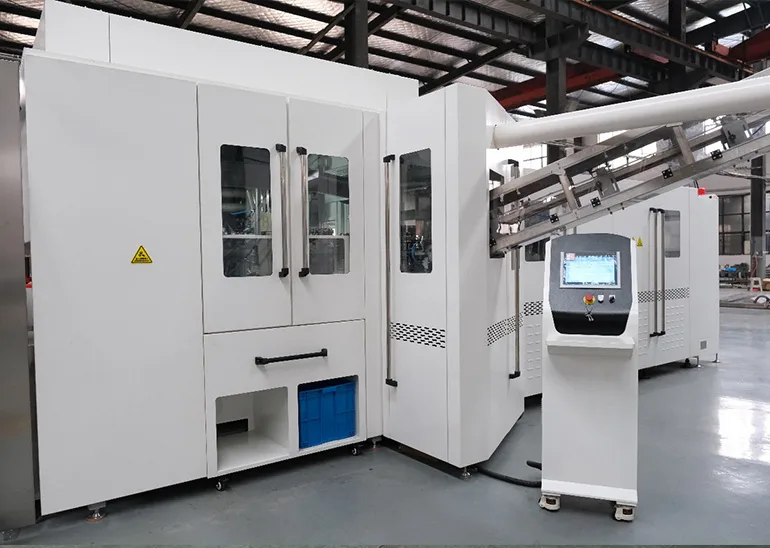
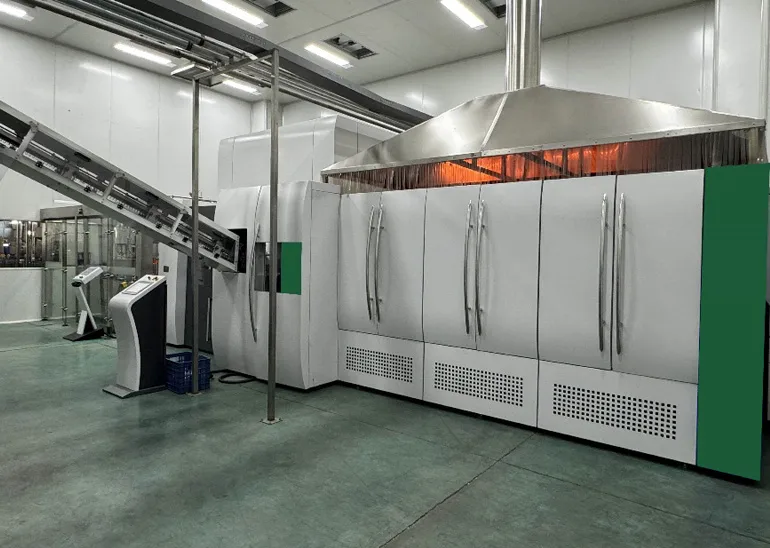
PET machine for all kinds of water bottle adopts special PET screw design, L/D ratio at 24:1(25:1), which can effectively improve the defective rate and the transparency of products, ultra-fast plasticizing rate can greatly shorten the production cycle time.
Position follows the signal. A coder needs the bottle presented at a fixed gap; a cap feeder needs a buffer before the capper; a detector needs a clear view and a reject gate downstream. Moving any of them changes the timing and the reject logic.
| Device | What it controls | Consumable |
|---|---|---|
| Coder or printer | Date and batch code | Ink, solvent or laser power |
| Cap feeder | Cap supply to the capper | None, but a buffer is needed |
| Nitrogen doser | Headspace oxygen | Nitrogen per 1,000 units |
| Fill level detector | Reject decision | None, but a reject gate is needed |
Rated output, change parts and services are listed on the Accessory page.
Ink, solvent, laser power, nitrogen, caps and labels all carry a per-unit cost that does not appear in the machine price. A device with a low purchase price and a high consumable cost can be the most expensive item on the line over five years.
The specification sheet for the Conveying carries the figures quoted here.
Either through a discrete signal from the filler PLC, which is simple and reliable, or through the line network, which allows recipes and reporting. Discrete signals are easier to commission; network integration is easier to audit. Choose based on who will maintain it.
The same question is worked through from another angle in The Role of Nitrogen Dosers in Extending Beverage Shelf.
No. It does not change the filler rating. It reduces headspace oxygen, which protects shelf life. Its value is measured in shelf life and rejects, not in BPH.
Because the hopper is sized for a shift rather than for the line rate, or because the elevator runs slower than the capper consumes. Size the hopper on caps per minute at the filler rating, with margin.
Yes, with a reject gate and a shift register that tracks the bottle from the sensor to the gate. Without the register, the gate rejects the wrong bottle.
A laser marks the surface and needs no consumable ink, but it needs a clear line of sight and a consistent bottle position. An inkjet prints on most surfaces and carries ink and solvent cost.


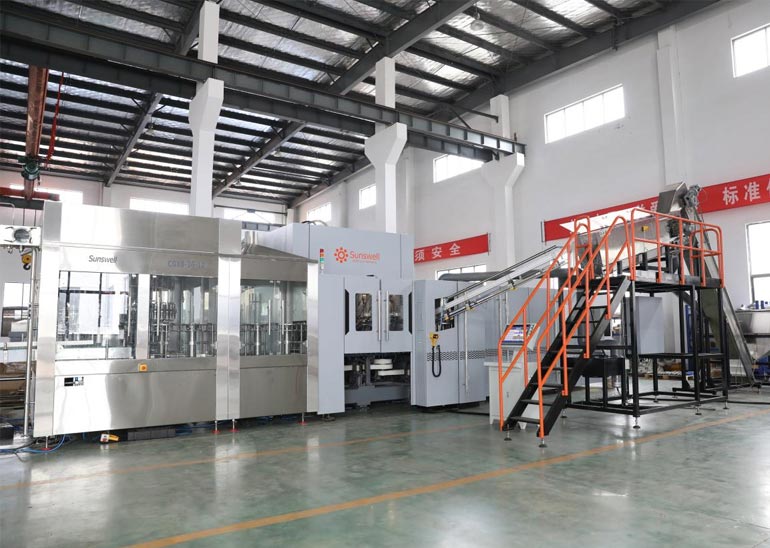
Country:Kazakhstan
Product: PET Bottled Sparkling Water, Canned Soft Drink, Canned Tea
Capacity: 25000CPH (250ml)
Solution:Three Lines,7000BPH(1.5L), 15000CPH(330ml),15000CPH(450ml)



 +86 13921964455
 [email protected]

A2 Dongjiu Industrial Park, 30 East Jintang Road, Tangshi, Zhangjiagang, Jiangsu 215600, China


