


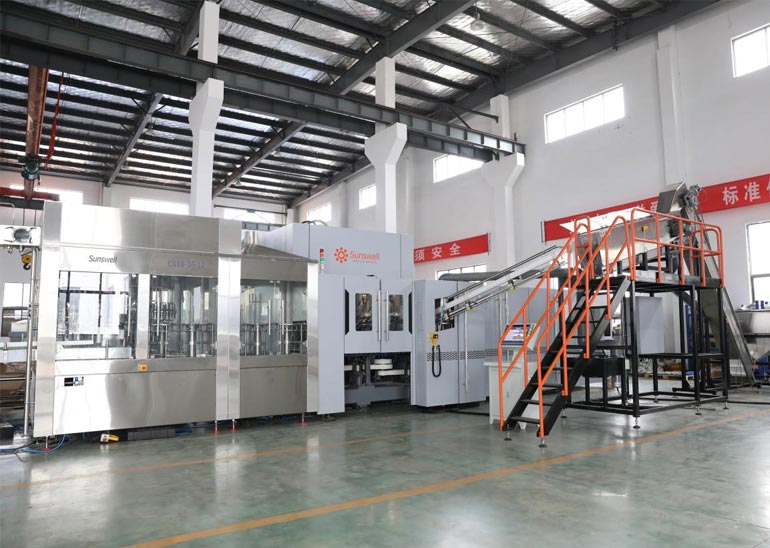
Selection guide · PET Blow Moulding
PET Blow Moulding Machine Selection Guide — Capacity, Bottle Size and Architecture
Blowing starts from a preform, not a bottle. The right machine is set by output, format and whether the blower stands alone or joins a combiblock.
2,000–48,000
BPH blow
2–40
Cavities typical
0.2–15
L bottle range
444+
Lines delivered
71+
Countries exported
Short answer: A PET blow moulding machine heats a preform and blows it into a bottle inside a mould, so selection turns on preform and bottle geometry, cavity count and output, not on a finished bottle. Linear blowers suit lower, flexible volume; rotary suits high steady output, with the crossover around 12,000–18,000 BPH on standard 0.2–2 L formats. Small and large formats are different machine families. Above roughly 12,000 BPH a blow-fill-cap block normally wins on weight, floor and operators; below that, or where you sell empty bottles, a separate blower is the better purchase.
🎯 Key takeaways
- Blowing starts from a preform, not a bottle — preform, oven and mould spec together
- Linear for flexible volume; rotary for high steady output (~12–18k BPH crossover)
- Output set by cavity count — ~1,500–2,200 bottles/cavity-hour at 0.5 L
- Small 0.2–2 L and large 3–15 L are different families
- Block wins above ~12,000 BPH; separate blower below, or if you sell empty bottles
- Neck is the only part not reformed — neck cooling matters at speed
On this page
1. Why blow moulding starts from a preform
A blow moulding machine does not fill a bottle — it makes the bottle from a PET preform, which is a thick-walled tube of PET shaped like the bottle neck. The preform is heated in an oven until the PET is stretchable, then blown with high-pressure air inside a mould to take the bottle shape. Selection therefore turns on preform and bottle geometry, cavity count and output, not on a finished bottle the way glass and can selection do.
The blower can stand alone, feeding a separate filler through an air conveyor, or it can be integrated into a blow-fill-cap block where the bottle is blown and filled without leaving the machine. That choice — separate or integrated — is the first decision, and it depends mainly on output and format, covered in the combiblock section below.
Blow moulding starts from a preform, not a bottle. Preform design, oven setting and mould are specified together; changing one without the others changes bottle quality.
PET bottle demand drives most blow moulding investment, because water, CSD and juice all ship in PET and the bottle is the package. The blower is therefore specified against the drink volume and format mix, and the same blower can serve water, CSD and juice once the bottle shape is compatible — the product is decided downstream at the filler, not at the blower.
2. Capacity and output
Blow moulders are rated in BPH at a named bottle size. Output is set by cavity count and by how fast each cavity can heat, stretch and cool a bottle. As an indicative rule, a cavity delivers about 1,500–2,200 bottles per hour at 0.5 L depending on the machine and bottle, so a 24,000 BPH line needs roughly 12–16 cavities at that size. Use this to sanity-check a quotation, not to specify from.
Output falls as bottle size rises, because a larger bottle needs longer heating and cooling and a larger mould. A line rated at a small format will not hold that rate on a large one, and a line rated on 0.5 L may not hold it on 1.5 L. Size on your main format and confirm the speed on your drawing.
| Output band | Typical use | Cavity count (indicative) | Note |
|---|---|---|---|
| 2,000–8,000 BPH | Regional, flexible | 4–10 | Often linear, multi-format |
| 8,000–18,000 BPH | Mainstream water/CSD | 10–20 | Rotary common above 12k |
| 18,000–36,000 BPH | High-speed water/CSD | 20–40 | Rotary, paced to filler |
| Large format 3–15 L | Water, edible oil | 2–6 | Separate large-format family |
Rotary machines also integrate more naturally into a combiblock, because the continuous carousel matches the continuous filler and capper. Linear machines usually stand alone and feed a filler through an air conveyor. The type and the architecture are linked: if you are heading to a combiblock, you are usually heading to rotary.
A useful check before quoting is to convert your annual volume to BPH at your main bottle and compare it to the cavity rule. If the resulting cavity count lands near the linear-rotary crossover, the architecture choice is live; if it is far below, linear is the obvious call and you save capex, and if it is far above, rotary or a block is indicated. The capacity selection guide carries the full band logic, and the crossover is a band, not a hard line, so confirm on your actual bottle rather than on the rule of thumb alone.
3. Linear vs rotary
Linear blow moulders move preforms through stations intermittently; rotary blow moulders move them continuously around a carousel. Rotary is faster and smoother at high, steady output; linear is cheaper and often more flexible for changeovers and lower volumes. The crossover is roughly 12,000–18,000 BPH on standard 0.2–2 L formats.
| Linear | Rotary | |
|---|---|---|
| Output | Lower, flexible | High, steady |
| Changeover | Simpler, faster between formats | More involved |
| Relative cost | Lower | Higher |
| Best for | Regional, multi-SKU | High-volume single format |
| Integration | Usually separate | Usually in a combiblock |
The choice is not only about speed. A plant with many formats and moderate volume often prefers linear for the changeover flexibility even where a rotary would technically reach the rate; a plant with one high-volume SKU prefers rotary for the smoothness and the lower per-bottle cost.
Non-round bottles — oval, rectangular, custom — are blowable but need a preform and stretch design tuned to the shape, and they typically run slower than a round bottle of the same volume because the material distribution is harder to control. State the shape early; a round and a non-round 1 L are different blowing jobs and different quotes.
4. Bottle size and format
Small format 0.2–2 L and large format 3–15 L are different machine families. Mould size, clamping force, neck handling and cooling all differ, and a 15 L bottle cannot be carried by its neck ring when full the way a 0.5 L bottle is. Plants selling both formats buy two blowers, usually at very different speeds, and should plan the building for both.
| Factor | Effect on machine | What to confirm |
|---|---|---|
| Format (small/large) | Different mould and clamp family | Which family you will run |
| Bottle height | Sets oven and mould height | Full height blown |
| Neck finish | Sets preform and neck cooling | Finish drawing and tolerance |
| Base design | Sets cooling and stability | Base geometry with preform supplier |
| Shape | Sets stretch and mould | Non-round needs more care |
Non-round and custom shapes are possible but need more careful preform and stretch design, and they usually run slower than a standard round bottle of the same volume. State the shape at quotation; a round 1 L and a non-round 1 L are different blowing jobs.
Preform cost is the dominant material cost of a PET bottle, larger than the machine amortisation per bottle at volume, so preform weight is where bottle economics are won or lost. Lightweighting the preform with the supplier and the mould designer cuts material per bottle across the whole run, which is why preform and mould are specified together rather than bought separately.
5. Preform, oven and neck
The preform is where bottle cost and quality are set. Preform weight, gate design and material distribution decide wall thickness and strength, and the oven heats the preform so the PET stretches and orients correctly. Oven lamp count and control decide how evenly the preform is heated, which decides thickness uniformity and bottle consistency.
Neck handling matters because the neck is the only part not reformed — it carries the thread and must stay dimensionally stable through heating and blowing. Neck cooling and handling are part of the machine spec, and they matter more on a high-speed line where the neck is handled thousands of times per hour.
| Item | Sets | Note |
|---|---|---|
| Preform weight | Bottle weight and cost | Lightweight with preform supplier |
| Oven lamps | Heat uniformity | More control = better bottles |
| Stretch rod | Material orientation | Sets bottle strength |
| Neck cooling | Thread stability | Critical at high speed |
The block also improves hygiene and yield, because the bottle is never exposed between blowing and filling and there is no air-conveyor reject from a bottle that tipped or scuffed. For a high-volume line those small losses add up across millions of bottles a year, which is part of why the block wins above its economic speed rather than only at it.
Bottle consistency across a run depends on the oven holding the same temperature profile shift after shift, which is why oven control and a stable preform supply matter more than the headline cavity count. A line that heats unevenly makes bottles that differ in wall thickness and top load, and those differences show up as rejects or weak bottles at the filler. Specify the oven control level to the product and the reject budget, not to the lowest price, because a cheap oven is paid for in material and rejection across the line's life.
6. Separate blower or combiblock
Above roughly 12,000 BPH on standard 0.2–2 L formats a blow-fill-cap block normally wins on bottle weight, floor area and operator count, because the bottle is blown and filled without leaving the machine and without an air conveyor. Below about 8,000 BPH, on large formats, on unusual shapes, or where you also sell empty bottles, a separate blower plus a rinser-filler-capper remains the better purchase.
The block and the separate line are compared in combiblock vs separate line, and capacity bands across every product family are in combiblock capacity selection. For the blower as a standalone, the range is in blow moulding machines.
Pick the architecture for your volume, not the trend. A block specified below its economic speed is an expensive way to blow bottles; a separate line specified above its comfort zone costs you floor and operators.
For a plant that also runs glass or can, the PET blower is one filling principle among three, so plan the hall so the three do not compete for the same utilities and pack area. The blower range across formats is in blow moulding machines, and the block family is in the combiblock range.
7. Choosing your configuration
Five inputs settle most of the specification:
- Output at your main format. This sets cavity count and linear vs rotary.
- Small or large format. 0.2–2 L and 3–15 L are different families.
- Bottle shape. Round is fastest; non-round needs more design care.
- Separate or combiblock. Set mainly by output and whether you sell empty bottles.
- Preform and mould. Specify with your preform supplier against the bottle drawing.
Once the architecture and format are fixed, the remaining choices are tier and automation, compared in PET blow moulding configurations and price levels. The questions buyers ask most are collected in the PET blow moulding FAQ.
Size the cavities to the bottle, then pick linear or rotary for the volume. Buying a 40-cavity rotary for a 6,000 BPH line spends capex the volume will never use.
For complete lines, the blower sits inside the water production line, the carbonated drinks line and the juice production line solutions, and the block family is in the combiblock range.
Frequently asked questions
What does a blow moulding machine actually do?
It heats a PET preform and blows it into a bottle shape inside a mould. The preform is the starting point, not a finished bottle, so selection turns on preform and bottle geometry, cavity count and output — not on a bottle that already exists the way it does for glass or can.
Linear or rotary blow moulder — which do I need?
Linear (intermittent) for lower output and flexible, often multi-cavity change; rotary (continuous) for high, steady output. Above roughly 12,000–18,000 BPH on standard 0.2–2 L formats, rotary is normally the better choice; below that, linear is often cheaper and more flexible.
How many cavities do I need?
As an indicative rule, a cavity delivers about 1,500–2,200 bottles per hour at 0.5 L depending on the machine and the bottle. A 24,000 BPH line needs roughly 12–16 cavities at that size. Use this to sanity-check a quotation, not to specify from, and confirm on your bottle drawing.
Can a blow moulder run 0.5 L and 5 L bottles?
Small format 0.2–2 L and large format 3–15 L are different machine families. Mould size, clamping force, neck handling and cooling all differ, and a 15 L bottle cannot be handled by a small-format carousel. Plants selling both buy two blowers, usually at very different speeds.
Should the blower be separate or in a combiblock?
Above roughly 12,000 BPH on standard formats a blow-fill-cap block normally wins on bottle weight, floor area and operator count. Below about 8,000 BPH, on large formats, on unusual shapes, or where you also sell empty bottles, a separate blower plus filler is the better purchase.
What does the preform oven do?
It heats the preform to the temperature where PET stretches and orients correctly. Oven lamp count and control set how evenly the preform is heated, which sets wall thickness uniformity and bottle strength. Preform design and oven settings are specified together, not independently.
How light can a bottle be?
Lighter inside a block than on a line with an air conveyor, because a neck-handled bottle never rides on its base and does not need the stiffness margin conveyor travel demands. The achievable weight is set with the preform supplier and mould designer against bottle height, neck finish and the top load your distribution requires. Any figure quoted before the drawing is reviewed is a guess.
Is training included with a blow moulder?
Operator and maintenance training is delivered during commissioning and should be written into the contract with defined duration and scope. It covers running, mould change, oven setting, calibration and first-line fault diagnosis, in the languages your team uses.
About the author
Written by the Sunswell engineering team — led by Howie SUN, Founder & CEO, with 14 years in filling and blow-moulding equipment R&D and turnkey project delivery across 71+ countries.
Last reviewed: 2026-08-10 · Reviewed by Sunswell engineering team
Ask our engineering team →Recommend Products
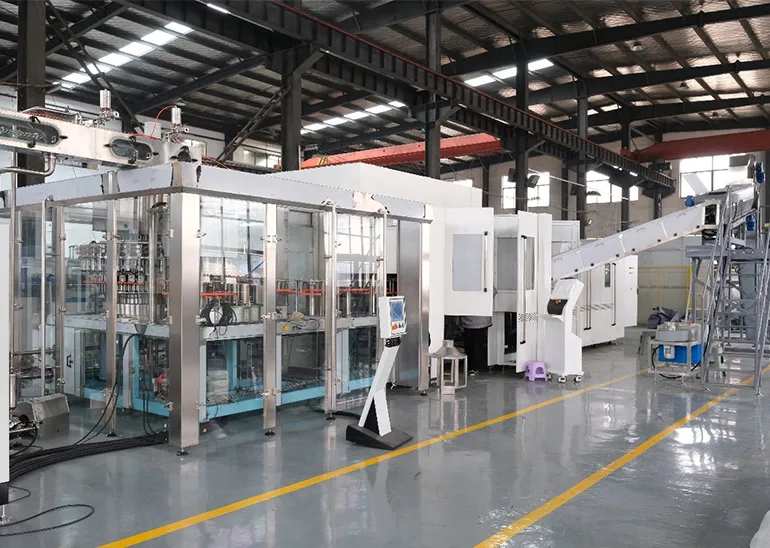
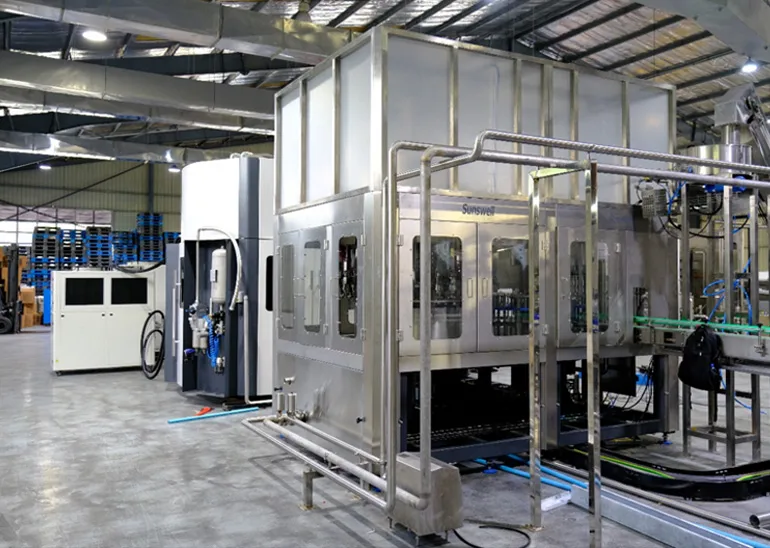
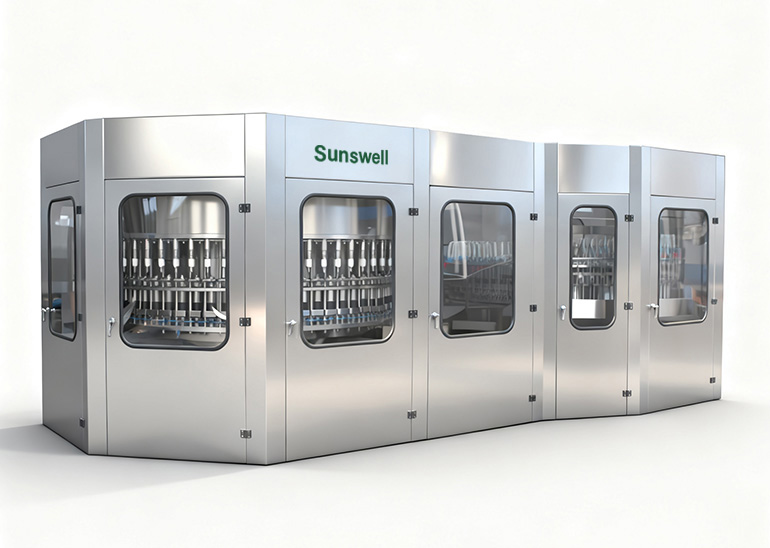
Project references
-

Vizit, 12,000BPH 1L Bottling Line with Combiblock for CSD, Kazakhstan
Country: Kazakhstan
Product: PET Bottled Carbonated Soft Drinks
Capacity: 12000BPH (1L)
Solution:Carbonated Drinks Production Line
Read More + -
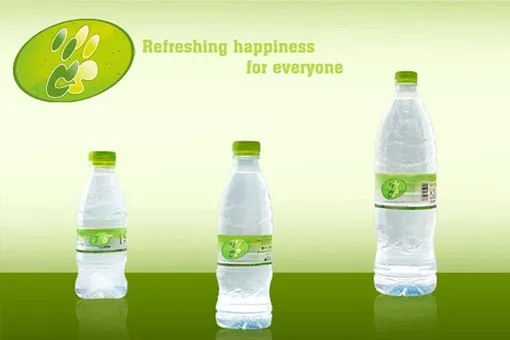
Taza, 4 Sets of 12,000BPH 1.5L Bottling Lines with Combiblock for Water, Maldives
Country: Maldives
Product: PET Bottled Mineralized Water
Capacity: 24,000BPH (500ml); 2 Lines
Solution:Water Production Line
Read More + -
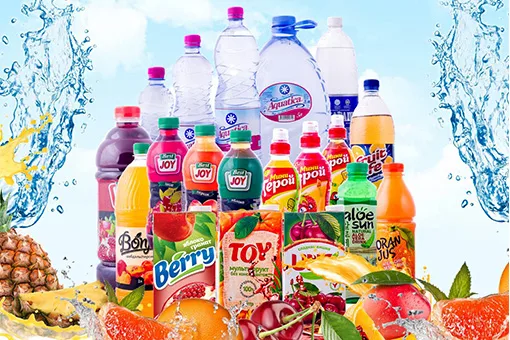
Rauan, 8 Sets of Bottlingand Canning Lines from 12,000-24,000BPH for Water, CSD and Juice, Kazakhstan
Country:Kazakhstan
Product: PET Bottled Sparkling Water, Canned Soft Drink, Canned Tea
Capacity: 25000CPH (250ml)
Solution:Three Lines,7000BPH(1.5L), 15000CPH(330ml),15000CPH(450ml)
Read More +
Have a specific project in mind?
Tell us product, target BPH, bottle sizes and market. We reply with a draft layout, equipment list and lead time estimate.
Fill the inquiry form ↑