
| Valve type | Isobaric for beer and CSD, volumetric for juice and tea |
| Capacity | Up to 25,000 CPH |
| Can range | Standard 250, 330 and 500 ml |
| Seaming | Roller seamer integrated with the filler |
| Options | Hot fill for juice and tea, nitrogen dosing |
| Key control | Fill level, seam tightness, dissolved oxygen |
A can is sealed by two rolling operations that fold the can flange and the end together. Seam thickness, seam height and overlap are checked by tear-down at a fixed interval, not by eye. A seam that looks right and measures wrong leaks three weeks later, in the customer warehouse rather than on your line.
Beer and CSD run isobaric, cold, under counter-pressure. Juice and tea often run hot fill or a volumetric fill with a downstream pasteuriser. The can is the same format; the filler, the valve set and the temperature control are not, so one can line rarely covers both without a second specification.
When assessing potential fillers, prioritize models that offer reliable CO2 control systems and the flexibility to adjust settings based on specific beer requirements.
| Product | Filling principle | Critical measurement |
|---|---|---|
| Beer | Isobaric, cold | Dissolved oxygen and seam tightness |
| CSD and soda | Isobaric, cold | CO2 retention and fill height |
| Juice and tea | Volumetric or hot fill | Fill temperature and seam integrity |
| Energy drinks | Isobaric or volumetric | Dissolved oxygen and closure |
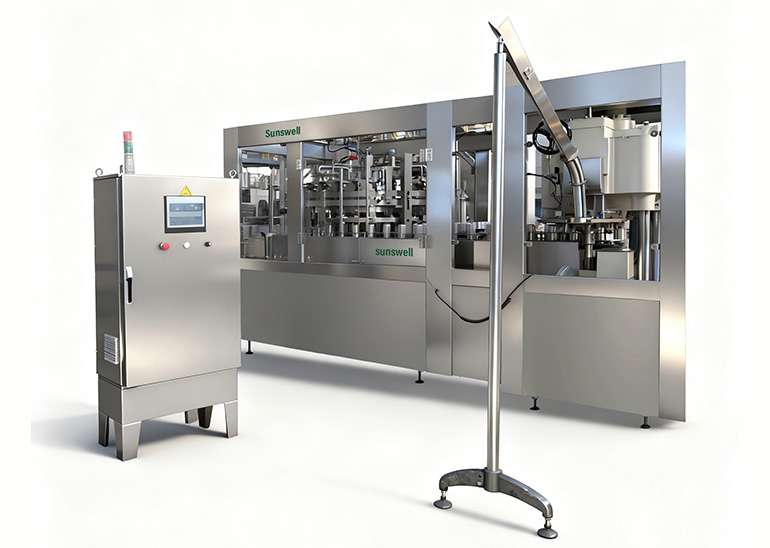
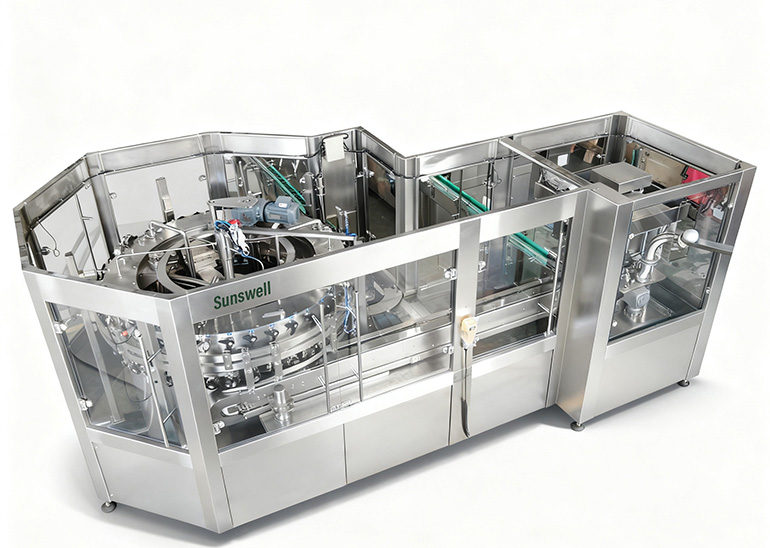
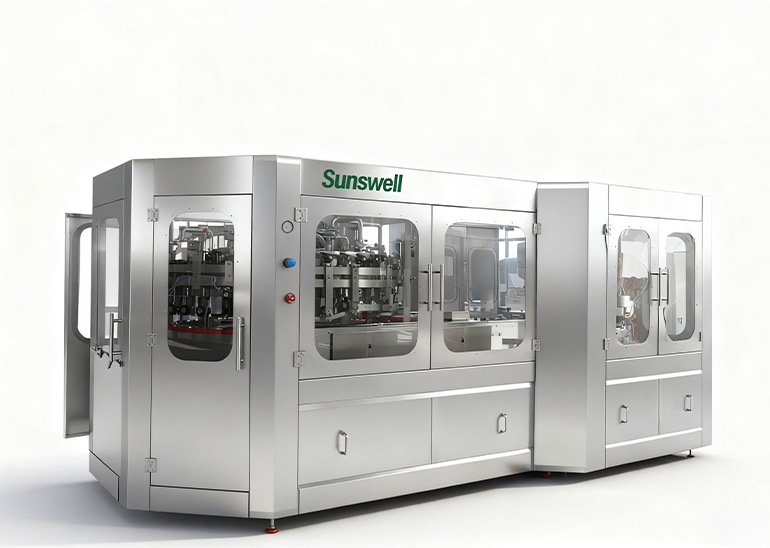
Where this becomes a line rather than a single machine, the Aluminum Can Filling Machine for Beer, Carbonated Soft Drink is the starting point.
Compressed air for the seamer and the air conveyor, CO2 for purging, and the tear-down cans used for seam checks every shift. None of these appear in the machine price. A line running 24,000 CPH can consume a measurable share of its operating cost in air alone.
By prioritizing pressure management, CO2 control, operational speed, and packaging integration, bottled water plant managers and decision-makers can make informed choices that align with their production goals and deliver exceptional products to consumers.
The unit behind this configuration is the Aluminum Can Filling Machine for Hotfill Juice and Tea.
The filler discharges cans onto a transfer star wheel that hands each can to the seamer at a fixed pitch. Any slip at that transfer shows up as a damaged flange and a failed seam. The transfer is the most alignment-sensitive point on a can line.
The same question is worked through from another angle in Nitrogen Dosers with Can Lines: Filler and Seamer Synchronisation.
Small can lines exist for craft producers, usually with a compact filler-seamer and manual or semi-automatic packing. The limit is not the filler but the seam quality control, which needs a tear-down station and a trained operator at any volume.
Yes, with change parts for the filler, the seamer and the conveyor. Changeover time is the real cost. Two formats on one line normally means 40-90 minutes per switch and a lower production factor.
It is the oxygen left in the product after filling. It drives oxidation, off-flavour and haze. Beer and juice have tight limits, and the measurement belongs in the acceptance protocol, taken from the finished can.
At a fixed interval during production, by tear-down and measurement, plus a check after every seamer adjustment. The interval is set by the plant quality plan; the point is that it is measured, not inspected by eye.
Usually conveyor pressure or a jam at a transfer, not the can quality. Air conveyor pressure, guide rail gaps and accumulation length are the three settings to check first.
Yes, at the same filler, because the fill volume per cycle is smaller. The seamer and the packer still have to carry the higher can rate, which is why the line rating is set on cans per hour, not litres.
Country: Syria
Product: Aluminum Canned Carbonated Soft Drinks
Capacity: 24000CPH (250ml)
Solution:Carbonated Drinks Production Line
Country:Kazakhstan
Product: PET Bottled Sparkling Water, Canned Soft Drink, Canned Tea
Capacity: 25000CPH (250ml)
Solution:Three Lines,7000BPH(1.5L), 15000CPH(330ml),15000CPH(450ml)



 +86 13921964455
 [email protected]

A2 Dongjiu Industrial Park, 30 East Jintang Road, Tangshi, Zhangjiagang, Jiangsu 215600, China


