
| Valve type | Isobaric for beer, gravity or volumetric for wine and spirits |
| Rated output | 4,000-20,000 BPH on glass |
| Package | Glass, 200-750 ml typical, crown or ROPP closure |
| Key control | Dissolved oxygen, fill height, closure torque |
| Line scope | Rinser, filler, capper or crowner, labeller, packer |
| Cleaning | CIP with caustic and rinse cycles |
Start from the symptom and work back to the mechanism, not from the part list. Most filling faults show up in three places: fill weight or level, closure integrity, and product condition. Which of the three moved first tells you whether the cause is mechanical, thermal or product-side.
Beer carries dissolved CO2 and is extremely sensitive to oxygen. Counter-pressure filling keeps CO2 in solution and limits contact with air. The alternative, filling warm and flat, destroys the head and shortens shelf life. This is why a beer filler and a wine filler are rarely the same machine.
The gravitational force effectively drives the liquid into the bottles without the need for excessive mechanical pressure, minimizing the risk of oxidation.
| Package | Filling | Line rate on glass |
|---|---|---|
| Glass bottle, crown | Isobaric | 4,000-20,000 BPH |
| Glass bottle, ROPP | Isobaric or gravity | 4,000-20,000 BPH |
| Aluminum can | Isobaric + seamer | Up to 25,000 CPH |
| PET, short shelf life | Isobaric | Higher rate, lower barrier |
Valve count, utility schedule and footprint sit on the Filling Machine for Glass CSD page.
Oxygen drives staling. In beer it shows as cardboard and paper notes within weeks; in wine it flattens fruit and browns the colour. The main entry points are the filler bowl, the space between fill and closure, and the closure itself. Measuring in the finished bottle is the only number that counts.
Sizing for this duty runs through the Gravity Filling Machine for Glass Bottle Wine, where the valve count is set out.
Glass weighs more, breaks, and needs mechanical spacing instead of an air conveyor. Every transfer is a potential breakage point, so the line runs at a lower rate and with more accumulation. A 20,000 BPH glass line is a different engineering problem from a 20,000 BPH PET line.
The same question is worked through from another angle in Talking Something about Beer Production Line.
Only with two different fillers. Bottles are filled on an isobaric bottle filler with a crowner; cans on a can filler with a seamer. Some plants run both, but as two lines sharing utilities and packing.
The value comes from the closure supplier and the bottle finish, and it is checked with a torque meter at a fixed interval. A line without a torque check will leak at the rate the capping head drifts.
By mechanical spacing instead of an air conveyor, guarded transfers, and a breakage detection point that stops the line before the fragments travel. Glass lines carry more inspection than PET lines for this reason.
Glass surfaces and higher fill temperatures nucleate gas faster. The pressure ramp at the end of fill and the product temperature are the two settings that reduce it.
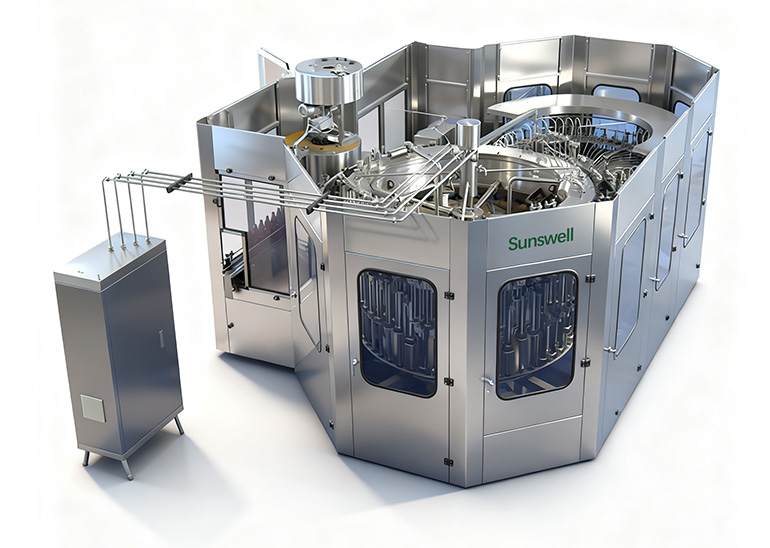
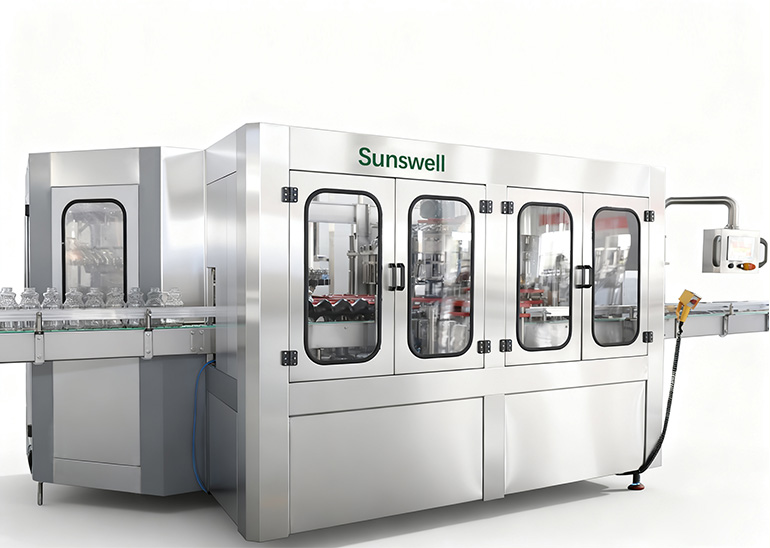
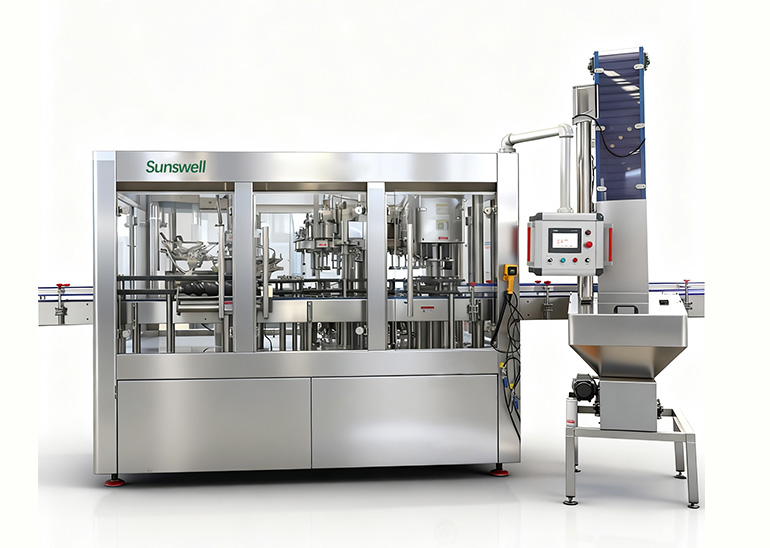
Country:Kazakhstan
Product: PET Bottled Sparkling Water, Canned Soft Drink, Canned Tea
Capacity: 25000CPH (250ml)
Solution:Three Lines,7000BPH(1.5L), 15000CPH(330ml),15000CPH(450ml)



 +86 13921964455
 [email protected]

A2 Dongjiu Industrial Park, 30 East Jintang Road, Tangshi, Zhangjiagang, Jiangsu 215600, China


