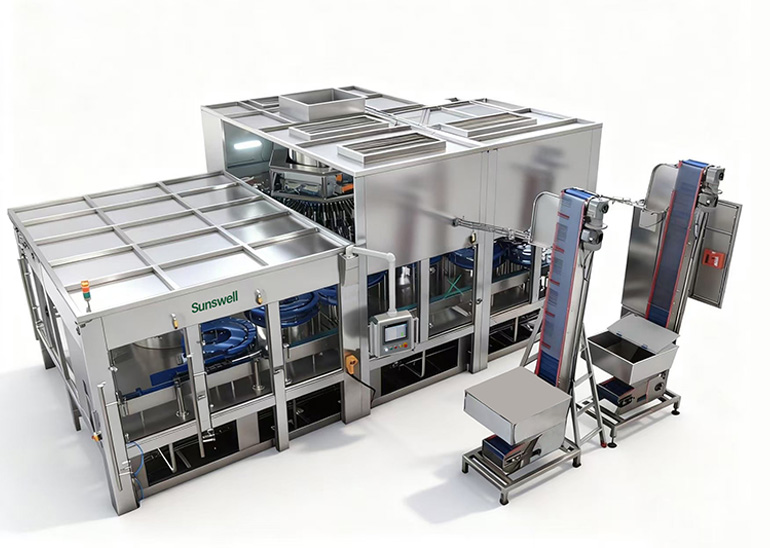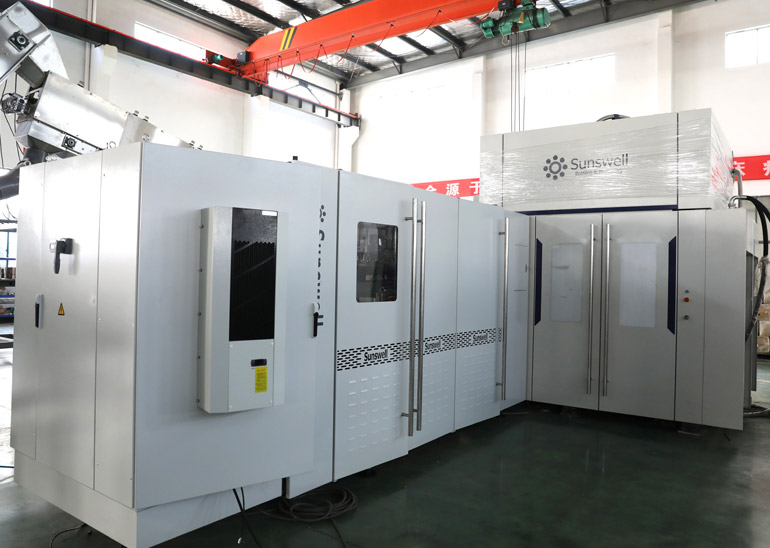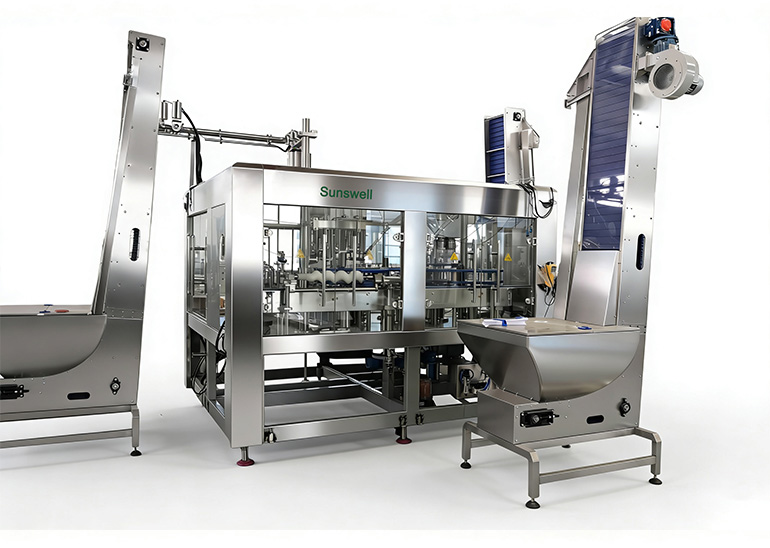
| Filling system | Piston dosing, or load cell for high-value product |
| Viscosity | Up to 10,000 cP with the right bore |
| Products | Sauces, pastes, pulp juice, honey, detergents |
| Bottle or can | PET, glass, jar, pouch by configuration |
| Key control | Dose repeatability, drip-free cut-off, product temperature |
| Cleaning | CIP circuit with a bypass for high-solid product |
Four inputs fix the shortlist: the product, the package, the daily demand and the number of formats per week. Everything else, including the brand of the PLC, is a detail that can be settled after those four are written down.
Honey and syrup drinks are sweet, viscous and temperature-sensitive — they need warm, accurate handling that a cold-water filling machine lacks.
Four things: the piston seal, the product temperature, the supply pressure at the inlet, and the presence of solids at the valve seat. A worn seal leaks past the piston and the dose falls slowly, which is why the drift is invisible from one bottle to the next and obvious over a shift.
Accurate sweetener dosing sets taste and label claims; your Processing Equipment should blend and hold temperature before the Nitrogen Doser -safe fill.
| Product type | Dosing | Main risk |
|---|---|---|
| Smooth sauce | Piston | Drip at the nozzle |
| Chunky sauce | Piston with large bore | Bridging at the valve seat |
| Honey and syrup | Piston or load cell | Stringing and slow cut-off |
| Pulp juice | Piston | Fibre settling in the bowl |
Throughput and change-part lists are on the Filling Machine for Viscous Product page rather than in this note.
A suck-back stroke at the end of the dose pulls the tail back into the nozzle. The stroke length, the nozzle bore and the product viscosity have to be matched, and they change when the recipe changes. Drip is a setting problem before it is a nozzle design problem.
For the same duty in another bottle format, the Edible Oil Load Cell is specified separately.
Seal wear and product temperature. A worn seal leaks past the piston and the dose falls gradually; a colder product fills the cylinder less completely. Both show as a slow downward trend, which is why the sample is weighed, not judged by eye.
The same question is worked through from another angle in Piston Filling Machines for Viscous Food Products: Sauces, Pastes.
Up to about 10,000 cP with the correct bore and inlet pressure. Above that, the product usually needs a heated hopper or a different pumping principle, and the line is specified around the product rather than the machine.
Yes, if the bore and the valve seat are sized for the largest particle. A filler set for smooth sauce will bridge on pulp, so the particle size is a specification input, not a detail.
The suck-back stroke is too short for the viscosity, or the nozzle bore is too large. Both are settings, and both change when the recipe changes.
Longer than on a water line, because the dose, the stroke and often the nozzle set change. Cleaning between incompatible products usually takes longer than the mechanical change.
Country:Kazakhstan
Product: PET Bottled Sparkling Water, Canned Soft Drink, Canned Tea
Capacity: 25000CPH (250ml)
Solution:Three Lines,7000BPH(1.5L), 15000CPH(330ml),15000CPH(450ml)



 +86 13921964455
 [email protected]

A2 Dongjiu Industrial Park, 30 East Jintang Road, Tangshi, Zhangjiagang, Jiangsu 215600, China