


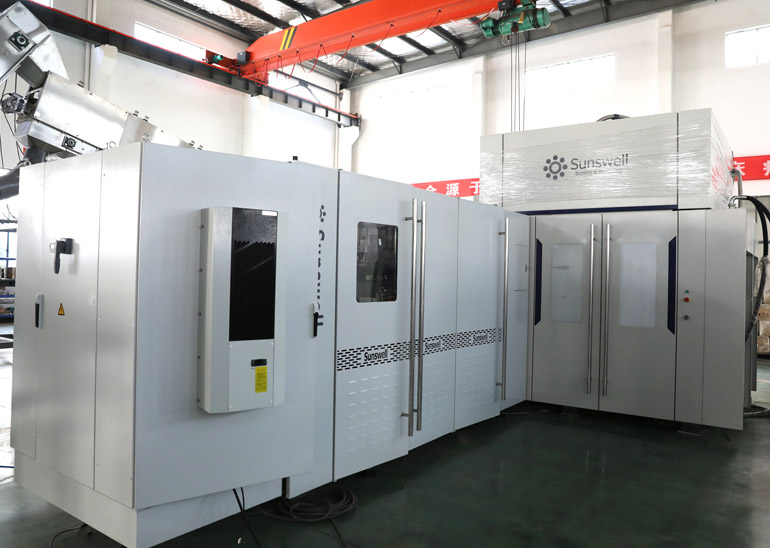
Production line · Oil & sauce
Edible Oil & Sauce Production Line
Oil and sauce are the products where filling accuracy becomes profit: the liquid is expensive, the fill is declared, and the viscosity defeats volumetric metering. This page walks the line — from product feed to packed bottle — and why the filler is the heart of it.
444+
Lines delivered
71+
Countries exported
20,000
m² workshop
80+
Staff
2011
Sunswell founded
Short answer: The oil and sauce line runs: product feed (storage, heating for some oils, deaeration for sauces) → filling by load cell or piston → capping → labelling → packing. Load-cell filling weighs each bottle and suits declared-weight products and viscous sauces; piston filling meters by cylinder for medium accuracy. The line's economics are set by fill accuracy — giveaway on expensive oil is the biggest hidden cost in the plant.
🎯 Key takeaways
- Load-cell filling pays for itself on expensive, dense or declared-weight products.
- Piston filling suits sauces and viscous products with medium accuracy needs.
- Some oils need gentle heating to fill; sauces need deaeration to stop bubbles.
- PET and glass are both common; the bottle and cap set the infeed and capper.
- Fill accuracy is the line's economics — spec the tolerance, measure it at FAT.
On this page
1. The complete process
The line: product feed and storage → preparation (heating for some oils, deaeration for sauces) → filling → capping → labelling → packing → palletising. No gas, no heat treatment — the process is deliberately short. The complexity sits in the filler and the product handling, because the liquid's behaviour, not the machine's speed, sets the outcome.
Oil and sauce plants typically run several products on one line, so changeover and cleaning are design criteria, not afterthoughts.
2. Load cell vs piston
Load-cell filling places each bottle on a scale and fills to a target weight, compensating for bottle and density variation in real time — the accuracy tier for declared-weight and expensive product. Piston filling meters a measured volume per stroke — reliable for viscous sauces, with accuracy set by the cylinder and the product's consistency. The choice is accuracy versus cost, set by the product and the tolerance.
For declared-weight oil, load cell is usually the honest choice: the giveaway it prevents pays for the weighing hardware within a production season.
Volumetric fillers struggle with viscous or pulpy product — that is why this product family moves to piston or load cell rather than chamber metering.
3. Viscous product handling
Viscous products do not behave like water: they pour slowly, trap air, and leave the valve differently at different temperatures. The product path is specified for viscosity — larger valves, heated jackets where needed, and dosing that suits the flow. Sauces with particles add the requirement of passing solids without clogging or shearing them.
Ask the supplier for a filling test with your actual product before order — viscosity is the spec that brochures cannot answer.
4. Heating and deaeration
Some edible oils are warmed to fill at the right viscosity; sauces are deaerated to remove air that would show as bubbles in the bottle. Both are preparation steps before the filler, sized on the product and the line output. The heating is gentle and controlled — the oil's quality is the brand, and overheating is as bad as underfilling.
For sauces with pulp or particles, the deaeration and the filler must both tolerate the solids — a piston filler with a particle-rated valve is the standard answer.
5. PET and glass
Oil and sauce bottle into PET and glass: PET for economy and logistics, glass for the higher-end sauce and vinegar ranges. The bottle and cap set the infeed, the capper and the cap sorter — a sauce cap with a dispensing closure is a different capper spec than a simple oil cap. Decide the package before the filler is quoted.
The neck finish and the closure matter more here than for water — oil caps must seal against leakage and sauce caps must dispense cleanly.
6. The accuracy economics
Fill accuracy is the line's profit statement: on a high-volume oil line, even a small average overfill is a large annual giveaway, and underfill is a declared-weight compliance risk. The accuracy is specified as a tolerance, verified at FAT on the actual bottle, and monitored in production — the difference between a 1 g and a 5 g average giveaway is a business decision, made consciously.
State the tolerance and the declared weight in the contract — the acceptance test should measure the average and the scatter, not just 'it filled bottles'.
7. Equipment list
| Station | Typical equipment | Notes |
|---|---|---|
| Product feed | Storage tanks, heated jacket where needed | Viscosity-controlled |
| Preparation | Heater / deaerator | Per product |
| Filling | Load-cell or piston filler | Accuracy is the economics |
| Capping | Screw capper, dispensing-closure option | Seal and dispense |
| Packing | Labeller, packer, palletiser | Glass: carton; PET: shrink |
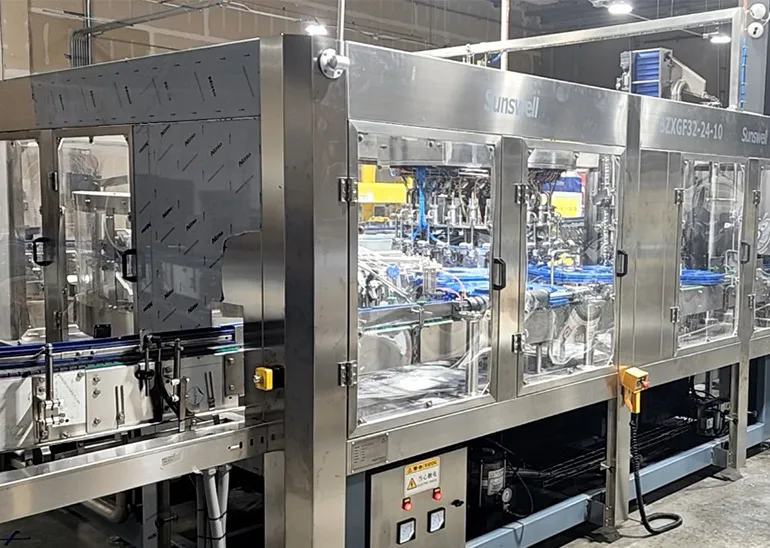
The oil and sauce filler family is shared with the edible oil filling machine range and the viscous product machines — the line is configured from proven stations.
Frequently asked questions
Why is load-cell filling common for oil?
Oil is expensive and declared by weight — load-cell weighing stops giveaway and holds the declared fill. The accuracy pays for the hardware.
Piston or load cell for sauce?
Piston for viscous and particle sauces with medium accuracy; load cell where the declared weight is audited or the product is expensive.
Do oils need heating to fill?
Some do, to reach the right viscosity — gently and controlled. The heating is a preparation station sized on the product.
Why do sauces need deaeration?
To remove air that would show as bubbles in the bottle. Particle sauces need deaeration and filling that tolerate the solids.
PET or glass for oil and sauce?
Both — PET for economy, glass for the higher-end range. The bottle and closure set the infeed and the capper.
Can Sunswell supply an oil or sauce line?
Yes — load-cell and piston fillers for oil, sauce and viscous products, with heating, deaeration, capping and packing as a complete line.
About the author
Written by the Sunswell engineering team — led by Howie SUN, Founder & CEO, with 14 years in filling and blow-moulding equipment R&D and turnkey project delivery across 71+ countries.
Last reviewed: 2026-08-28 · Reviewed by Sunswell engineering team
Ask our engineering team →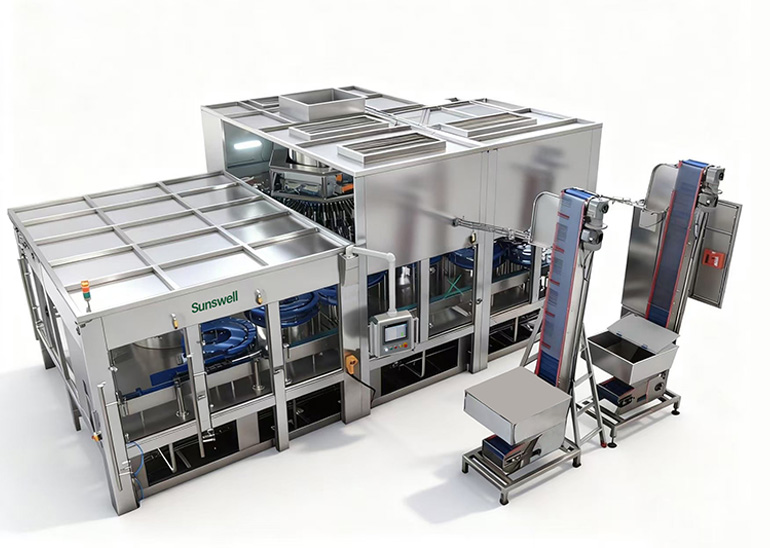
Have a specific project in mind?
Tell us product, target BPH, bottle sizes and market. We reply with a draft layout, equipment list and lead time estimate.
Fill the inquiry form ↑