
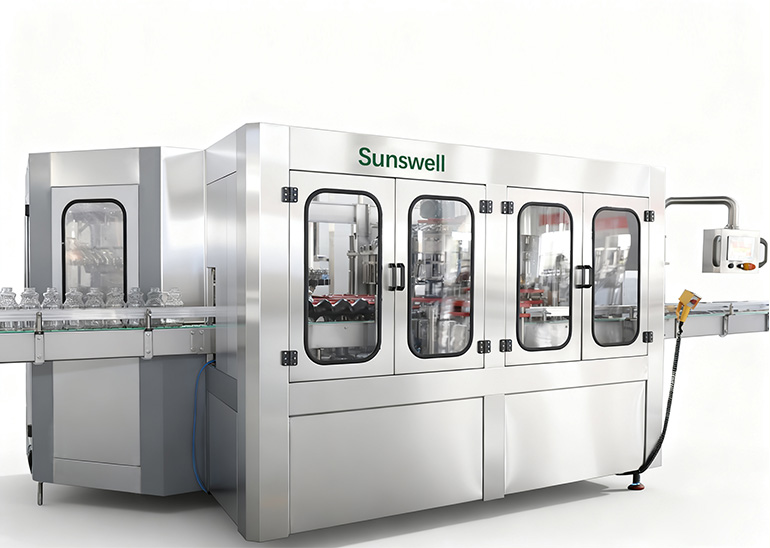
| Destination | Export project |
| Output range | 10,000 BPH |
| Configuration | beer, wine and spirits |
| Product | beer, wine and spirits |
| What is included | Supply, factory test, shipping, commissioning |
| Record | Order and delivery notes below |
The right technology and commercial decisions decide whether a beverage filling machine line runs compliantly, efficiently and profitably.
Beer is shifting: mega-breweries consolidate while craft explodes, and the two need very different filling machine approaches. This guide maps the trend and the technology gap between macro and craft lines, from glass bottle filling machine to canner.
Macro breweries run 40,000+ BPH, fully automated, can-led. Craft runs 1,000–10,000 BPH, flexible, bottle-and-can. The gap is speed, automation and changeover.
| Station | Function in the line |
|---|---|
| Beer | In scope |
| Wine and spirits | In scope |
Sizing for this duty runs through the Isobaric Filling Machine for CSD and Sparkling Water, where the valve count is set out.
Craft should buy flexible, upgradable lines; macro needs throughput and OEE. A Combiblock can serve both ends of the spectrum.
Yes — buy upgradable; add speed/modules as volume grows on the filling machine.
Build a beer-ready filling machine line with Sunswell.
Throughput and change-part lists are on the CSD & Sparkling Water by Mechanical Filler page rather than in this note.
The order covers supply, factory test, shipping and commissioning, configured with beer, wine and spirits. The line was specified for beer, wine and spirits.
10,000 BPH at the format named on the order. Rated figures exclude changeover, CIP and downstream stops, so plan production on 0.65-0.85 of that number.
The non-standard items are the ones recorded in the section above. Everything else follows the standard configuration for beer, wine and spirits.
Factory acceptance test before shipment, then installation and commissioning on site. Operator training is part of the handover, not an extra.
Spare parts for the wear items, remote support, and a commissioning report that records the settings the line was left running at.

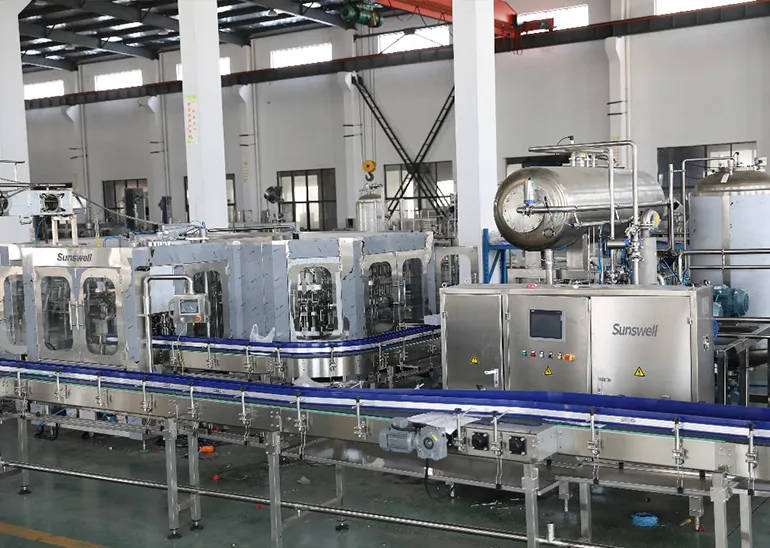
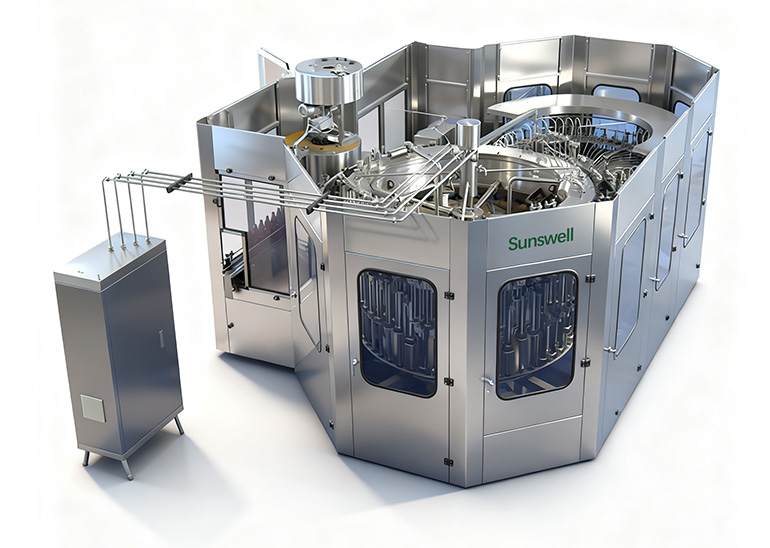
Country:Kazakhstan
Product: PET Bottled Sparkling Water, Canned Soft Drink, Canned Tea
Capacity: 25000CPH (250ml)
Solution:Three Lines,7000BPH(1.5L), 15000CPH(330ml),15000CPH(450ml)



 +86 13921964455
 [email protected]

A2 Dongjiu Industrial Park, 30 East Jintang Road, Tangshi, Zhangjiagang, Jiangsu 215600, China


