


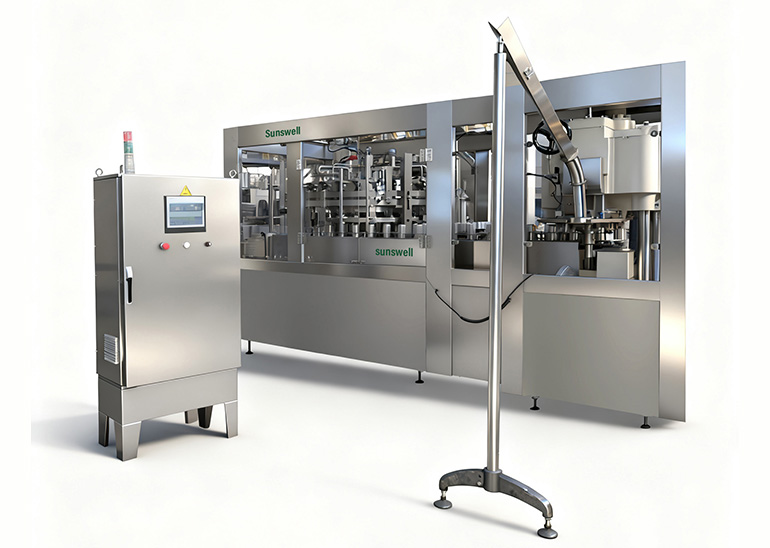
Line configuration · Beer
Beer & Craft Beverage — Line Configuration Options and Investment Levels
A brewery's packaging line is chosen along three routes — glass, cans and kegs — and within each, the filler tier and the preservation option set the investment. This page compares the configurations for craft-scale to industrial output.
444+
Lines delivered
71+
Countries exported
24,000
CPH canning case
20,000
m² workshop
2011
Sunswell founded
Short answer: Beer packaging runs three routes: glass (crown or roll-on capping), cans (seaming, often with a nitrogen doser) and kegs (washing, counter-pressure filling, sealing). Every route uses an isobaric counter-pressure filler — beer is carbonated — and the preservation option is pasteurising or micro-filtration, per beer and market. Craft breweries start with a compact filler and add routes as volume grows.
🎯 Key takeaways
- All three beer routes fill under counter-pressure — isobaric is non-negotiable for beer.
- Glass, cans and kegs are separate routes with different discharges.
- Pasteurising or micro-filtration follows filling, per the beer and the market.
- Craft breweries start compact and add routes — plan the hall for the second line.
- Oxygen control is the beer-specific spec across every configuration.
On this page
1. The three routes
Beer packaging runs three routes: glass bottles (crown or roll-on closure), cans (seamed lid) and kegs (pressurised returnable containers). Each route is a configuration — different infeed, discharge and downstream — and most breweries run two or three. The common thread is the isobaric counter-pressure filler, because beer is carbonated and must fill under pressure.
| Route | Discharge | Best for |
|---|---|---|
| Glass | Crown / roll-on capper | Classic brands, retail |
| Cans | Seamer + N₂ option | Growth format, cost per unit |
| Kegs | Keg washer + filler | Draught, HORECA |
Start with the route that matches the brand's first market; add the others as the brewery grows.
2. Glass route
The glass route: depalletising, bottle rinsing, isobaric filling, capping (crown or roll-on), pasteurising or micro-filtration, labelling and packing. Glass protects the beer from light (in coloured bottles) and carries the classic brand image — at higher weight and cost per unit. Craft breweries often start here with a compact mono-filler.
Glass handling is gentle by design: heavy, brittle bottles need soft infeed and transfers, and the line is specified around the bottle.
3. Can route
The can route: can rinsing or air purge, isobaric filling, seaming, and often a nitrogen doser for rigidity — then pasteurising or micro-filtration, tray and wrap packing. Cans are light-proof, cheap to pack and the growth format in most markets. A canning line counts in cans per hour and is a distinct configuration from bottling.
Seam quality is the can line's quality: a poor seam is a leak, a flat beer and a recall risk. The seamer is specified and monitored, not assumed.
4. Keg route
The keg route is a short, dedicated line: keg washing, counter-pressure filling, sealing and weighing. Kegs are returnable, so the washing station is the front end, and the filling runs under counter-pressure like bottles. The route suits breweries serving draught — and it is a separate configuration, not a bottle line accessory.
Keg washing is a hygiene station: the wash cycle, the inspection and the record-keeping are part of the route's spec.
5. The filler tier
Within each route, the filler tier sets consistency: mechanical isobaric valves are the proven norm, and higher-speed or tighter-tolerance lines add electronic timing or flow metering. Load-cell weighing is not used for beer — the fill is volume and pressure based. The tier follows the speed and the fill tolerance, not fashion.
Oxygen pickup is the tier's hidden spec — purge points, sealed paths and gas handling are what separate a beer line from a CSD line.
6. Preservation option
Beer is preserved by pasteurising (tunnel or flash) or by micro-filtration, set by the beer, the pack and the market. Tunnel pasteurising is standard at scale; micro-filtration suits beers that must not be heat-treated. The option is a process decision made with the brewery — and it is a line station, budgeted as one.
For unpasteurised beers, the micro-filtration and hygiene regime replace the pasteuriser — the configuration changes, the shelf-life target does not.
7. Matching to brewery
Match the configuration to the brewery's first market: a craft brand launching bottles starts with a compact glass route and adds cans for events and growth; a regional brand with draught accounts adds kegs; an industrial brewery runs dedicated glass, can and keg lines. The hall is planned for the routes to come — the second line is an addition, not a rebuild.
The CSD filling machine technology is the parent of the beer filler; the beer-specific part is oxygen control and the preservation option.
Frequently asked questions
Which route should a craft brewery start with?
Usually glass — a compact mono-filler with capping — then add cans as volume and events grow. Plan the hall for the second line.
Do I need a separate line for kegs?
Yes — kegs run a dedicated short route: washing, counter-pressure filling and sealing. It is not a bottle-line accessory.
Pasteurising or micro-filtration?
Set by the beer and the market — tunnel pasteurising at scale, micro-filtration for beers that must not be heat-treated.
Why is the filler always isobaric?
Beer is carbonated — it must fill under counter-pressure or it foams and loses gas. There is no non-isobaric beer filler.
What is the nitrogen doser for?
It adds pressure to cans for rigidity — common on canning lines, especially for low-carbonation products.
Can Sunswell supply a full brewery packaging line?
Yes — isobaric fillers, canning with seamers and nitrogen dosing, glass capping and keg routes, with pasteurising or micro-filtration per beer.
About the author
Written by the Sunswell engineering team — led by Howie SUN, Founder & CEO, with 14 years in filling and blow-moulding equipment R&D and turnkey project delivery across 71+ countries.
Last reviewed: 2026-08-28 · Reviewed by Sunswell engineering team
Ask our engineering team →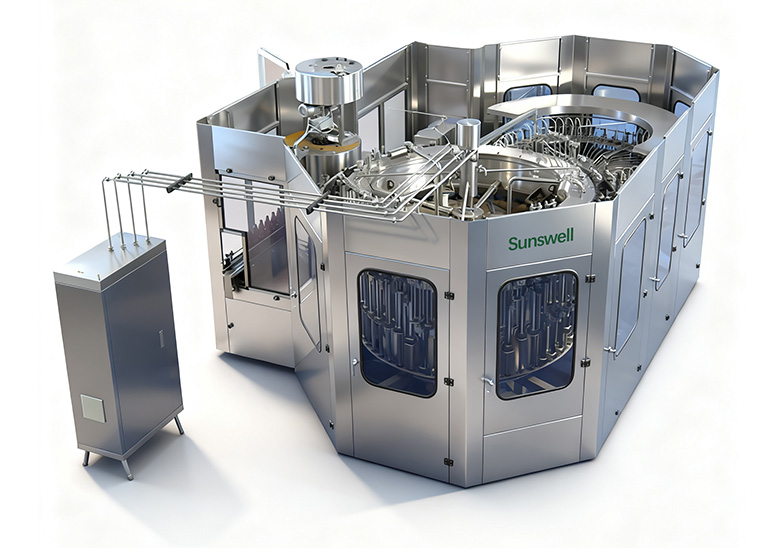
Have a specific project in mind?
Tell us product, target BPH, bottle sizes and market. We reply with a draft layout, equipment list and lead time estimate.
Fill the inquiry form ↑