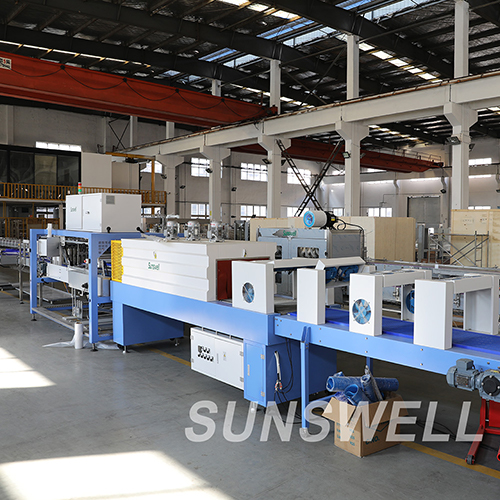
The right upstream and supporting technology decides whether a beverage filling machine line runs efficiently, compliantly and profitably. In this guide Sunswell breaks down Bottled Water Production for B2B buyers planning or upgrading a production line.
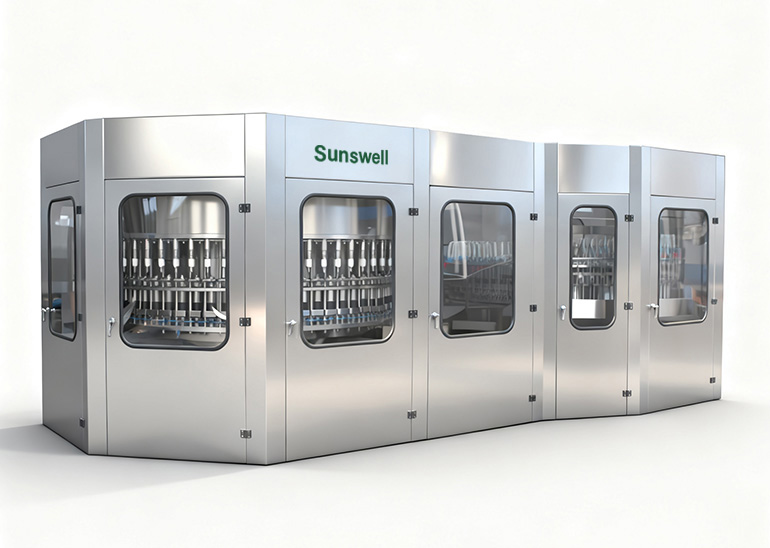
Bottled water is the most common entry point for new beverage investors because the product is simple and demand is universal. This FAQ answers the 15 questions Sunswell hears most from first-time buyers evaluating a water filling machine and Water Treatment Systems — from source choice to capacity, cost and permits.
| Decision | Typical starting answer |
|---|---|
| Capacity | 6,000–12,000 BPH (500 ml) |
| Product | Purified (RO) easiest; mineral/spring needs a protected source |
| Package | PET for volume, glass for premium |
| Treatment | RO + UV minimum, validated CIP |
| Setup time | 4–8 months order-to-production |
| Scale-up | Add a Combiblock module later |
New entrants often begin at 6,000–12,000 BPH (500 ml) to balance cost and market reach; scale later with a Combiblock.
Purified (RO-treated) is easiest and cheapest to permit; mineral/spring needs a protected source and stricter claims. Your water production line design follows the choice.
Almost always — RO/UV at minimum for purified; source testing decides for spring/mineral. Skimping here fails audits.
PET dominates for cost and weight; glass for premium. PET lines are faster and cheaper per bottle on a filling machine.
Wide range by capacity and automation; request a TCO model, not just sticker price (see the TCO guide).
Food-facility registration, water source approval, labelling compliance and often SONCAP/PVoC/EAC depending on market.
Typically 4–8 months from order to production including shipping, install and commissioning.
Monoblock links rinser-filler-capper; combiblock adds blow molding for a shorter, cleaner path.
Validated CIP, sanitized caps, closed transfer and regular water testing.
Estimate local daily demand ÷ operating days, then add headroom; undersizing caps growth.
Yes with separate Combiblock modules; plan utilities and footprint for multi-SKU now.
A 12,000 BPH line needs roughly 400–600 m² including warehouse; combiblock saves space.
Stable 3-phase power and a reliable water source; size backups for outages.
Check certificates (CE/ISO/SGS), reference plants and after-sales; audit the factory before paying.
Varies by market margin; model break-even on volume and price before committing CapEx.
Start your plant with a proven water filling machine and water production line from Sunswell.



 +86 13921964455
 [email protected]

A2 Dongjiu Industrial Park, 30 East Jintang Road, Tangshi, Zhangjiagang, Jiangsu 215600, China