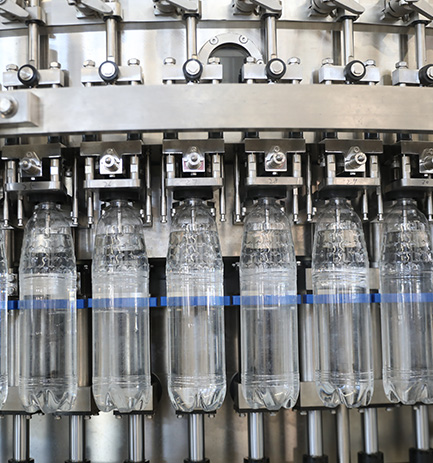
The right technology and commercial decisions decide whether a beverage filling machine line runs compliantly, efficiently and profitably. In this guide Sunswell breaks down Carbon Footprint of a Bottled Water Plant for B2B buyers planning or upgrading a production line.
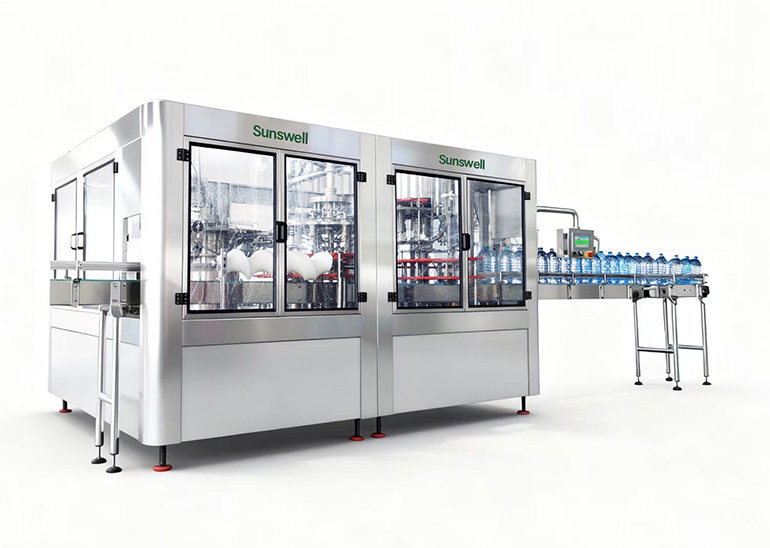
Carbon footprint is now a buyer and regulator scorecard for bottlers. A water filling machine plant's CO₂ sits mostly in energy, resin and transport. This guide shows how to calculate Scope 1-3 emissions for a line and where a Combiblock cuts them.
Scope 1: on-site fuel/boilers. Scope 2: purchased electricity. Scope 3: resin, transport, water treatment — usually the largest for bottling. Measure grams CO₂e per litre to compare options.
Resin (PET) and electricity dominate; Water Treatment Systems and compressed air are secondary but real.
| Lever | Impact |
|---|---|
| Lightweight PET | Large (Scope 3) |
| Renewable electricity | Large (Scope 2) |
| Efficient filler + CIP | Medium |
| Local filling | Medium (transport) |
VFD drives, heat recovery and short, clean Processing Equipment paths cut energy. A Combiblock shortens the line, lowering air and transfer losses.
Meter electricity and resin per litre; publish CO₂e/litre so the number is auditable for EU and export buyers of your filling machine output.
Less than resin and power, but an efficient Combiblock with VFD and short path still removes meaningful Scope 2.
Meter electricity and resin per litre first; that covers most emissions for a water plant.
Build a lower-carbon water filling machine line with Sunswell.



 +86 13921964455
 [email protected]

A2 Dongjiu Industrial Park, 30 East Jintang Road, Tangshi, Zhangjiagang, Jiangsu 215600, China