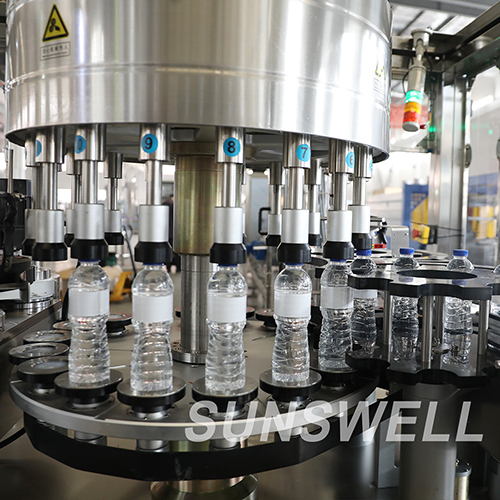
The right upstream and supporting technology decides whether a beverage filling machine line runs efficiently, compliantly and profitably. In this guide Sunswell breaks down Beverage Industry Productivity Benchmark for B2B buyers planning or upgrading a production line.
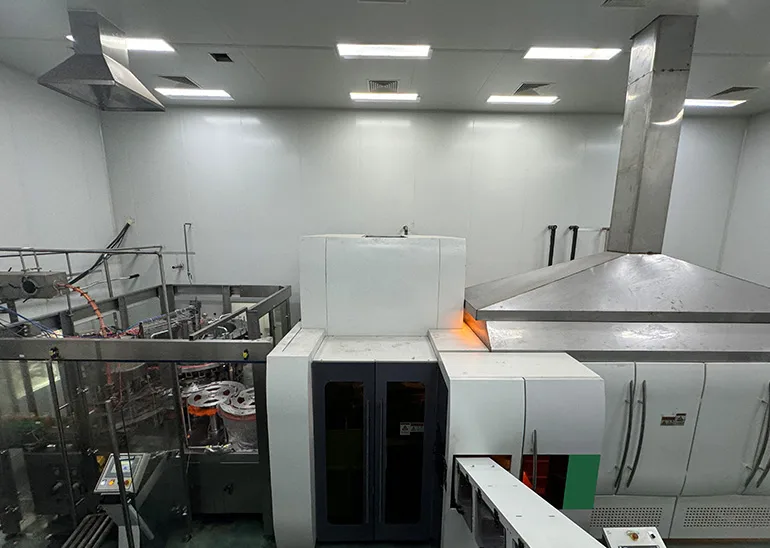
OEE (Overall Equipment Effectiveness) — availability × performance × quality — is the single best yardstick for a filling machine line. World-class bottling sits around 85%, typical plants 60–70%. Targeting the right OEE, and attacking the right losses, is how a Combiblock pays back faster. This benchmark shows realistic targets and where losses hide.
Availability captures breakdowns and changeover; performance captures speed loss; quality captures rejects and rework. A line running 24,000 BPH but down 20% of the time is not world-class.
Most losses are changeover, micro-stops on the conveyor system, and filler speed creep. Quality loss is usually cap/seal defects or fill-weight deviation.
| Plant tier | OEE | Typical gap |
|---|---|---|
| World-class | 85%+ | Best-practice changeover |
| Good | 70–85% | Managed stops |
| Typical | 60–70% | Changeover & micro-stops |
| Poor | < 60% | Unplanned downtime |
SMED (quick-changeover) and servo/recipe change on PE bottle filling machines slash changeover. Sensor-based micro-stop detection on the conveyor system recovers hidden minutes.
Inline checkweighers and vision cut quality loss; efficient Processing Equipment and CIP trim energy. Track OEE per shift so losses are visible and owned.
Yes within 6–12 months of ramp if changeover is designed in from the start on the Combiblock.
Not automatically — only if availability and quality hold. A faster filling machine with more stops can lower OEE.
Benchmark and lift OEE on your filling machine and Combiblock with Sunswell.



 +86 13921964455
 [email protected]

A2 Dongjiu Industrial Park, 30 East Jintang Road, Tangshi, Zhangjiagang, Jiangsu 215600, China