


Compliance Guide · Kazakhstan
EAC / EAEU Certification for Beverage Machinery Imported into Kazakhstan
A contract-stage decision with manufacturing implications — not a shipping formality.
EAC
EAEU conformity mark
5
Member states
9
Technical file elements
ISO/CE
Certified · SGS audited
444+
Lines delivered
Short answer: Machinery entering Kazakhstan requires EAC conformity documentation under Eurasian Economic Union technical regulations covering machinery safety, electrical safety and electromagnetic compatibility. The manufacturer assembles the technical file; the applicant is normally a legal entity registered within the Union, usually the importing buyer. Start at contract stage and run it in parallel with manufacturing — retrospective certification is slow and expensive.
🎯 Key takeaways
- EAC covers Russia, Kazakhstan, Belarus, Armenia and Kyrgyzstan — it is a safety conformity regime, not a quality rating
- CE does not substitute for EAC, though the underlying technical file overlaps substantially
- Three regulatory areas typically apply to a filling line: machinery safety, electrical safety, EMC
- The applicant must normally be registered in the Union — usually the buyer; the manufacturer supplies the technical file
- Run certification in parallel with manufacturing: a question answered during assembly is trivial, after crating it is not
- At the border, names, models, serials and quantities must match exactly across certificate, invoice and packing list
On this page
1. What EAC is and what it is not
EAC is the conformity mark of the Eurasian Economic Union — Russia, Kazakhstan, Belarus, Armenia and Kyrgyzstan. Products covered by the Union's technical regulations may only be placed on the market with the mark, supported by a certificate or declaration of conformity issued through an accredited body within the Union.
Two clarifications that save a lot of confusion:
- EAC is not a quality rating. It is a statement that the product meets the safety requirements of the applicable technical regulations. It says nothing about how well the machine performs.
- EAC is not CE with a different logo. The underlying technical file overlaps substantially, which is genuinely helpful, but the assessment is separate and must be carried out through Union bodies.
The single most useful thing to know: EAC is a contract-stage decision with manufacturing implications, not a shipping formality. Certain requirements affect how the machine is built and documented — marking, language, safety documentation. Discovering them after the machine is assembled means rework.
2. Which regulations apply to a filling line
A beverage filling line is not a single product for certification purposes. It is machinery with electrical control systems, and more than one regulation typically applies.
| Aspect | Regulatory area | What it drives |
|---|---|---|
| Mechanical safety | Machinery and equipment safety | Guarding, interlocks, emergency stops, risk assessment |
| Electrical safety | Low-voltage equipment safety | Cabinet construction, protection, earthing |
| Electromagnetic compatibility | EMC requirements | Drive and control system emissions and immunity |
| Equipment in explosive atmospheres | Applies only if relevant | Not usually applicable to standard beverage lines |
| Food contact materials | Separate from machinery regulation | Product-contact stainless and elastomer documentation |
Confirm the applicable combination with your certification body early. Machines differ, and a supplier who states the list confidently without reference to your specific configuration is guessing.
3. The technical file
Certification rests on a technical file that the manufacturer assembles. If this is complete and accurate, the process is administrative. If it is not, everything else stalls.
- General description of the machine and its intended use, with model and serial identification.
- General arrangement drawings showing the machine and its safety-relevant features.
- Electrical schematics covering power distribution, control circuits and safety circuits.
- Pneumatic and hydraulic diagrams where applicable.
- Component list with manufacturer, model and certification status of bought-in parts — particularly the safety-related ones.
- Risk assessment identifying hazards and the measures taken against each.
- Test records from factory testing, including safety circuit verification.
- Operation and maintenance manual in the required language.
- Declaration or certificate documentation as the scheme requires.
Component certification status matters more than buyers expect. Safety-related bought-in components — safety relays, emergency stop devices, protective devices — carry their own conformity documentation, and the assessment body will ask for it. This is another argument for naming mainstream brands in the technical annex at contract stage.
4. Who does what
The most common failure in this process is not technical. It is both parties assuming the other is handling certification. Write the split into the contract.
| Task | Usually | Note |
|---|---|---|
| Applicant for the certificate | Buyer or their agent | The applicant normally must be a legal entity registered in the Union |
| Technical file preparation | Manufacturer | Drawings, schematics, component list, risk assessment, test records |
| Translation of documentation | Agreed case by case | Specify the language and who pays in the contract |
| Certification body selection | Buyer | Must be accredited within the Union |
| Body fees | Buyer, unless agreed otherwise | Put it in the contract |
| Marking on the machine | Manufacturer | Applied before shipment once the scheme is confirmed |
| Customs presentation | Buyer or broker | Documents must match the shipment exactly |
5. When to start
Certification runs in parallel with manufacturing and should begin as soon as the technical specification is frozen.
| Project stage | Certification action |
|---|---|
| Contract negotiation | Agree scope, applicant, cost split and language |
| Specification freeze | Manufacturer begins assembling the technical file |
| Manufacturing start | Buyer engages the certification body |
| Mid-manufacturing | File submitted; body raises questions while the machine is still on the floor |
| Pre-FAT | Outstanding points closed; scheme confirmed |
| FAT | Test records added to the file |
| Before shipment | Marking applied; documents issued and checked against the packing list |
The sequence matters. A question raised by the certification body while the machine is still being assembled is a small change. The same question raised after the machine is crated is an unpacking exercise, and if it arrives after the container has sailed it becomes a site modification.
6. At the border
Conformity documentation is only useful if it matches the shipment. The checks are mechanical and unforgiving.
- Names must match. The importer on the certificate, on the invoice and on the transport document must be the same legal entity, written the same way.
- Machine identification must match. Model designations and serial numbers on the certificate, the nameplate and the packing list must agree.
- Quantities must match. A packing list that disagrees with the invoice is enough to hold a consignment.
- HS classification must be agreed in advance. Filling machinery, blow moulding machinery and conveyors can attract different treatment. Settle this with your broker before shipment.
Send the full document set to your broker before the shipment departs. A broker who reviews documents while the consignment is still in China can have a discrepancy corrected in days. The same discrepancy discovered at the border is corrected while demurrage runs.
7. Practical guidance for buyers
- Raise certification in the first technical discussion, not in the last email before shipment. It signals to the supplier that you know the process.
- Name the destination market in the RFQ. Suppliers quote differently for markets with formal conformity requirements, and a quote that ignores them is not comparable.
- Ask what the supplier has shipped into the Union before. Experience shows in how quickly they produce a complete technical file.
- Fix the language of documentation. Russian technical documentation is available for Central Asian projects and should be specified, along with the language used for operator training.
- Budget the body fees. They are a real project cost and belong in the budget rather than appearing as a surprise.
- Keep the file. It is referenced when you add a second line, when equipment is inspected, and if the plant is ever sold or refinanced.
Certification is one part of a wider import process. The equipment, utilities and project sequencing side is covered in setting up a bottled water plant in Kazakhstan, and the general procurement sequence in how to buy a beverage filling line from China.
Frequently asked questions
What is EAC certification?
EAC is the conformity mark of the Eurasian Economic Union, covering Russia, Kazakhstan, Belarus, Armenia and Kyrgyzstan. Products in scope of the Union's technical regulations must carry the mark and be supported by a certificate or declaration of conformity issued by an accredited body in the Union.
Which technical regulations apply to filling machinery?
Machinery equipment falls under the Union's technical regulation on machinery and equipment safety, with electrical and electromagnetic compatibility regulations applying to the control system. The exact combination depends on the machine, so confirm the applicable list with your certification body before manufacturing.
Who obtains the certificate — buyer or seller?
Either can, but the applicant must normally be a legal entity registered within the Union. In practice the importing buyer or their agent is the applicant, and the manufacturer supplies the technical file. Agree this split in the contract, because assuming the other side is handling it is a common and costly failure.
How long does EAC certification take?
Typically several weeks once the technical file is complete, and longer if documentation has to be assembled retrospectively. Start at contract stage rather than when the machine is ready to ship.
Is a certificate or a declaration required?
It depends on the product category and the assessment scheme applicable to it. Your certification body will confirm which route applies. Both result in the right to affix the EAC mark; they differ in the assessment procedure and who bears formal responsibility.
Does CE marking cover me in Kazakhstan?
No. CE and EAC are separate regimes. CE documentation is useful supporting evidence because much of the underlying technical file overlaps, but it does not substitute for EAC conformity assessment.
What happens if equipment arrives without EAC documentation?
It can be held at the border. Resolving it retrospectively is slower and more expensive than doing it in advance, and demurrage accrues throughout. This is the most avoidable delay in the entire import process.
Does Sunswell supply EAC documentation?
Sunswell prepares the manufacturer's technical file — drawings, schematics, component lists, risk assessment and test records — and works with the buyer's certification body. The scope split is written into the contract.
About the author
Written by the Sunswell engineering team — led by Howie SUN, Founder & CEO, with 14 years in filling and blow-moulding equipment R&D and turnkey project delivery across 71+ countries.
Last reviewed: 2026-08-06 · Reviewed by Sunswell engineering team
Ask our engineering team →Recommend Products
Project references
-

Vizit, 12,000BPH 1L Bottling Line with Combiblock for CSD, Kazakhstan
Country: Kazakhstan
Product: PET Bottled Carbonated Soft Drinks
Capacity: 12000BPH (1L)
Solution:Carbonated Drinks Production Line
Read More + -
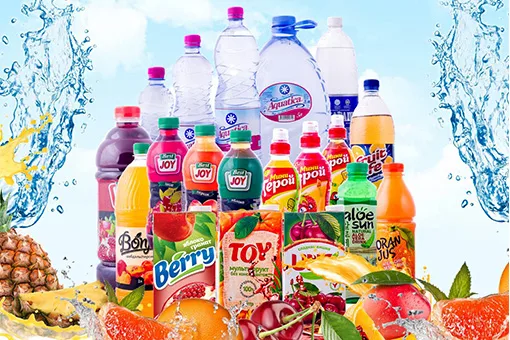
Rauan, 8 Sets of Bottlingand Canning Lines from 12,000-24,000BPH for Water, CSD and Juice, Kazakhstan
Country:Kazakhstan
Product: PET Bottled Sparkling Water, Canned Soft Drink, Canned Tea
Capacity: 25000CPH (250ml)
Solution:Three Lines,7000BPH(1.5L), 15000CPH(330ml),15000CPH(450ml)
Read More +
Have a specific project in mind?
Tell us product, target BPH, bottle sizes and market. We reply with a draft layout, equipment list and lead time estimate.
Fill the inquiry form ↑