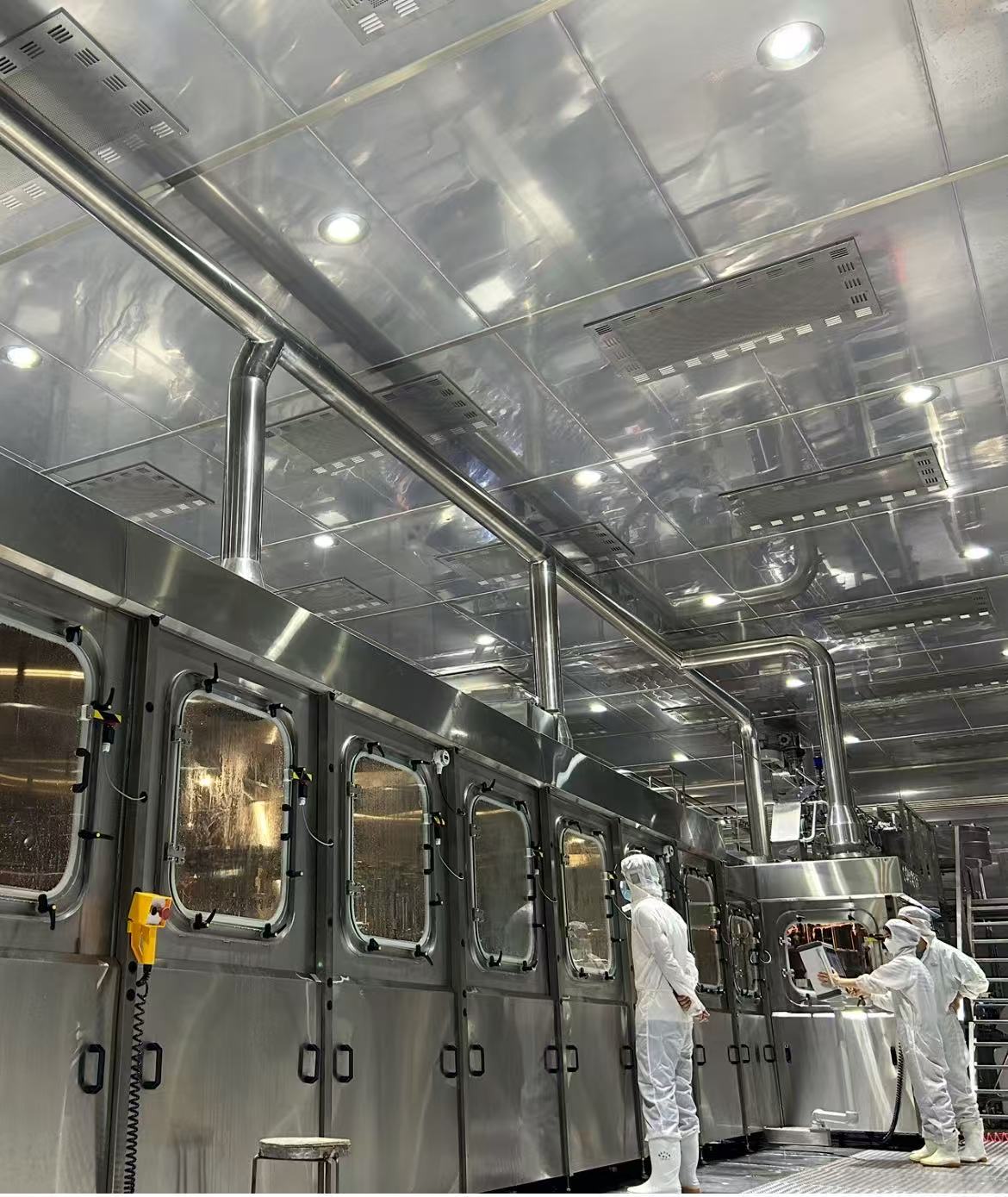
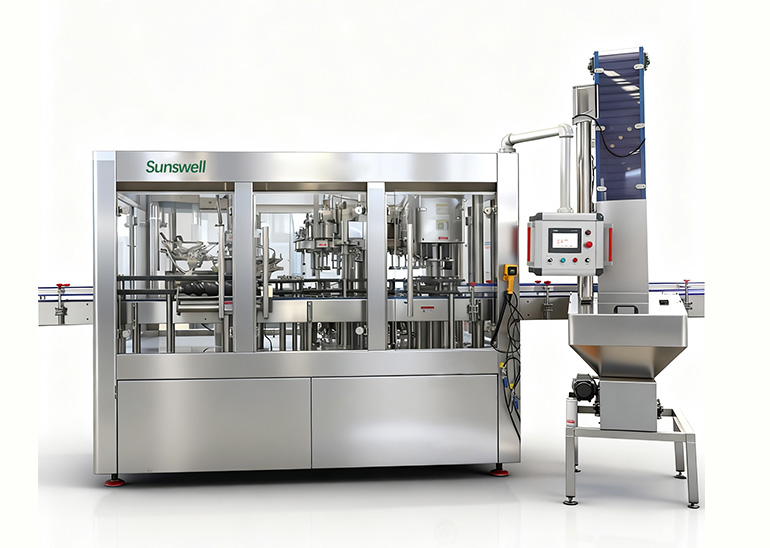
| What is included | Filling, capping and closing equipment |
| Filling principles | Gravity, volumetric, isobaric, piston, load cell |
| Capacity | 2,000-48,000 BPH by configuration |
| Accuracy basis | Volume, weight or fill level |
| Material | SUS 304 product contact, CIP-ready |
| Key control | Fill accuracy, closure integrity, CIP time |
Filling principle comes from the product, not from the target BPH. Still liquid at a steady density runs gravity or volumetric; carbonated product needs isobaric; thick product with solids needs a piston; product sold by weight runs a load cell. A machine picked ahead of the product usually gets picked again.
Let confirmed demand — not forecasts — trigger line two; a water production line at 80% utilisation is the classic trigger.
The parts cost is small; the time is not. A format change touches star wheels, guide rails, grippers, the cap chute and the recipe. On a line with two formats and two changes a day, the annual hours lost exceed the price of a second small machine in many plants.
Scale when utilization stays above ~75%, lead times slip, or a second SKU outgrows shared capacity.
| Principle | Doses by | Fails when |
|---|---|---|
| Gravity | Fill level in the bottle | Bottle geometry varies |
| Volumetric | Chamber volume | Valve seal wears |
| Isobaric | Volume under counter-pressure | Pressure or temperature drifts |
| Piston | Displacement | Product carries solids |
| Load cell | Net weight | Product temperature moves |
The Gravity Filling Machine for Still Water is the matching unit when this becomes a line project.
Wiring and pneumatic diagrams, the spare parts list with lead times, the changeover checklist, the CIP recipe and the acceptance record. A line handed over without those five is a line that depends on the engineer who installed it.
The unit behind this configuration is the Volumetric Filling Machine for Still Water.
When the formats are far apart or the cleaning regimes conflict. Two smaller fillers each run at their own rate and can be cleaned independently. One large flexible filler carries every changeover on the critical path, and its downtime is the plant downtime.
The same question is worked through from another angle in How Mechanical Fillers Reduce Maintenance Needs.
It depends on the principle and the product. A volumetric or load cell filler holds a tighter band than gravity on a variable bottle. The tolerance belongs in the acceptance protocol, measured by weight on a defined sample.
From tens of minutes to over an hour, set by the circuit volume and the soil. It is a fixed cost per production day and should be planned as downtime, not squeezed into the shift.
Bottle capacity variation, product temperature, valve wear or foam. On glass, mould-to-mould capacity variation alone is enough to make level filling inconsistent, which is why glass lines often check-weigh.
Rated BPH is a steady-state figure at one format. Real output subtracts changeover, CIP, label changes and downstream stops, which is why planning uses a factor of 0.65-0.85.
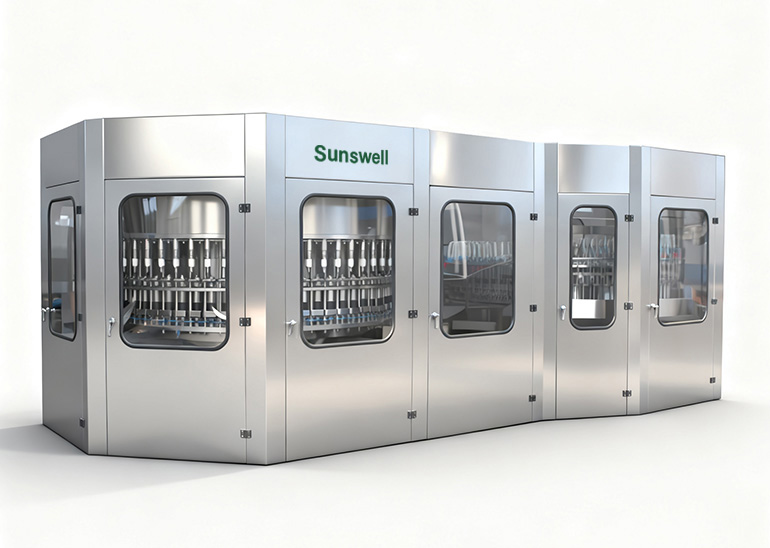
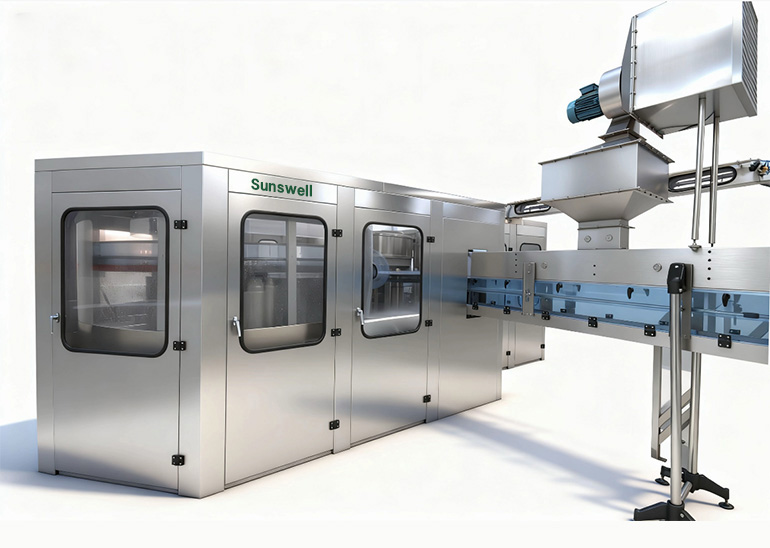
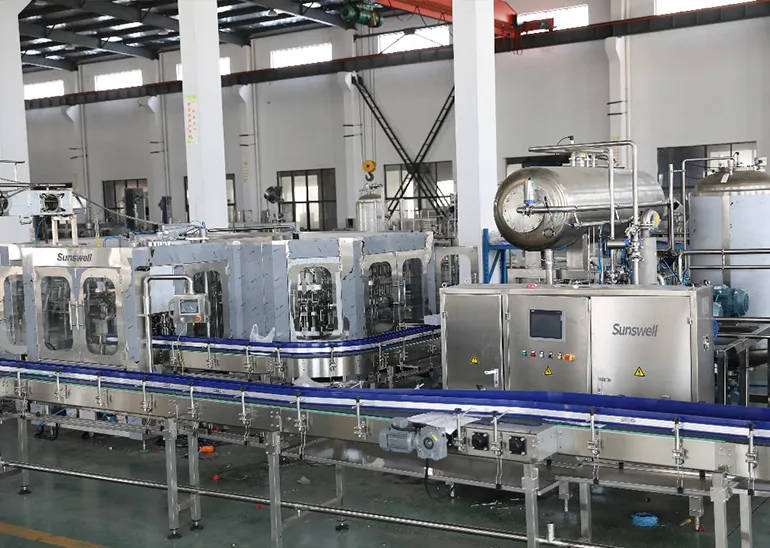
Country:Kazakhstan
Product: PET Bottled Sparkling Water, Canned Soft Drink, Canned Tea
Capacity: 25000CPH (250ml)
Solution:Three Lines,7000BPH(1.5L), 15000CPH(330ml),15000CPH(450ml)



 +86 13921964455
 [email protected]

A2 Dongjiu Industrial Park, 30 East Jintang Road, Tangshi, Zhangjiagang, Jiangsu 215600, China