
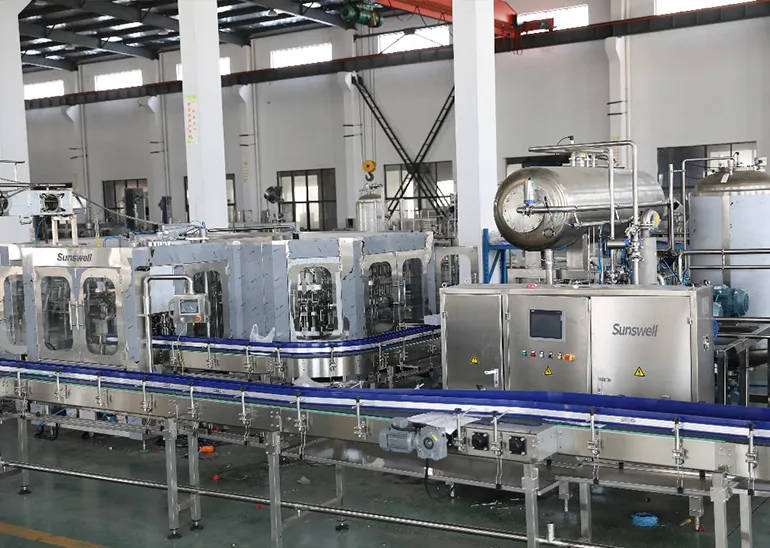
| Valve type | Isobaric, CO2 counter-pressure |
| Output range | 12,000-36,000 BPH at 0.2-2 L |
| Containers | PET bottle, glass bottle, aluminum can |
| CO2 handling | Pre-pressurisation and return pipe, no venting |
| Valves | Mechanical, semi-electric or volumetric |
| Line scope | Water treatment, syrup mixing, carbonation, filler, pack |
Mechanical valves open and close on a fixed cam profile and are the most forgiving on maintenance. Semi-electric valves use a signal to open and close, so the fill window can be set per recipe. Volumetric valves dose a chamber and hold accuracy when bottle pressure or product temperature drifts during the shift.
Foam is usually a temperature or pressure problem, not a valve problem. Warm product, a fast pressure release at the end of fill, a worn seal that lets gas bypass, or a dirty return pipe all show up as foam at the same place. Check the product temperature and the pressure ramp before touching the valves.
| Valve type | Setting | Best for |
|---|---|---|
| Mechanical | Fixed cam profile | Single product, long runs |
| Semi-electric | Signal-timed open and close | Recipe changes within one product family |
| Volumetric | Chamber dose | Pressure or temperature drift during the shift |
| Isobaric + volumetric | Chamber dose under counter-pressure | High CO2 with tight fill accuracy |
The specification sheet for the CSD & Sparkling Water by Mechanical Filler carries the utility figures quoted here.
Syrup is proportioned and blended with treated water, then carbonated under pressure and temperature control. The ratio accuracy and the carbonation stability decide the product, and both are upstream of the filler. A filler cannot correct a drifting blend.
In this stage, the syrup is mixed with purified water and carbonated using CO2 (carbon dioxide).
The Isobaric Filling Machine for CSD and Sparkling Water is the matching unit when this becomes a line project.
Warm product holds less CO2 at the same pressure, so the filler either loses gas or needs a higher pressure that increases foaming. Chilling before carbonation is the standard answer, and the chiller capacity belongs in the utility schedule.
Advanced CSD machines have integrated mixing tanks with precise temperature and agitation controls to ensure the syrup is properly mixed and ready for the next step in the production process.
The same question is worked through from another angle in How to Reduce Foam in CSD Bottling with Semi-Electric.
Overfoaming is gas leaving the product too fast at the end of fill. The pressure release has to be ramped, not dumped, and the fill height has to leave the right headspace. A snift valve that opens too early turns a good fill into a wet bottle.
The system also maintains optimal pressure and temperature, both of which are critical for maximizing CO2 absorption into the drink.
No. Carbonation needs isobaric valves under counter-pressure; still water runs gravity or volumetric. A combiblock can carry both valve sets, but they are specified separately and are not interchangeable at the push of a button.
It holds what the mixer sets and the temperature allows. Most CSD runs between 2.5 and 4.0 volumes, with the target set per product. Retention, not the mixer set point, is what the acceptance test should measure in the filled bottle.
Usually product temperature rising in the bowl or a worn valve seal. Both change the pressure balance, so the fill cuts off earlier. Log bowl temperature and fill weight together for one shift before changing any valve.
400 cans per minute. CPH and BPH are different units and cannot be compared directly, because can and bottle formats carry different volumes and different downstream equipment.
The higher the volumes, the sharper the mouthfeel and the more pressure the package must hold. Higher carbonation also needs a colder fill and a tighter pressure ramp, so it reduces practical line speed.
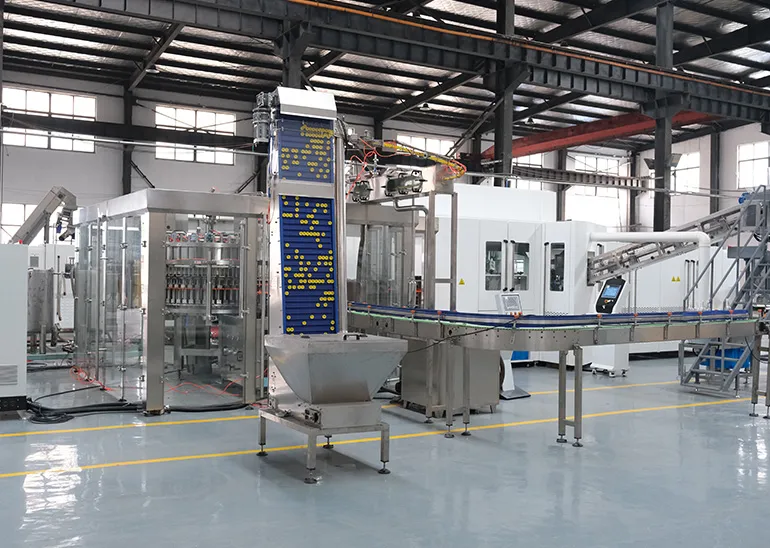
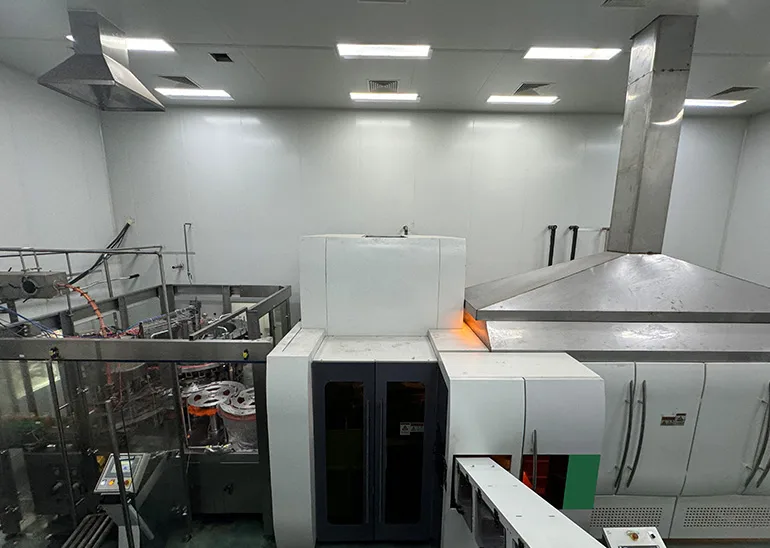
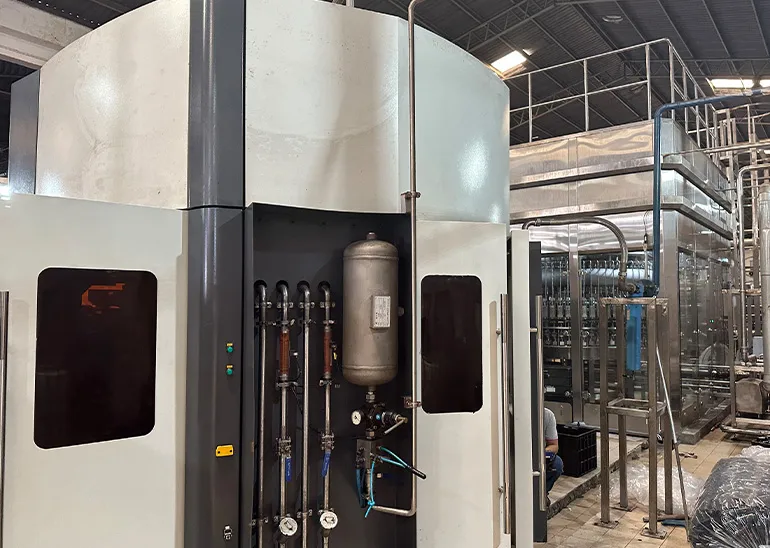
Country: Kazakhstan
Product: PET Bottled Carbonated Soft Drinks
Capacity: 12000BPH (1L)
Solution:Carbonated Drinks Production Line
Country: Syria
Product: Aluminum Canned Carbonated Soft Drinks
Capacity: 24000CPH (250ml)
Solution:Carbonated Drinks Production Line



 +86 13921964455
 [email protected]

A2 Dongjiu Industrial Park, 30 East Jintang Road, Tangshi, Zhangjiagang, Jiangsu 215600, China


