
| Filling system | Load cell net-weight, or piston dosing |
| Capacity range | 12,000-36,000 BPH at 0.2-2 L |
| Viscosity | Up to 10,000 cP |
| Accuracy | Plus or minus 0.5 g per bottle |
| Container | PET or glass |
| Key control | Weight per bottle, temperature, drip-free cut-off |
Four inputs fix the shortlist: the product, the package, the daily demand and the number of formats per week. Everything else, including the brand of the PLC, is a detail that can be settled after those four are written down.
Oil clings. A valve that cuts off cleanly on water leaves a thread of oil on the bottle shoulder, and that thread becomes a rejected bottle and a dirty conveyor. The cut-off profile, the nozzle tip and the suck-back setting are the three things to watch at acceptance, not the fill speed.
| Dosing method | Accuracy basis | When it fits |
|---|---|---|
| Load cell | Net weight per bottle | Density moves with temperature |
| Piston | Displacement volume | Stable density, high speed, thick product |
| Volumetric valve | Chamber volume | Low-viscosity oil at steady temperature |
| Flow meter | Measured volume | Continuous flow, limited pulp or solids |
A different bottle format means a different unit; see the Edible Oil Load Cell.
Weigh a fixed sample at the start, middle and end of a shift, on the same scale, and record the temperature at the same time. A filler that holds plus or minus 0.5 g at a steady 25 C may drift at 18 C. Acceptance without a temperature record is an argument waiting to happen.
For the same duty in another bottle format, the Filling Machine for Viscous Product is specified separately.
With a warm flush and a full drain, because oil does not rinse like water. The circuit needs a low point for drainage and a filter on the return. A change between two oils is quicker than a change from oil to a water-based product.
The same question is worked through from another angle in Benefits of Using Load Cell Combiblocs for Edible Oil.
Plus or minus 0.5 g per bottle on the reference specification. Real drift depends on product temperature, valve cut-off and the scale calibration interval, so the acceptance test should record all three.
No. Oil is filled at the temperature that gives a clean cut-off and a stable weight. Heating is used to lower viscosity when the product is cold, not to preserve it.
With a flushing cycle sized for the oil and the pipe run. High-viscosity oil needs a warm flush and a longer drain time than water, and the changeover belongs in the production plan.
Yes, with different infeed parts and a different capping head. Glass brings breakage risk and a lower practical rate, so the two formats are usually run in separate campaigns.
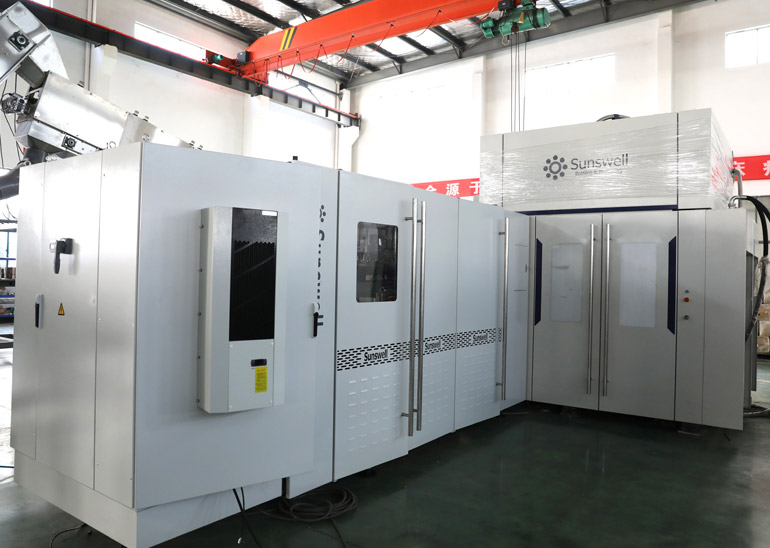
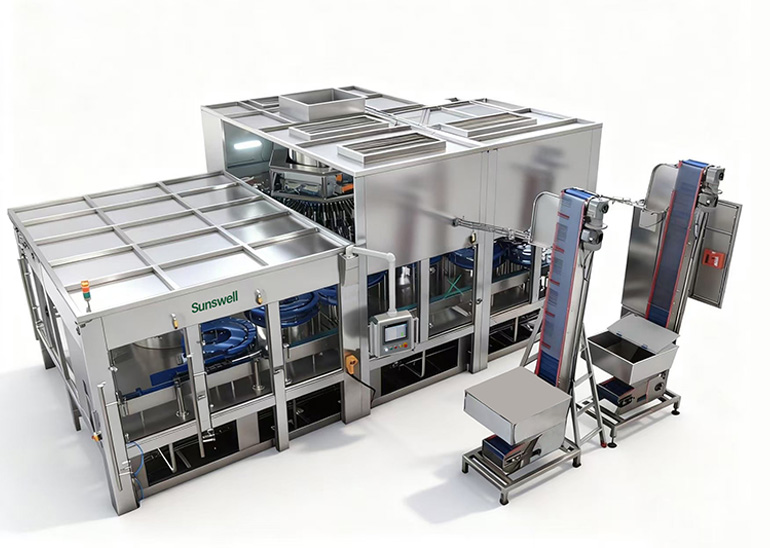
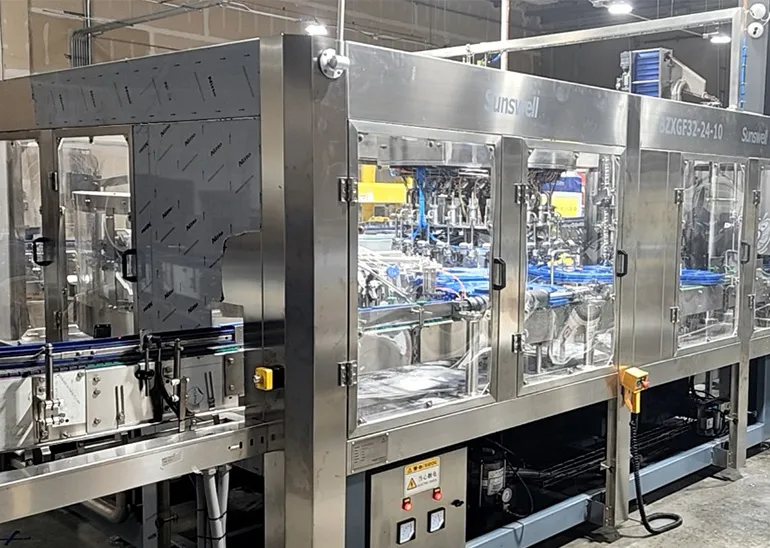
Country:Kazakhstan
Product: PET Bottled Sparkling Water, Canned Soft Drink, Canned Tea
Capacity: 25000CPH (250ml)
Solution:Three Lines,7000BPH(1.5L), 15000CPH(330ml),15000CPH(450ml)



 +86 13921964455
 [email protected]

A2 Dongjiu Industrial Park, 30 East Jintang Road, Tangshi, Zhangjiagang, Jiangsu 215600, China


