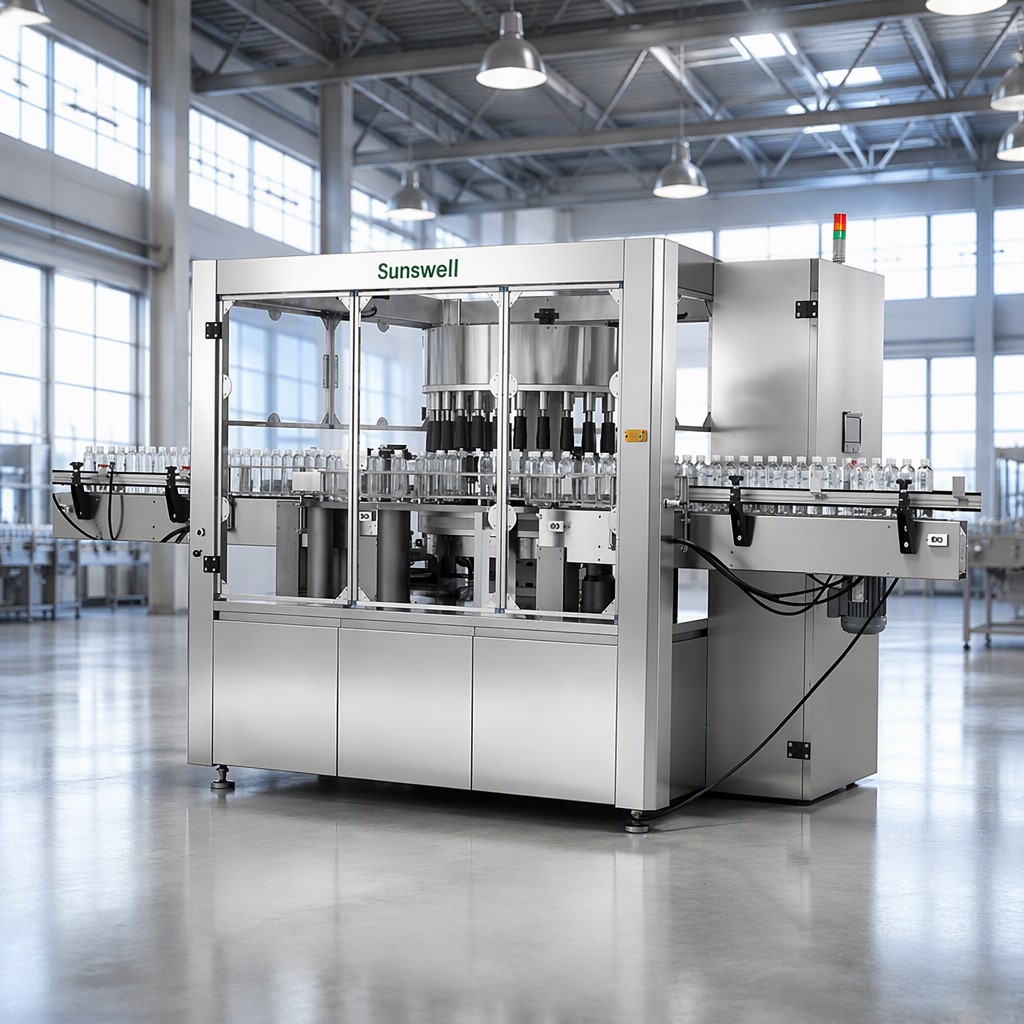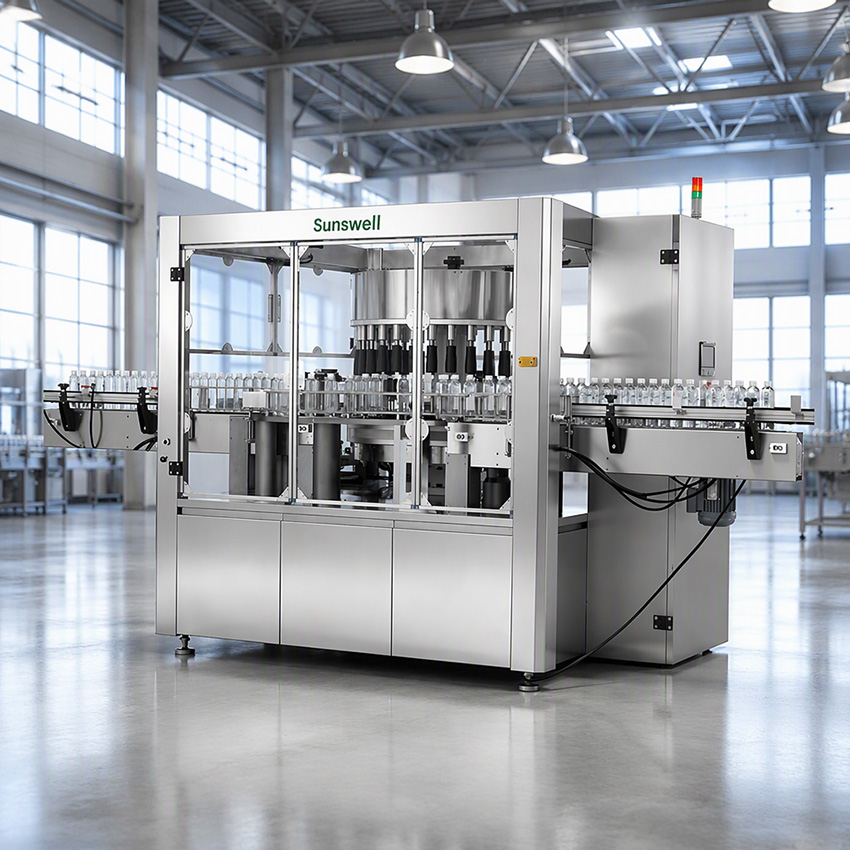
| Types | Sleeve, hot melt glue OPP, rotary sticker, self-adhesive |
| Speed | Matched to the filler, with an accumulator between |
| Key control | Label position, glue pattern, shrinkage, adhesion |
| Material | OPP film, PVC or PETG sleeve, paper sticker |
| Key decision | Full sleeve or partial wrap |
| Line position | After filling, before packing |
A full-body sleeve covers the whole bottle and gives the most design freedom, at the cost of film and a shrink tunnel. An OPP wrap-around label is the cheapest per unit at high speed. A sticker suits short runs and curved surfaces where a wrap is impractical.
Compared to self-adhesive alternatives, OPP film labels reduce material costs by 50-70%, with additional savings from eliminated backing paper disposal.
Hot melt glue is applied at the leading and trailing edge and at the seam. The pattern, the pot temperature and the nozzle condition decide how much is used and how clean the bottle looks. Glue strings and smears are the usual complaint, and they come from temperature and nozzle wear.
The system uses servo driven label cutting and application, synchronized speed matching with upstream fillers, and intelligent hot melt glue temperature control.
| Label type | Cost per unit | Best for |
|---|---|---|
| OPP wrap-around | Lowest at volume | High-speed round bottles |
| Full-body sleeve | Higher film cost | Full coverage and shaped bottles |
| Self-adhesive sticker | Middle | Short runs and flat or curved panels |
| Paper label with glue | Low material, slower | Glass bottles and craft products |
Rated output, change parts and services are listed on the Sleeve Labeling page.
Surface energy, bottle temperature and glue choice. A cold bottle straight from the filler carries condensation, and a water-based adhesive will not bond to it. Hot melt handles a damp surface better, which is why it dominates high-speed beverage lines.
Reference unit for this duty: the Hot Melt Glue OPP Labeling.
A consistent circumference and no sharp undercut where the film cannot follow. Sleeves shrink around the shape, so a bottle with a deep waist needs a film with the right shrink direction. The bottle and the sleeve are designed together.
Sunswell’s next generation rotary OPP hot melt labeling machine is designed for high speed PET beverage lines from 12,000 to 36,000 BPH.
The same question is worked through from another angle in How Labeling Accuracy Influences Brand Perception.
Because a missing or skewed label is a customer reject that the line cannot see. A camera at the labeller outlet with a reject gate catches it at the source, before the packer hides it inside a case.
At high volume, an OPP wrap-around label usually is, because the film is thinner and the machine runs faster. A sleeve costs more per unit but covers the whole bottle and allows full-body design.
On a fixed production interval set by the glue supplier and the plant, and immediately after any stop long enough for the glue to cure. A clogged nozzle shows as a missing glue line and a label that lifts in the pack.
Perforation strength, film tension and tunnel temperature act together. A tear that appears after shrinkage usually means the perforation was cut too deep for the film gauge.
Hot melt glue applied at the leading edge, the trailing edge and the seam. The pattern and the pot temperature decide both the bond and how clean the bottle looks.
Usually too little glue, a cold bottle, or a seam pressed before the glue sets. Check the glue pattern and the bottle temperature before changing the speed.
Country:Kazakhstan
Product: PET Bottled Sparkling Water, Canned Soft Drink, Canned Tea
Capacity: 25000CPH (250ml)
Solution:Three Lines,7000BPH(1.5L), 15000CPH(330ml),15000CPH(450ml)



 +86 13921964455
 [email protected]

A2 Dongjiu Industrial Park, 30 East Jintang Road, Tangshi, Zhangjiagang, Jiangsu 215600, China