
| Supply scope | Filling, capping and closing equipment |
| Filling principles | Gravity, volumetric, isobaric, piston, load cell |
| Rated output | 2,000-48,000 BPH by configuration |
| Accuracy basis | Volume, weight or fill level |
| Wetted parts | SUS 304 product contact, CIP-ready |
| Key control | Fill accuracy, closure integrity, CIP time |
Maintenance effort should follow the wear map, not the machine layout. Seals, capping inserts, guide rail blocks and filters account for most unplanned stops; painting and polishing account for none. A short daily check on those four items beats a long monthly inspection.
The product fixes the filling principle; output only fixes the size. Still liquid at a steady density runs gravity or volumetric; carbonated product needs isobaric; thick product with solids needs a piston; product sold by weight runs a load cell. Fix the product first; a machine chosen before it is a machine chosen twice.
| Principle | Doses by | Fails when |
|---|---|---|
| Gravity | Fill level in the bottle | Bottle geometry varies |
| Volumetric | Chamber volume | Valve seal wears |
| Isobaric | Volume under counter-pressure | Pressure or temperature drifts |
| Piston | Displacement | Product carries solids |
| Load cell | Net weight | Product temperature moves |
Throughput and change-part lists are on the Gravity Filling Machine for Still Water page rather than in this note.
A CIP cycle is measured in tens of minutes to over an hour depending on the circuit and the soil. It is not production time, and a plan that counts it as production will miss its daily output every day. The number belongs in the capacity calculation, not in the shift handover.
Throughput and change-part lists are on the Volumetric Filling Machine for Still Water page rather than in this note.
The parts cost is small; the time is not. A format change touches star wheels, guide rails, grippers, the cap chute and the recipe. On a line with two formats and two changes a day, the annual hours lost exceed the price of a second small machine in many plants.
The same question is worked through from another angle in How Semi-Automatic Fillers Help Small Beverage Factories.
It depends on the principle and the product. A volumetric or load cell filler holds a tighter band than gravity on a variable bottle. The tolerance belongs in the acceptance protocol, measured by weight on a defined sample.
Yes, with change parts: star wheels, guide rails, grippers and a recipe. The parts are cheap compared with the changeover time, which is why most plants specify one dominant format.
Bottle capacity variation, product temperature, valve wear or foam. On glass, mould-to-mould capacity variation alone is enough to make level filling inconsistent, which is why glass lines often check-weigh.
Valve seals, piston seals, capping head inserts, guide rail blocks and one set of change parts for the second format. These are the items that stop a line for days when they fail.
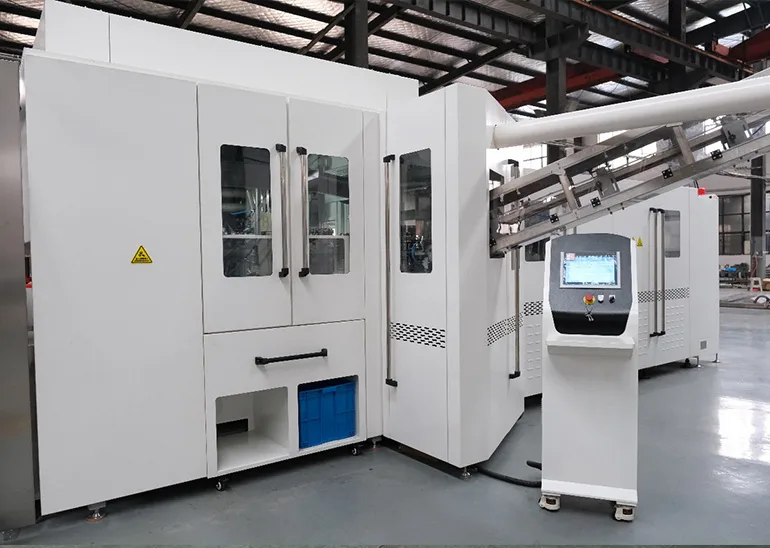
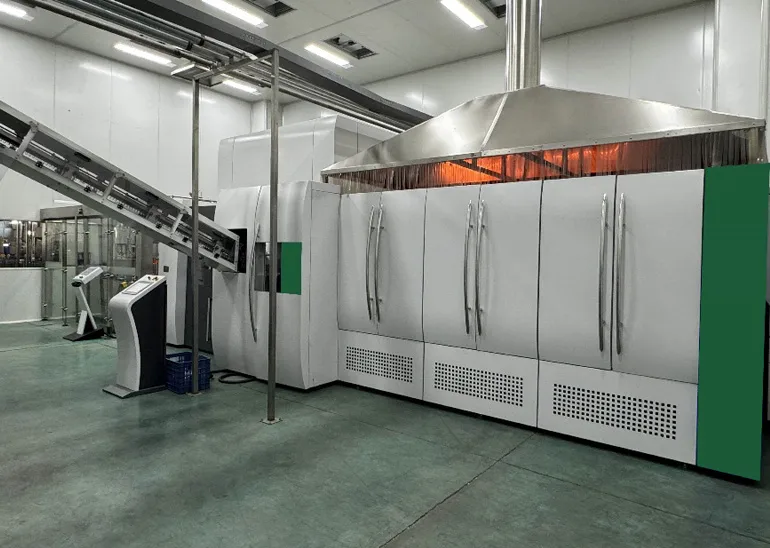
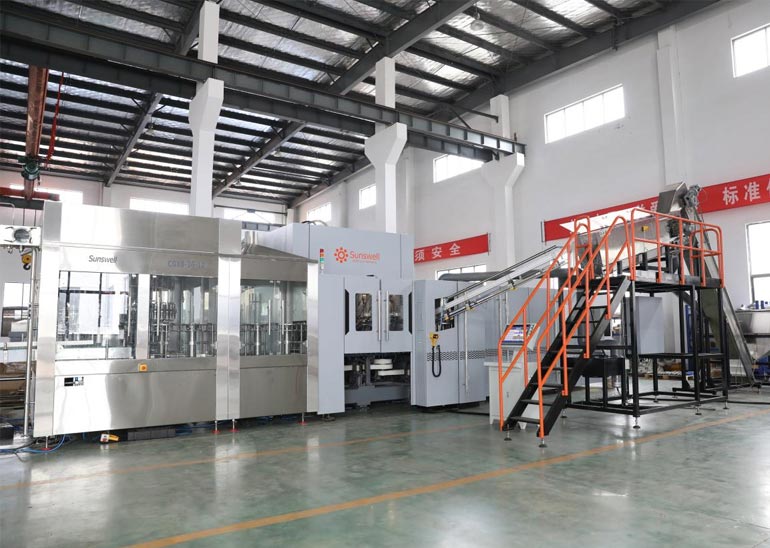
Country:Kazakhstan
Product: PET Bottled Sparkling Water, Canned Soft Drink, Canned Tea
Capacity: 25000CPH (250ml)
Solution:Three Lines,7000BPH(1.5L), 15000CPH(330ml),15000CPH(450ml)



 +86 13921964455
 [email protected]

A2 Dongjiu Industrial Park, 30 East Jintang Road, Tangshi, Zhangjiagang, Jiangsu 215600, China


