| Supply scope | Filling, capping, labelling and packing equipment |
| Sizing basis | Demand in units per day, divided by productive hours and a production factor |
| Production factor | 0.65-0.85 depending on formats and changeovers |
| Key control | Fill accuracy, closure integrity, changeover time |
| Key decision | One flexible line or two dedicated lines |
| Acceptance | Output, accuracy, closure and changeover, measured |
Four inputs fix the shortlist: the product, the package, the daily demand and the number of formats per week. Everything else, including the brand of the PLC, is a detail that can be settled after those four are written down.
Settle the product and the package before the machine. Product viscosity, acidity, carbonation and particle size decide the filling principle; the bottle neck finish decides the capping head and the change parts. A machine chosen before those two are fixed is chosen twice.
| Decision | What it fixes | What it does not fix |
|---|---|---|
| Filling principle | Product and accuracy | Downstream capacity |
| Valve count | Rated BPH | Changeover and CIP time |
| Automation level | Labour per shift | Product quality |
| Line layout | Floor space and flow | Throughput of the slowest station |
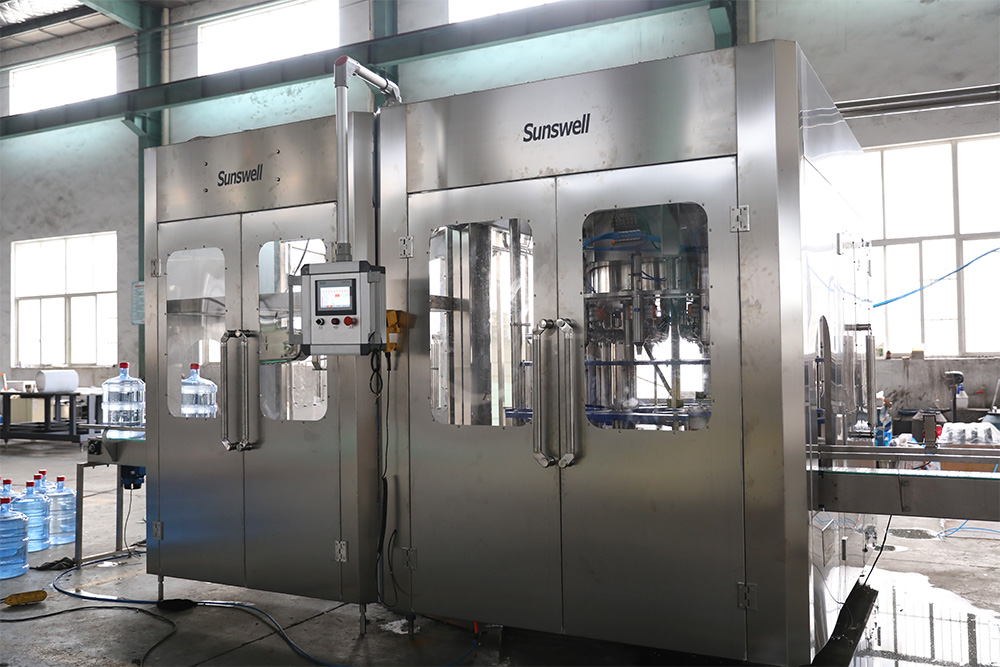
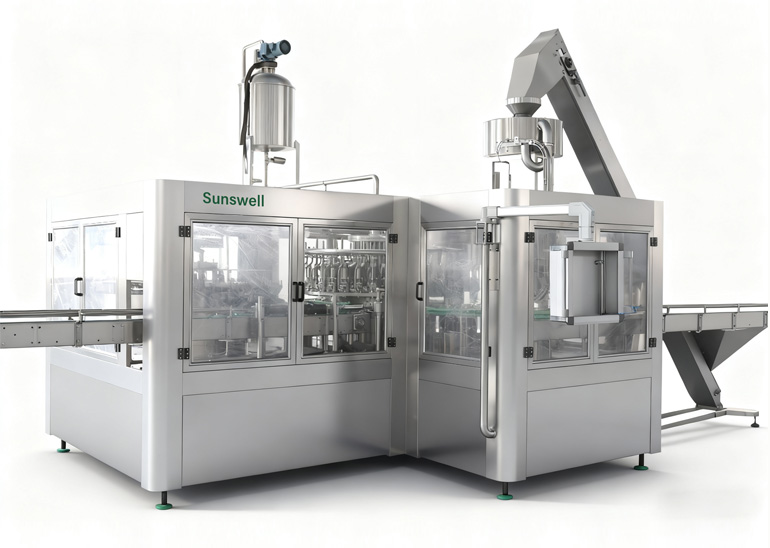
The unit behind this configuration is the Gravity Filling Machine for Still Water.
It proves the machine meets the written specification on the agreed product, at the agreed format, in the builder workshop. It does not prove the line will run in your building. Both tests are needed, and the second one is where most disputes start.
For the same duty in another bottle format, the Volumetric Filling Machine for Still Water is specified separately.
Capacity is what the machine can do at steady state in one format. Throughput is what the plant gets across a week of changeovers, cleaning and stops. Plans built on capacity alone are the reason new lines look slow in their first month.
The same question is worked through from another angle in GULFOOD Manufacturing Dubai: What We Showed.
Bottles per day divided by productive hours, then divided by a production factor of 0.65-0.85. The factor covers changeover, cleaning and downstream stops. Sizing at 1.0 is the most common planning error.
Capacity is usually added by a second line or by a downstream upgrade, not by speeding up the filler. The filler, the capper and the packer are matched, so raising one alone moves the bottleneck.
A monoblock combines rinse, fill and cap on one frame. A full line adds treatment, blowing, labelling, packing and palletizing around it. The monoblock is one station in a longer chain.
Valve count, automation level, material of construction, whether blowing is included, and the packing format. Price follows the specification, so two quotes are only comparable when the specifications match.
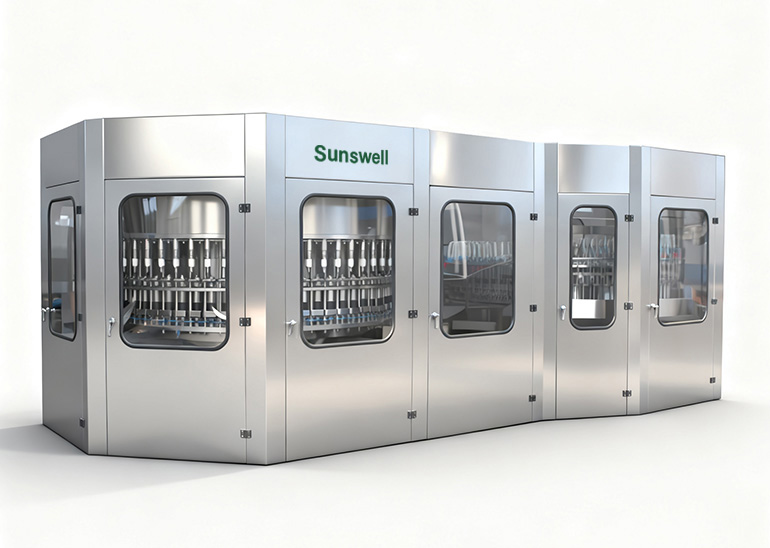
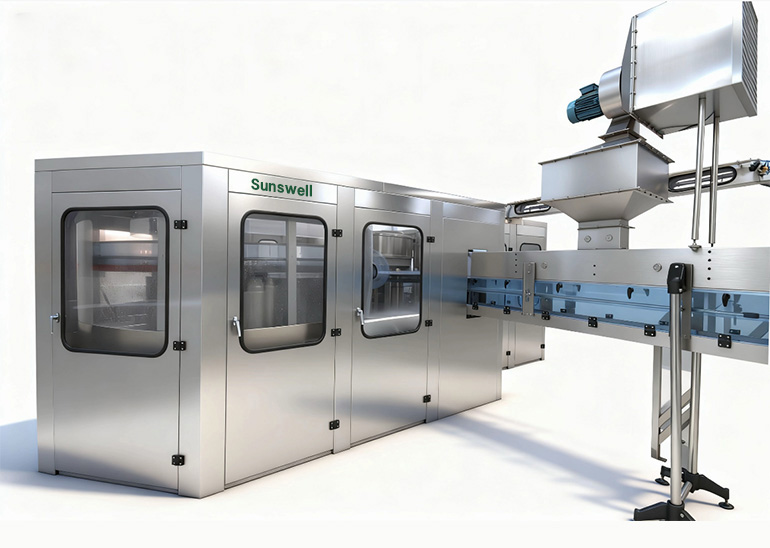
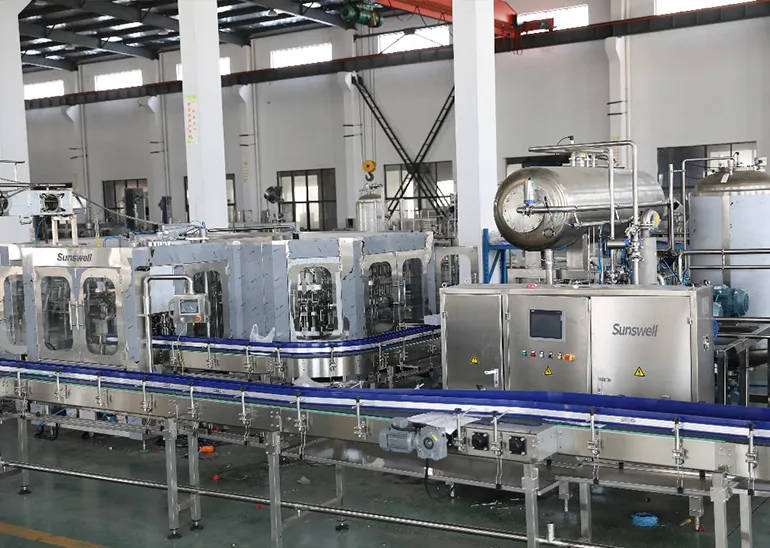
Country:Kazakhstan
Product: PET Bottled Sparkling Water, Canned Soft Drink, Canned Tea
Capacity: 25000CPH (250ml)
Solution:Three Lines,7000BPH(1.5L), 15000CPH(330ml),15000CPH(450ml)



 +86 13921964455
 [email protected]

A2 Dongjiu Industrial Park, 30 East Jintang Road, Tangshi, Zhangjiagang, Jiangsu 215600, China