
| What is included | Filling, capping and closing equipment |
| Filling principles | Gravity, volumetric, isobaric, piston, load cell |
| Capacity | 2,000-48,000 BPH by configuration |
| Accuracy basis | Volume, weight or fill level |
| Wetted parts | SUS 304 product contact, CIP-ready |
| Key control | Fill accuracy, closure integrity, CIP time |
The product fixes the filling principle; output only fixes the size. Still liquid at a steady density runs gravity or volumetric; carbonated product needs isobaric; thick product with solids needs a piston; product sold by weight runs a load cell. A machine picked ahead of the product usually gets picked again.
Four variables sit behind a fill number: the dosing principle, the product temperature, the bottle geometry, and the condition of the valve or piston seal. A machine that holds its tolerance on the factory test can drift in the plant when the product arrives warmer or the bottle wall gets thinner.
| Principle | Doses by | Fails when |
|---|---|---|
| Gravity | Fill level in the bottle | Bottle geometry varies |
| Volumetric | Chamber volume | Valve seal wears |
| Isobaric | Volume under counter-pressure | Pressure or temperature drifts |
| Piston | Displacement | Product carries solids |
| Load cell | Net weight | Product temperature moves |
Sizing for this duty runs through the Gravity Filling Machine for Still Water, where the valve count is set out.
Foaming product needs a slower fill ramp and often a longer nozzle that reaches below the surface. The machine is the same frame with a different valve and a different cam or recipe. Sizing it on the water rate and hoping the foam settles is how lines end up at half output.
The Volumetric Filling Machine for Still Water is the reference unit for this configuration.
It saves capital and floor space, and it costs labour per shift. Manual loading, manual packing and manual palletizing are the usual trades. For a small plant with a single format and a flexible crew, that is a sensible trade; for a plant running three shifts it is not.
The same question is worked through from another angle in How Upstream Bottle Production Impacts Filling Line Efficiency.
The neck finish sets the rinser clamp, the filling valve seal and the capping head. A change of a millimetre in the thread is a change of change parts and often of the capper. It is the single most under-specified item in a filling line enquiry.
Gravity fills to a level set by a tube, so accuracy depends on the bottle. Because volumetric filling doses by chamber volume, accuracy holds across bottle sizes. Gravity is simpler and cheaper; volumetric is more repeatable when the bottle changes.
It depends on the principle and the product. A volumetric or load cell filler holds a tighter band than gravity on a variable bottle. The tolerance belongs in the acceptance protocol, measured by weight on a defined sample.
Yes, with change parts: star wheels, guide rails, grippers and a recipe. The parts are cheap compared with the changeover time, which is why most plants specify one dominant format.
Bottle capacity variation, product temperature, valve wear or foam. On glass, mould-to-mould capacity variation alone is enough to make level filling inconsistent, which is why glass lines often check-weigh.
Valve seals, piston seals, capping head inserts, guide rail blocks and one set of change parts for the second format. These are the items that stop a line for days when they fail.
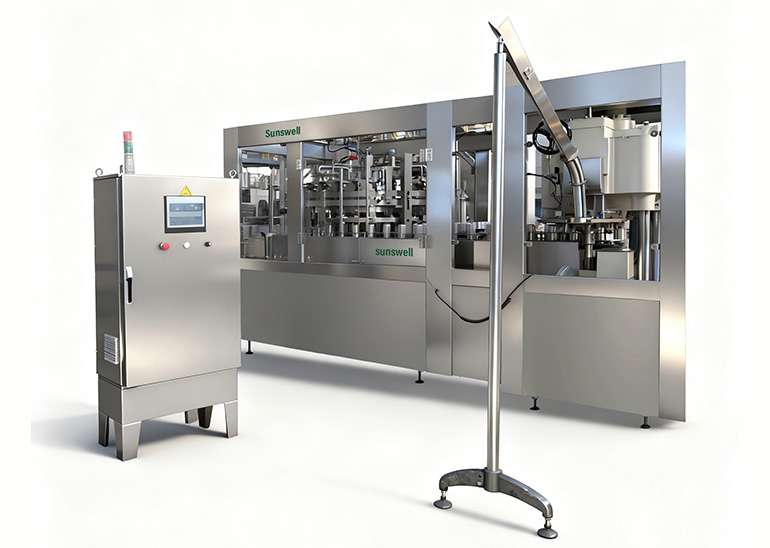
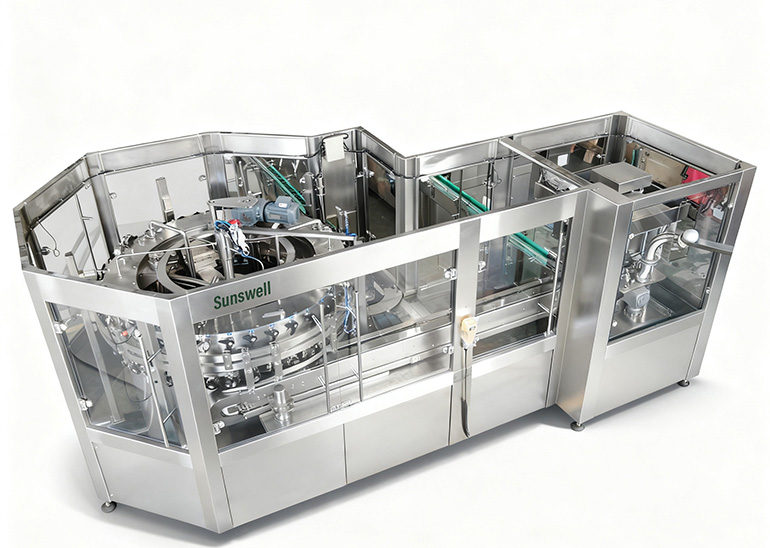
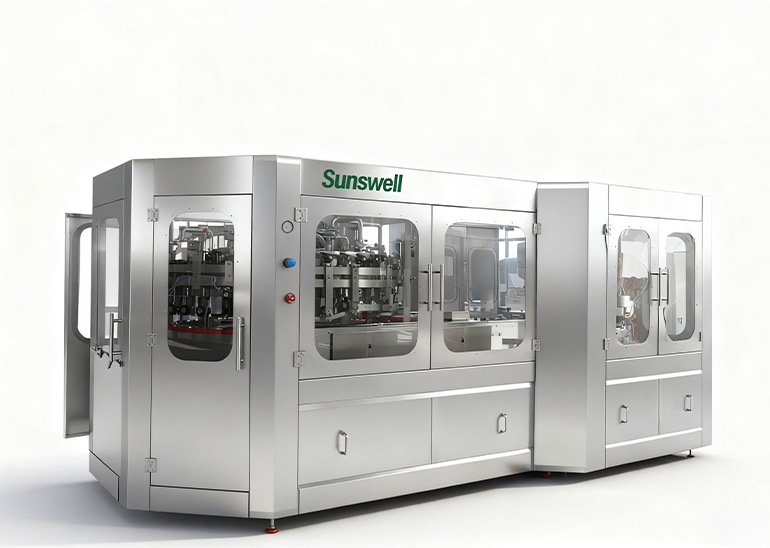
Country:Kazakhstan
Product: PET Bottled Sparkling Water, Canned Soft Drink, Canned Tea
Capacity: 25000CPH (250ml)
Solution:Three Lines,7000BPH(1.5L), 15000CPH(330ml),15000CPH(450ml)



 +86 13921964455
 [email protected]

A2 Dongjiu Industrial Park, 30 East Jintang Road, Tangshi, Zhangjiagang, Jiangsu 215600, China


