
The right technology and commercial decisions decide whether a beverage filling machine line runs compliantly, efficiently and profitably. In this guide Sunswell breaks down ROI Analysis for B2B buyers planning or upgrading a production line.
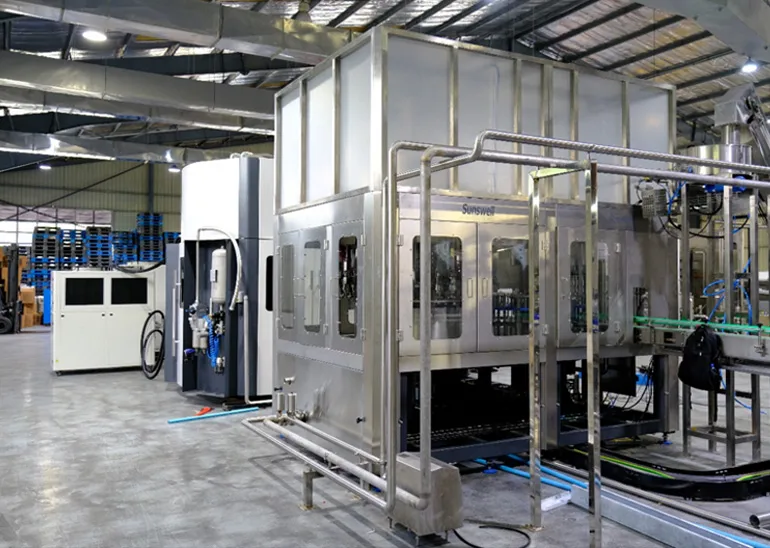
The manual-vs-automatic decision is really an ROI decision. A manual filling machine is cheap to buy but costly in labour and gives lower, variable output; a fully automatic Combiblock costs more yet cuts labour and downtime. This guide models payback across the three tiers so buyers pick on lifetime return, not sticker price.
Manual: operator-fed, low BPH, highest labour per bottle. Semi-automatic: mechanized fill, manual load/cap, middle ground. Fully automatic: rinser-filler-capper plus conveyor and controls, minimal labour, highest throughput.
Manual lines hide cost in wages and rejects; automatic lines front-load CapEx but save on labour, consistency and OEE for a water filling machine or juice line.
| Tier | CapEx | Labour/yr | BPH | Payback driver |
|---|---|---|---|---|
| Manual | Low | High | < 1,000 | Only tiny volume |
| Semi-auto | Medium | Medium | 1k–5k | Labour saving |
| Auto | High | Low | 5k–24k+ | Volume + OEE |
Above ~3,000 BPH, automatic lines usually beat manual on cost-per-bottle once wages and rejects are counted for Juice Filling Machines and CSD lines.
Automatic fill-weight control reduces giveaway and rework — a quiet but large ROI lever on a CSD filling machine.
Often within 1–3 years once volume passes a few thousand BPH, driven by labour and giveaway savings.
Yes, but a Combiblock purchased modular saves re-buying as you scale.
Model the ROI of your filling machine and Combiblock with Sunswell.



 +86 13921964455
 [email protected]

A2 Dongjiu Industrial Park, 30 East Jintang Road, Tangshi, Zhangjiagang, Jiangsu 215600, China