
| Valve type | Load cell net-weight, or piston dosing |
| Output range | 12,000-36,000 BPH at 0.2-2 L |
| Viscosity | Up to 10,000 cP |
| Accuracy | Plus or minus 0.5 g per bottle |
| Package | PET or glass |
| Key control | Weight per bottle, temperature, drip-free cut-off |
Oil clings. A valve that cuts off cleanly on water leaves a thread of oil on the bottle shoulder, and that thread becomes a rejected bottle and a dirty conveyor. The cut-off profile, the nozzle tip and the suck-back setting are the three things to watch at acceptance, not the fill speed.
Above a few thousand cP the product moves by pressure and time rather than by gravity, so the bowl, the feed pipe and the valve bore all grow. Temperature control also becomes part of the filling specification, because a cold oil at 10 C and the same oil at 25 C behave like two different products.
| Dosing method | Accuracy basis | When it fits |
|---|---|---|
| Load cell | Net weight per bottle | Density moves with temperature |
| Piston | Displacement volume | Stable density, high speed, thick product |
| Volumetric valve | Chamber volume | Low-viscosity oil at steady temperature |
| Flow meter | Measured volume | Continuous flow, limited pulp or solids |
The Edible Oil Load Cell is the reference unit for this configuration.
Weigh a fixed sample at the start, middle and end of a shift, on the same scale, and record the temperature at the same time. A filler that holds plus or minus 0.5 g at a steady 25 C may drift at 18 C. Acceptance without a temperature record is an argument waiting to happen.
Rated output, change parts and services are listed on the Filling Machine for Viscous Product page.
Nothing, if the filler tares each bottle before dosing. That tare step is what separates net-weight filling from a flow meter. Without it, a heavy bottle delivers less product and the label claim fails.
The same question is worked through from another angle in A Complete Guide to Selecting the Best Edible Oil.
Plus or minus 0.5 g per bottle on the reference specification. Real drift depends on product temperature, valve cut-off and the scale calibration interval, so the acceptance test should record all three.
Yes, with change parts and a recipe. Above 2 L the fill time per valve grows and the practical BPH drops, so the line is normally specified for one dominant format with a second format as a changeover.
Some packers dose nitrogen into the headspace to slow oxidation, especially for polyunsaturated oils. It is an option, and its value depends on the oil and the target shelf life, not on the filler.
With a flushing cycle sized for the oil and the pipe run. High-viscosity oil needs a warm flush and a longer drain time than water, and the changeover belongs in the production plan.
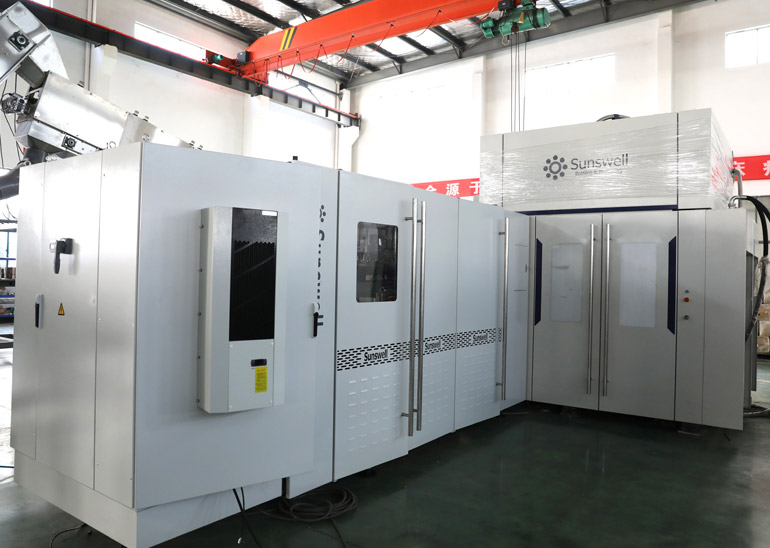
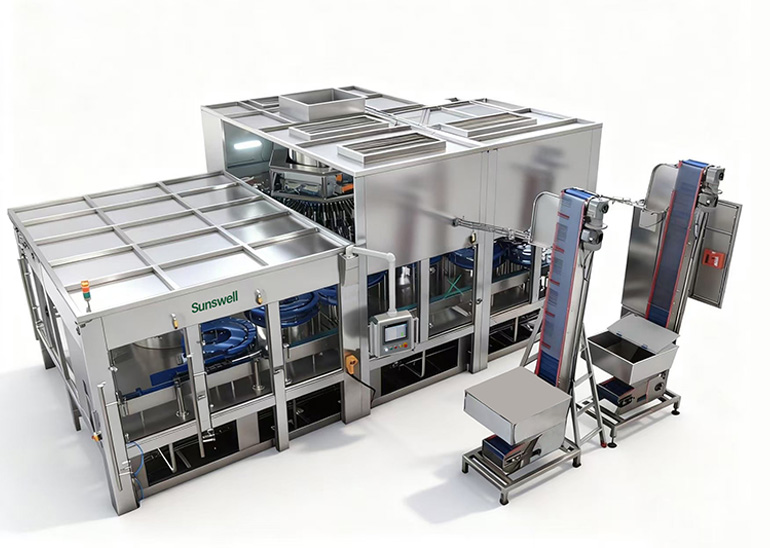
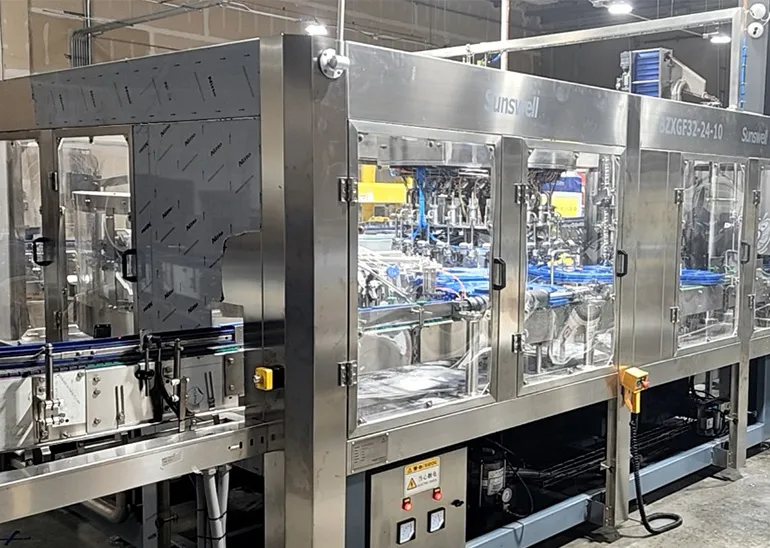
Country: Kazakhstan
Product: PET Bottled Carbonated Soft Drinks
Capacity: 12000BPH (1L)
Solution:Carbonated Drinks Production Line
Country: Maldives
Product: PET Bottled Mineralized Water
Capacity: 24,000BPH (500ml); 2 Lines
Solution:Water Production Line



 +86 13921964455
 [email protected]

A2 Dongjiu Industrial Park, 30 East Jintang Road, Tangshi, Zhangjiagang, Jiangsu 215600, China


