


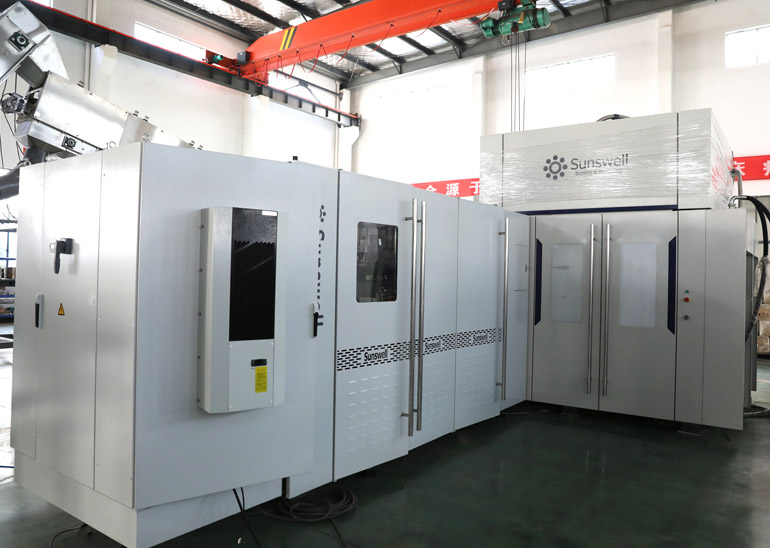
Line configuration · Oil & sauce
Edible Oil & Sauce — Line Configuration Options and Investment Levels
Oil and sauce lines configure along the filler tier — piston for medium accuracy, load-cell for declared weight — with preparation options (heating, deaeration) and the package decision on top. The product is expensive, so the accuracy tier is the investment axis.
444+
Lines delivered
71+
Countries exported
20,000
m² workshop
80+
Staff
2011
Sunswell founded
Short answer: Oil and sauce configurations run two filler tiers: piston (measured volume, reliable for viscous and particle products) and load-cell (weighed fill, for declared-weight and expensive product). Preparation options — gentle heating for some oils, deaeration for sauces — sit upstream, and the package (PET or glass, cap or dispenser) sets the infeed and capper. The accuracy tier is the profit axis.
🎯 Key takeaways
- Piston and load-cell are the two real tiers for oil and sauce; gravity is rare.
- Declared-weight and expensive products justify the load-cell tier.
- Heating (some oils) and deaeration (sauces) are preparation options, engineered per product.
- Particle sauces need a filler that passes solids without shearing them.
- The bottle, cap and declared tolerance set the configuration — send them with the enquiry.
On this page
1. The accuracy axis
Oil and sauce lines configure along one axis that matters: fill accuracy. Gravity filling is rare here — the products are viscous or declared — and the real tiers are piston and load-cell. The tier sets the filler, the accuracy and the investment, and it is chosen on the declared weight, the product price and the tolerance the brand must hold.
| Tier | Principle | Best for |
|---|---|---|
| Piston | Measured volume per stroke | Sauces, viscous, medium accuracy |
| Load cell | Weighed fill per bottle | Declared weight, expensive oil |
Accuracy is the profit axis — the tier decision is a business decision, not a technical detail.
2. Piston tier
A piston filler meters a measured volume per stroke — reliable for viscous sauces, tolerant of particles when the valve is particle-rated, and immune to bottle-posture variation. It is the standard tier for the bulk of oil and sauce production, with accuracy set by the cylinder and the product's consistency.
Piston fillers handle thick product cleanly and dose consistently — the workhorse of the category.
3. Load-cell tier
A load-cell filler weighs each bottle and fills to a target weight, compensating for bottle and density variation in real time. For declared-weight oil and expensive products, the giveaway it prevents pays for the weighing hardware — the accuracy is auditable and the tolerance is verified at FAT.
For declared-weight oil, load cell is usually the honest tier: the giveaway saving is real, and the accuracy is provable at acceptance.
Load cell is the slowest per station — size the station count on the accuracy tier the product needs, not a speed target alone.
4. Preparation options
Preparation sits upstream of the filler: some edible oils are warmed gently to fill at the right viscosity, and sauces are deaerated to remove bubbles that would show in the bottle. Both are engineered per product — the heating is controlled to protect the oil's quality, and the deaeration tolerates the sauce's particles.
For particle sauces, the deaerator and the filler valve must both pass solids — a particle-rated valve is a spec, not a hope.
5. Packaging decisions
Oil and sauce bottle into PET and glass: PET for economy and logistics, glass for the higher-end ranges. The bottle and cap set the infeed, the capper and the cap sorter — a sauce dispensing closure is a different capper spec than a simple oil cap. Decide the package before the filler is quoted.
The neck finish and the closure matter more here than for water — oil caps must seal against leakage and sauce caps must dispense cleanly.
6. Investment levels
| Level | Filler tier | Prep | Best fit |
|---|---|---|---|
| Entry | Piston | None or basic | Local brand, sauce or oil |
| Standard | Piston + particle valve | Deaeration / heating | Regional, multi-SKU |
| Top | Load cell | Full prep | Declared weight, export |
The levels follow the declared tolerance and the market — export markets with declared-weight rules justify the top tier.
7. Matching to product
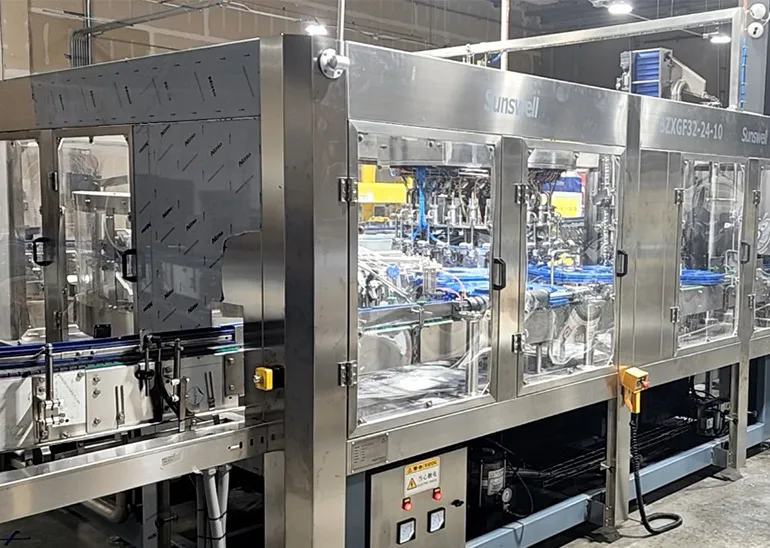
Match the configuration to three facts: the declared weight and tolerance (set by the market's rules), the product's viscosity and particles (which set the valve and prep), and the package (which sets the infeed and capper). The edible oil filling machine range shows the tiers in practice.
Frequently asked questions
Piston or load cell for oil and sauce?
Piston for viscous and particle products with medium accuracy; load-cell for declared-weight or expensive product where giveaway matters.
Why is load-cell common for oil?
Oil is declared by weight and expensive — the accuracy stops giveaway and holds the declared fill, paying for the hardware.
Do oils need heating?
Some do, to reach the right viscosity — gently and controlled. The heating is a preparation station sized on the product.
Can a filler handle particle sauces?
Yes — with a particle-rated valve on the piston or load-cell filler, and a deaerator that tolerates solids.
What sets the investment?
The filler tier, the preparation and the package — in that order. Declared-weight export markets justify the top tier.
Can Sunswell supply the configuration?
Yes — piston and load-cell fillers with heating, deaeration, capping and labelling, for oil, sauce and viscous products.
About the author
Written by the Sunswell engineering team — led by Howie SUN, Founder & CEO, with 14 years in filling and blow-moulding equipment R&D and turnkey project delivery across 71+ countries.
Last reviewed: 2026-08-28 · Reviewed by Sunswell engineering team
Ask our engineering team →

Have a specific project in mind?
Tell us product, target BPH, bottle sizes and market. We reply with a draft layout, equipment list and lead time estimate.
Fill the inquiry form ↑