
| What is included | Printers, coders, cap feeders, nitrogen dosers, detectors |
| Function | Support the filler without changing its rating |
| Key control | Position, timing, consumable cost |
| Integration | Signals from the filler PLC or a standalone sensor |
| Key decision | Whether the device earns its cost per 1,000 units |
| Typical position | After the filler, before the packer |
Position follows the signal. A coder needs the bottle presented at a fixed gap; a cap feeder needs a buffer before the capper; a detector needs a clear view and a reject gate downstream. Moving any of them changes the timing and the reject logic.
The ability to program complex sequences and logic functions in the PLC allows for efficient communication with the VFDs, enabling precise motor control and optimal performance throughout the bottling line.
Ink, solvent, laser power, nitrogen, caps and labels all carry a per-unit cost that does not appear in the machine price. A device with a low purchase price and a high consumable cost can be the most expensive item on the line over five years.
By gradually increasing or decreasing the motor speed, VFDs prevent sudden torque spikes that can damage equipment and lead to costly repairs.
| Device | What it controls | Consumable |
|---|---|---|
| Coder or printer | Date and batch code | Ink, solvent or laser power |
| Cap feeder | Cap supply to the capper | None, but a buffer is needed |
| Nitrogen doser | Headspace oxygen | Nitrogen per 1,000 units |
| Fill level detector | Reject decision | None, but a reject gate is needed |
Rated output, change parts and services are listed on the Accessory page.
Either through a discrete signal from the filler PLC, which is simple and reliable, or through the line network, which allows recipes and reporting. Discrete signals are easier to commission; network integration is easier to audit. Choose based on who will maintain it.
By connecting VFDs to PLCs, bottling plants can achieve a high level of synchronization and coordination between different stages of the production process.
The specification sheet for the Conveying carries the figures quoted here.
Through an encoder on the conveyor, so the print position follows the actual speed rather than a set value. Without the encoder, the code stretches when the line accelerates and lands off-centre.
The same question is worked through from another angle in Cap and Fill Level Detection: What the Camera Checks.
A consistent cap, a correct chute angle and a hopper that is never empty. Most cap jams are the chute and the level, not the sorter. A low-level sensor that stops the line before the hopper empties prevents most of them.
No. It does not change the filler rating. It reduces headspace oxygen, which protects shelf life. Its value is measured in shelf life and rejects, not in BPH.
Because the hopper is sized for a shift rather than for the line rate, or because the elevator runs slower than the capper consumes. Size the hopper on caps per minute at the filler rating, with margin.
A laser marks the surface and needs no consumable ink, but it needs a clear line of sight and a consistent bottle position. An inkjet prints on most surfaces and carries ink and solvent cost.
Caps arrive out of orientation, the elevator runs faster than the chute can release, or the chute angle is wrong for the cap. Most jams are a chute and speed setting, not a cap defect.
Yes. Detection without a reject gate only records the defect. The gate needs a shift register so it rejects the bottle that was measured, not the one behind it.
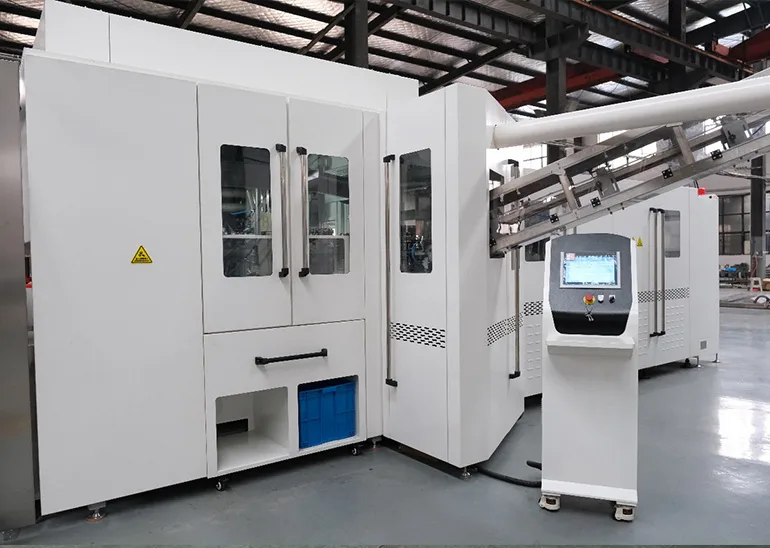
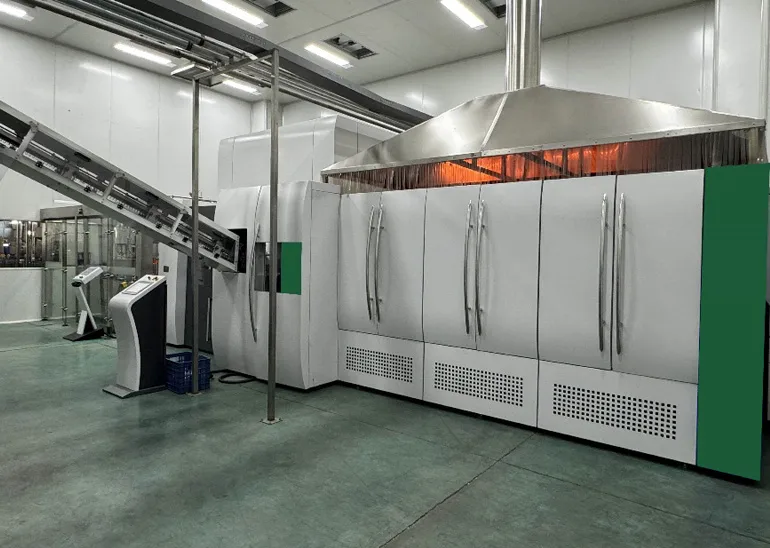
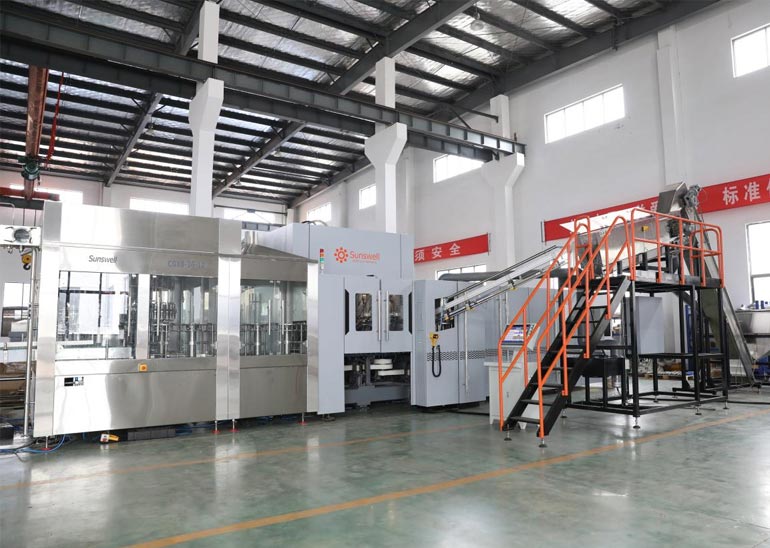
Country:Kazakhstan
Product: PET Bottled Sparkling Water, Canned Soft Drink, Canned Tea
Capacity: 25000CPH (250ml)
Solution:Three Lines,7000BPH(1.5L), 15000CPH(330ml),15000CPH(450ml)



 +86 13921964455
 [email protected]

A2 Dongjiu Industrial Park, 30 East Jintang Road, Tangshi, Zhangjiagang, Jiangsu 215600, China


