| Product fit | Still water, RO water, mineral water |
| Filling system | Gravity or volumetric valve |
| Rated output | 5,000-48,000 BPH at 500 ml |
| Format range | 200 ml to 16 L, by configuration |
| Material | SUS 304 product contact, CIP-ready |
| Line scope | Treatment, blowing, filling, capping, labelling, packing |
A water line stands or falls on three inputs: raw water analysis, neck finish, and how well filler and capper are matched. BPH takes the meeting; the neck finish and the capper match get the last five minutes. Change the thread by a millimetre and the rinser clamp and capping head have to change with it.
Within this massive market, mineral water stands out as a key sub-segment, with data from Coherent Market Insights showing its valuation is expected to grow from $324.05 billion in 2026 to $449.93 billion in 2033.
Gravity filling holds a level in a rigid bottle and costs least per valve. Volumetric filling doses a fixed volume into a chamber, so it holds accuracy across 3 L, 5 L and 10 L formats without changing the head. Isobaric filling is for carbonated product only, because it keeps CO2 in solution under counter-pressure. A still water line never needs it.
| Filling principle | Best for | Watch out for |
|---|---|---|
| Gravity | Still water, one rigid bottle size | Thin-wall bottles deform under head pressure |
| Volumetric valve | 3-15 L and mixed formats | Valve wear shows as slow drift, not a sudden error |
| Isobaric | Carbonated water only | Needs counter-pressure, so slower per valve |
| Load cell | Oil and high-value liquid | Slower cycle, higher cost per valve |
Sizing for this duty runs through the Blow-fill-cap Combibloc for Still Water, where the valve count is set out.
Ask for the rated capacity of the slowest station, the changeover checklist, the CIP cycle time, and the water and power consumption per 1,000 bottles. Those four numbers decide the real cost per bottle. A quotation that lists only the filler capacity and a total price leaves the buyer comparing incomparable offers.
The specification sheet for the Gravity Filling Machine for Still Water carries the utility figures quoted here.
A small line gives up automation, not quality. Manual or semi-automatic packing, fewer accumulation buffers, and a simpler CIP usually follow. What it should not give up is the filling valve and the capping head, because those two decide whether the product is saleable.
The same question is worked through from another angle in Energy-Saving Strategies for Large Water Filling Lines.
A lighter bottle is less rigid, so it deforms more under the filling head and grips differently in the star wheels. The filler may need a different neck handling and a lower contact pressure. Lightweighting is a bottle project that reaches into the filling line.
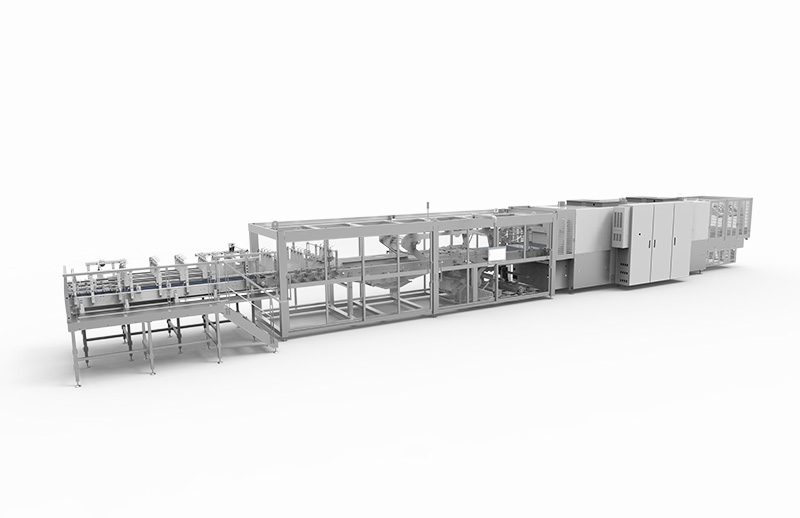
Fully automatic shrink wrapping machine: As a key piece of equipment in the downstream packaging process, it can efficiently bundle single bottles of mineral water into multi-bottle packs (such as 6-packs or 12-packs) or shrink-wrap medium to large-capacity family packs.
200 bottles per minute. Divide BPH by 60. A 24,000 BPH line runs at 400 bottles per minute, which is why filler and packer have to be matched rather than bought separately.
Gravity holds a fill level, so accuracy depends on bottle geometry. A volumetric filler measures a chamber volume, which keeps it accurate when the format changes. For one rigid bottle size, gravity is enough; for 3-10 L or mixed formats, volumetric is safer.
It depends on whether blowing, packing and palletizing sit in the same hall. Fix the footprint by drawing the layout at 1:100 with conveyor radii included, then check the turning radius of the largest format.
Plan for 380 V three-phase power, 0.6-0.8 MPa compressed air, and a chiller if blow molding runs in-house. Exact consumption belongs in the utility schedule of the quotation, not in a rule of thumb.
Commercial practice is a stated band per bottle size, typically checked by weight at the filler outlet. The band belongs in the acceptance protocol. A line without a written tolerance will argue about it at commissioning.
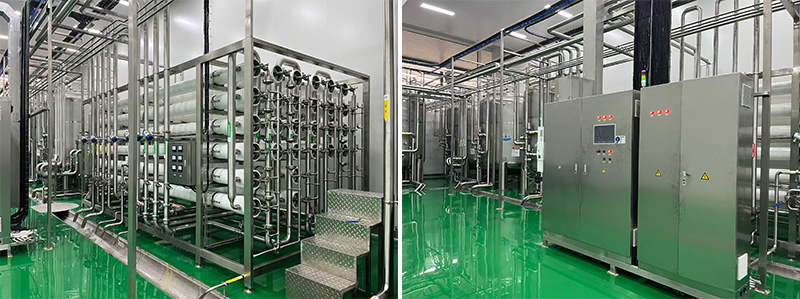
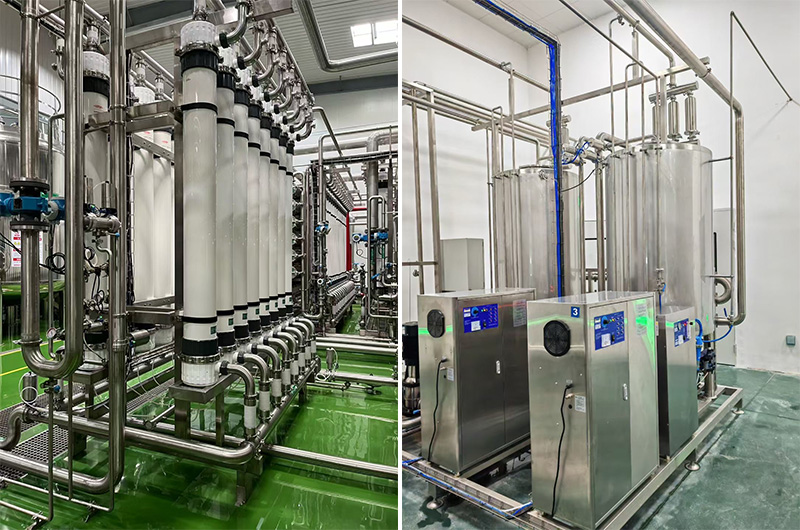
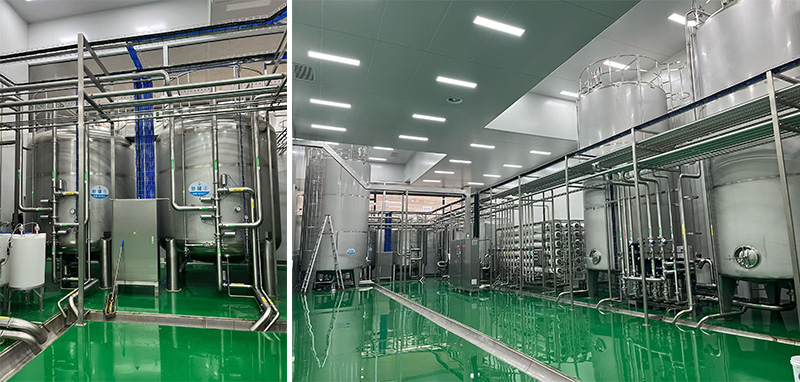
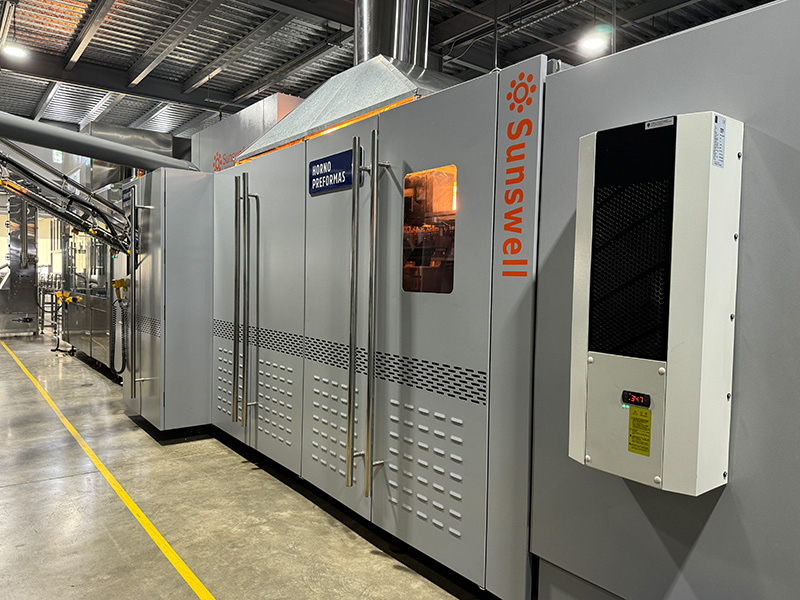
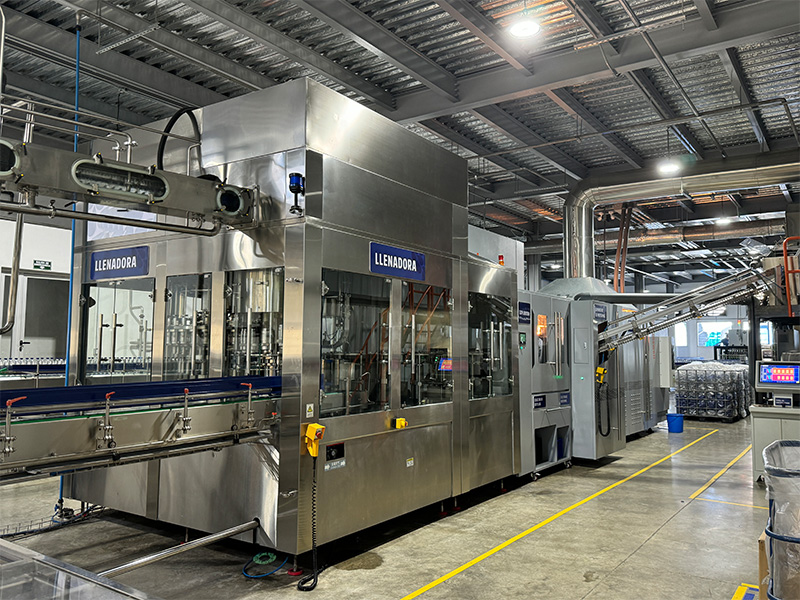
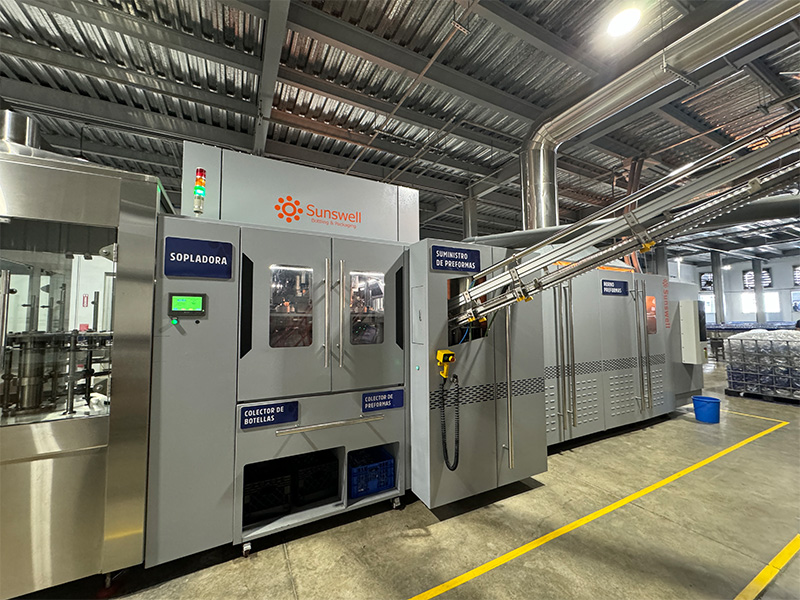
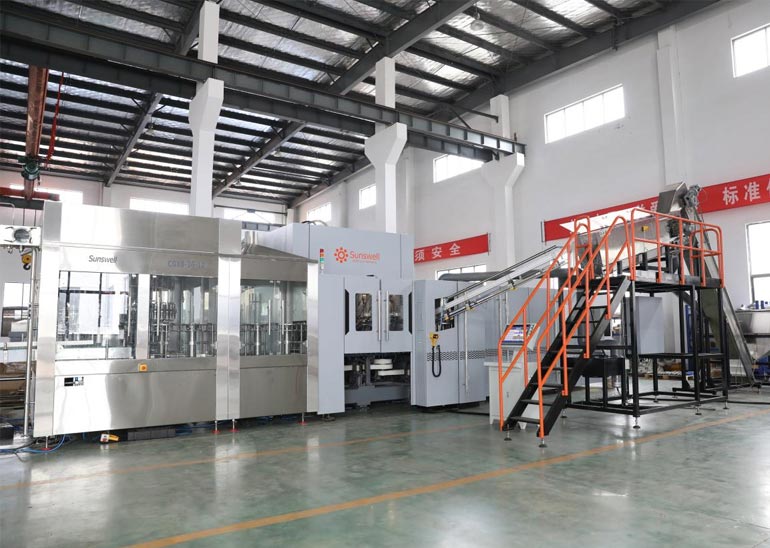
Country: Maldives
Product: PET Bottled Mineralized Water
Capacity: 24,000BPH (500ml); 2 Lines
Solution:Water Production Line
Country:Kazakhstan
Product: PET Bottled Sparkling Water, Canned Soft Drink, Canned Tea
Capacity: 25000CPH (250ml)
Solution:Three Lines,7000BPH(1.5L), 15000CPH(330ml),15000CPH(450ml)



 +86 13921964455
 [email protected]

A2 Dongjiu Industrial Park, 30 East Jintang Road, Tangshi, Zhangjiagang, Jiangsu 215600, China