

| Filling principle | Isobaric for beer, gravity or volumetric for wine and spirits |
| Capacity | 4,000-20,000 BPH on glass |
| Bottle | Glass, 200-750 ml typical, crown or ROPP closure |
| Key control | Dissolved oxygen, fill height, closure torque |
| Line scope | Rinser, filler, capper or crowner, labeller, packer |
| Cleaning | CIP with caustic and rinse cycles |
Oxygen drives staling. In beer it shows as cardboard and paper notes within weeks; in wine it flattens fruit and browns the colour. The main entry points are the filler bowl, the space between fill and closure, and the closure itself. Measuring in the finished bottle is the only number that counts.
Glass weighs more, breaks, and needs mechanical spacing instead of an air conveyor. Every transfer is a potential breakage point, so the line runs at a lower rate and with more accumulation. A 20,000 BPH glass line is a different engineering problem from a 20,000 BPH PET line.
| Package | Filling | Line rate on glass |
|---|---|---|
| Glass bottle, crown | Isobaric | 4,000-20,000 BPH |
| Glass bottle, ROPP | Isobaric or gravity | 4,000-20,000 BPH |
| Aluminum can | Isobaric + seamer | Up to 25,000 CPH |
| PET, short shelf life | Isobaric | Higher rate, lower barrier |
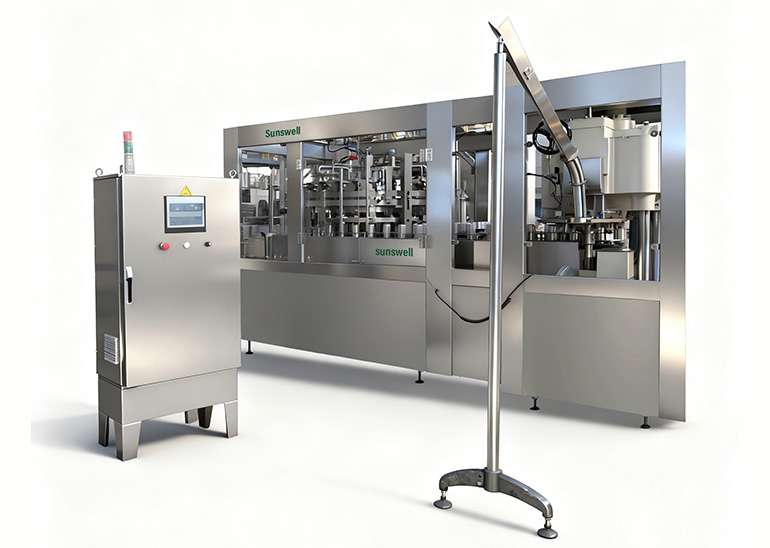
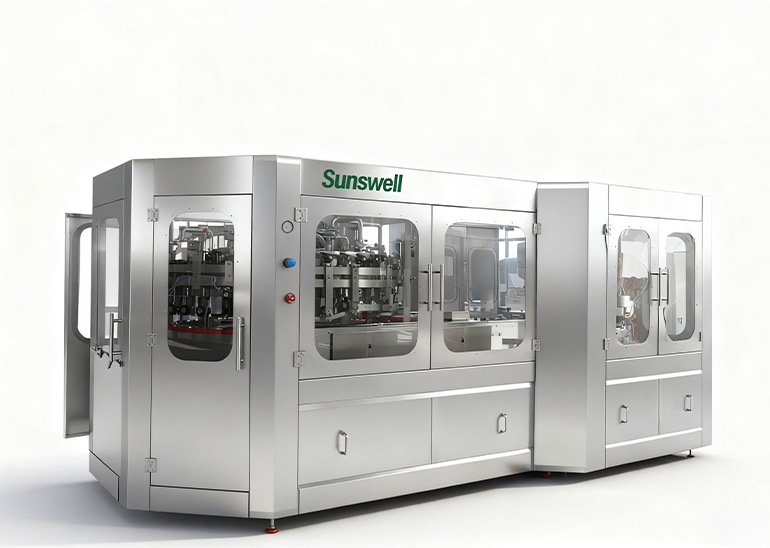
Where this becomes a line rather than a single machine, the Aluminum Can Filling Machine for Beer, Carbonated Soft Drink is the starting point.
A cold fill, a controlled pressure release and a clean glass. Beer foams on the way into the bottle if the pressure drops too fast, and a foaming fill gives a short volume and a wet crown. The pressure ramp is the setting that matters.
Raw barley → roughing (removing impurities, stone and iron) → selection (removing miscellaneous grains and damaged grains) → grading (below 2.2mm for feed) → dipping → germination (through temperature and humidity regulation air) → green malt → Drying and coking→root removal→finished malt.
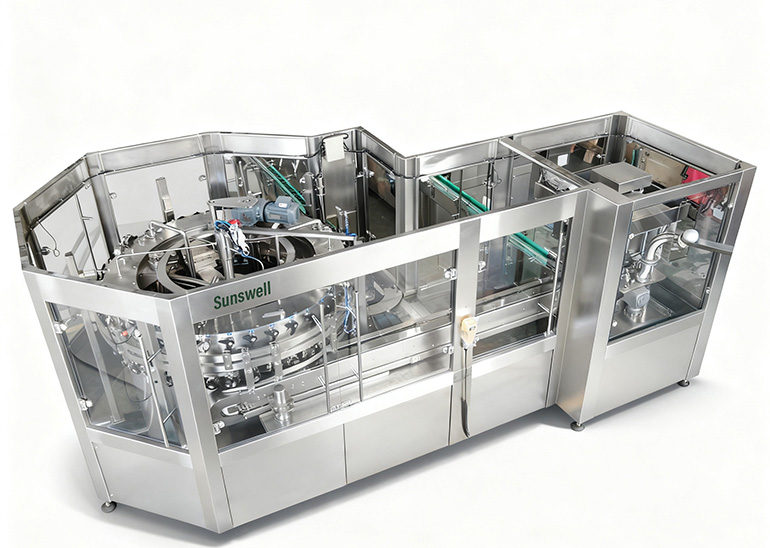
The unit behind this configuration is the Gravity Filling Machine for Glass Bottle Wine.
Wine is usually filled still and often under inert gas, with a focus on oxygen and sulphite rather than CO2. Beer needs counter-pressure and foam control. The bottle handling is similar; the product protection is not.
The same question is worked through from another angle in RTD Coffee and Cold Brew Filling: Oxygen Control and.
Only with two different fillers. Bottles are filled on an isobaric bottle filler with a crowner; cans on a can filler with a seamer. Some plants run both, but as two lines sharing utilities and packing.
Glass bottle capacity varies from mould to mould, so filling to a level gives a varying volume. Filling to a volume, or check-weighing after fill, is how glass lines hold a consistent net content.
It depends on the soil and the circuit volume. A brewery CIP is typically a caustic cycle, an intermediate rinse and a final rinse, and the time belongs in the daily plan because it is not production time.
By mechanical spacing instead of an air conveyor, guarded transfers, and a breakage detection point that stops the line before the fragments travel. Glass lines carry more inspection than PET lines for this reason.


Country:Kazakhstan
Product: PET Bottled Sparkling Water, Canned Soft Drink, Canned Tea
Capacity: 25000CPH (250ml)
Solution:Three Lines,7000BPH(1.5L), 15000CPH(330ml),15000CPH(450ml)



 +86 13921964455
 [email protected]

A2 Dongjiu Industrial Park, 30 East Jintang Road, Tangshi, Zhangjiagang, Jiangsu 215600, China


