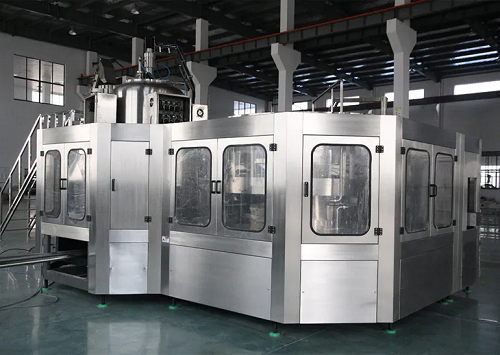
| Where it fits | Still water, RO water, mineral water |
| Filling system | Gravity or volumetric valve |
| Capacity range | 5,000-48,000 BPH at 500 ml |
| Bottle sizes | 200 ml to 16 L, by configuration |
| Material | SUS 304 product contact, CIP-ready |
| Line scope | Treatment, blowing, filling, capping, labelling, packing |
A water line stands or falls on three inputs: raw water analysis, neck finish, and how well filler and capper are matched. BPH takes the meeting; the neck finish and the capper match get the last five minutes. Change the thread by a millimetre and the rinser clamp and capping head have to change with it.
Since its establishment in 2011 in the award-winning city of Zhangjiagang, Sunswell has been at the forefront of technological innovation—transforming traditional beverage production with advanced water filling machines.
Gravity filling holds a level in a rigid bottle and costs least per valve. Volumetric filling doses a fixed volume into a chamber, so it holds accuracy across 3 L, 5 L and 10 L formats without changing the head. Isobaric filling is for carbonated product only, because it keeps CO2 in solution under counter-pressure. A still water line never needs it.
| Filling principle | Best for | Watch out for |
|---|---|---|
| Gravity | Still water, one rigid bottle size | Thin-wall bottles deform under head pressure |
| Volumetric valve | 3-15 L and mixed formats | Valve wear shows as slow drift, not a sudden error |
| Isobaric | Carbonated water only | Needs counter-pressure, so slower per valve |
| Load cell | Oil and high-value liquid | Slower cycle, higher cost per valve |
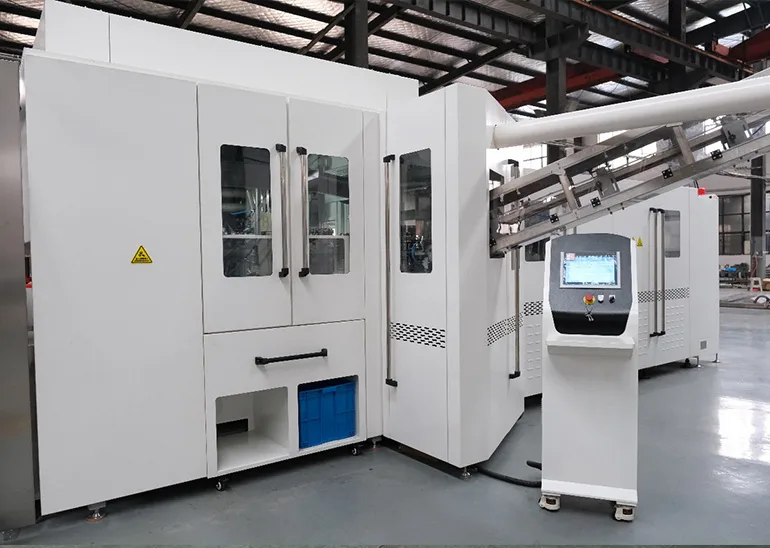
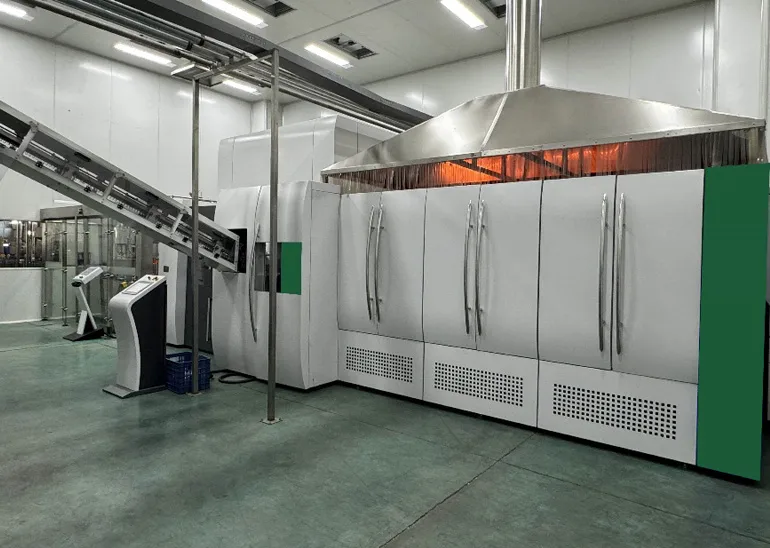
The Blow-fill-cap Combibloc for Still Water is the reference unit for this configuration.
Star wheels, guide rails, grippers, cap chute and filling recipe all change with the format. The parts are not the cost; the time is. Two formats on one line typically cost 40-90 minutes per switch, which is why the production factor falls from about 0.85 to 0.70 and why a second small line is sometimes cheaper than one flexible line.
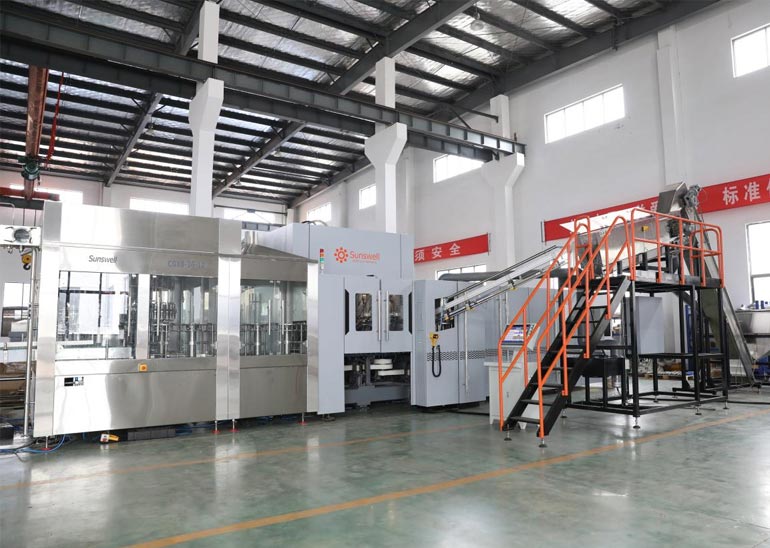
Rated output, change parts and services are listed on the Gravity Filling Machine for Still Water page.
A lighter bottle is less rigid, so it deforms more under the filling head and grips differently in the star wheels. The filler may need a different neck handling and a lower contact pressure. Lightweighting is a bottle project that reaches into the filling line.
The same question is worked through from another angle in How to Optimize Water Filling Line Workflow.
Yes, with change parts: star wheels, guide rails, grippers and a filling recipe. Budget 40-90 minutes per switch and expect the production factor to drop from about 0.85 to 0.70.
Gravity holds a fill level, so accuracy depends on bottle geometry. A volumetric filler measures a chamber volume, which keeps it accurate when the format changes. For one rigid bottle size, gravity is enough; for 3-10 L or mixed formats, volumetric is safer.
Plan for 380 V three-phase power, 0.6-0.8 MPa compressed air, and a chiller if blow molding runs in-house. Exact consumption belongs in the utility schedule of the quotation, not in a rule of thumb.
For a complete line with blowing, filling, labelling and packing, plan several weeks on site after arrival, plus operator training. Civil work and utility readiness are the usual delay, not the machinery.
Country: Maldives
Product: PET Bottled Mineralized Water
Capacity: 24,000BPH (500ml); 2 Lines
Solution:Water Production Line
Country:Kazakhstan
Product: PET Bottled Sparkling Water, Canned Soft Drink, Canned Tea
Capacity: 25000CPH (250ml)
Solution:Three Lines,7000BPH(1.5L), 15000CPH(330ml),15000CPH(450ml)



 +86 13921964455
 [email protected]

A2 Dongjiu Industrial Park, 30 East Jintang Road, Tangshi, Zhangjiagang, Jiangsu 215600, China